
Engraved Snuff Box
When you handle an engraved snuff box, you hold a miniature canvas of personal history and precise metalwork from the Georgian and Victorian eras.
Engraved Snuff Box
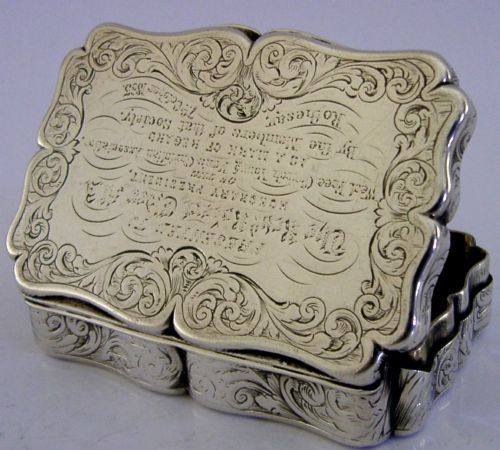
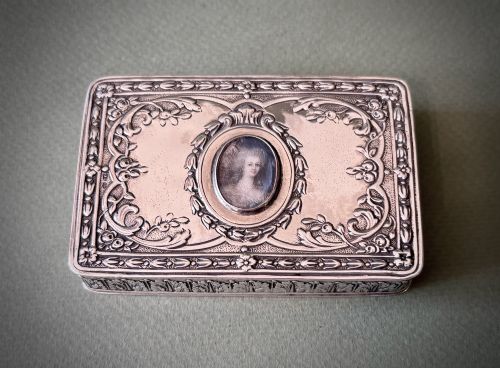
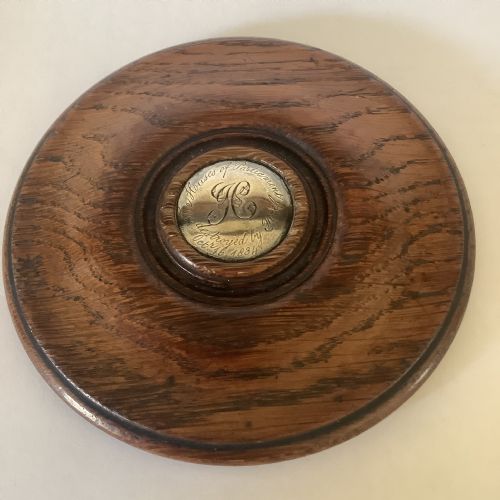
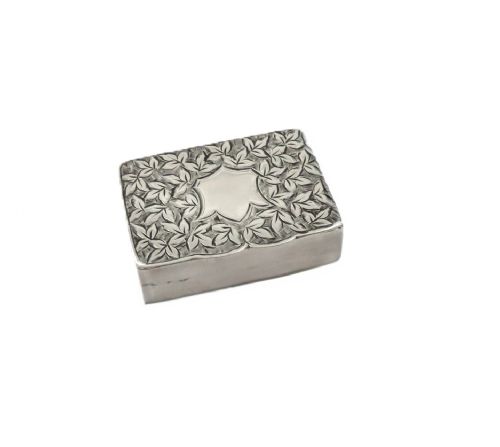
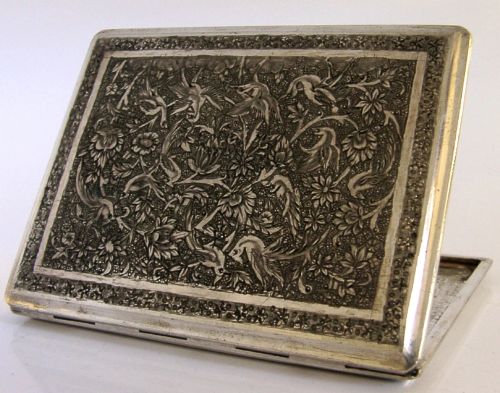
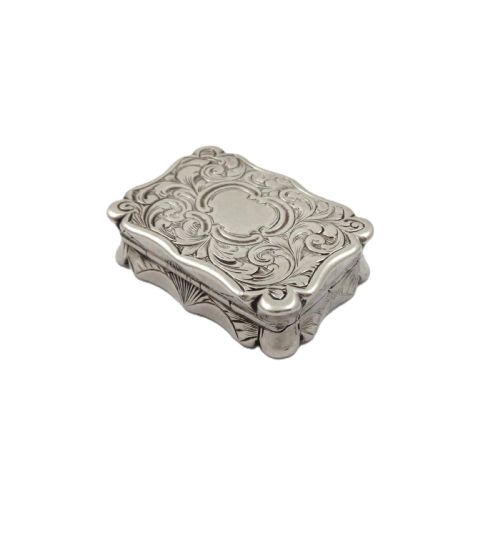
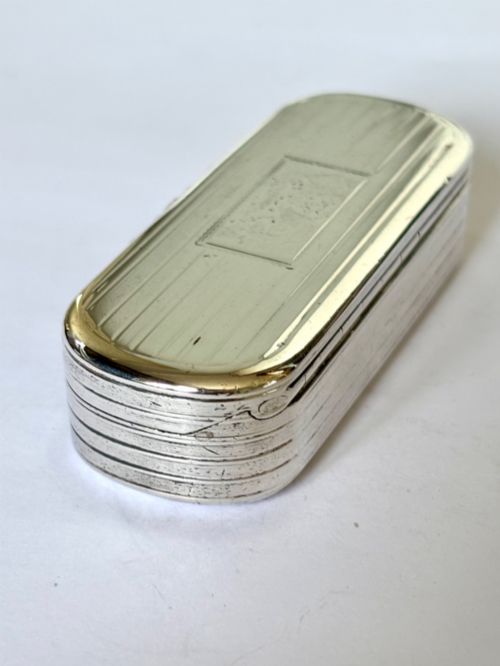
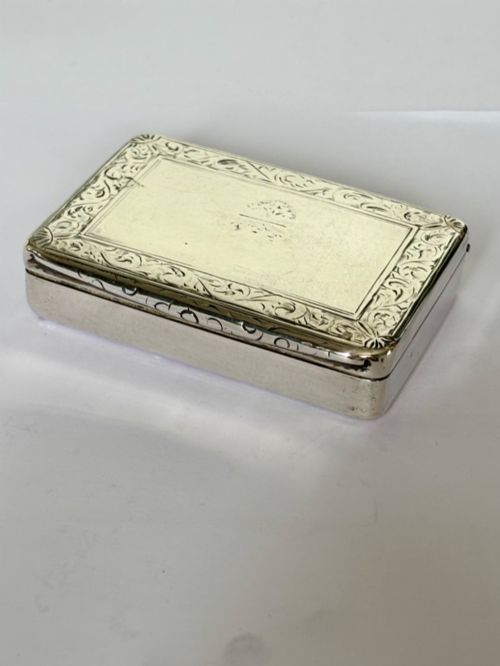
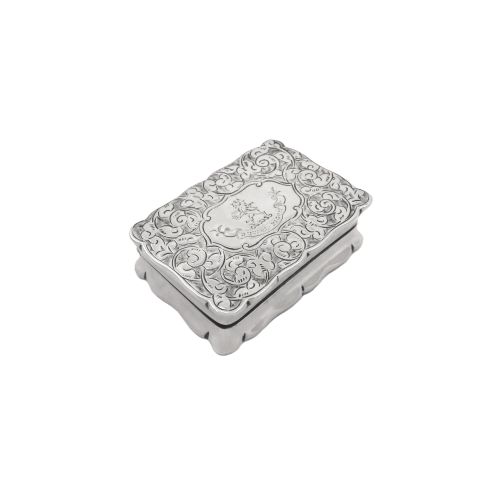
An engraved snuff box is a small pocket container designed to hold ground tobacco, frequently surface-carved with crests, names, or foliate scrolls. The pieces available span the Georgian, Victorian, and Edwardian periods, stretching back to the eighteenth and seventeenth centuries in brass and copper.
Most examples you meet on this page are fashioned from sterling silver or silver gilt, though brass, copper, steel, and agate also appear. These objects range from simple utilitarian brass boxes inscribed with a worker's name to elaborate silver-gilt table boxes bearing crisp armorial crests.
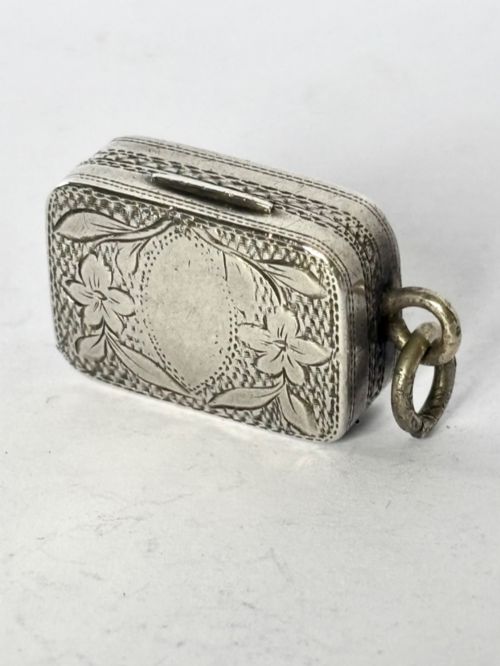
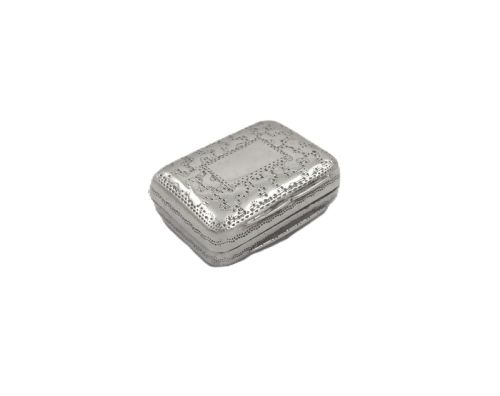
Forms include traditional pocket boxes, rounded vinaigrettes with internal pierced grilles, and combination pieces housing vestas. Makers stamp their work with assay office marks from London, Birmingham, Chester, Edinburgh, and Glasgow.
How they were made
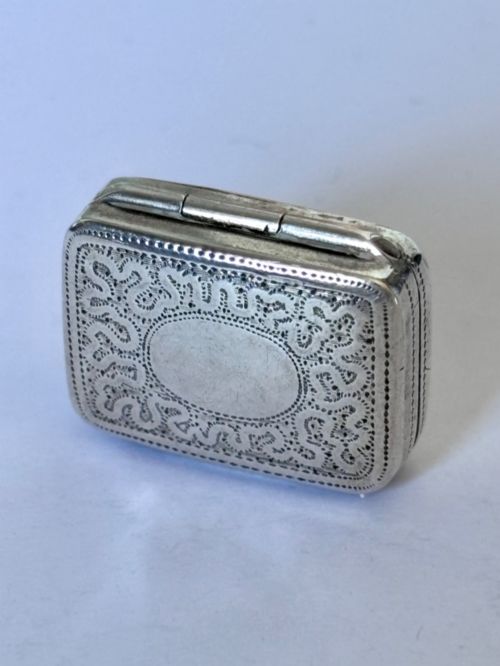
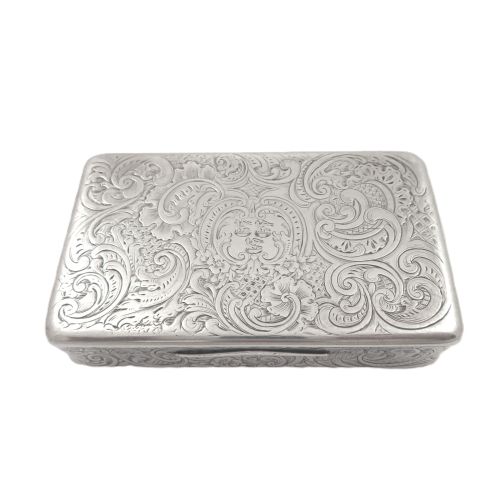
Silversmiths and metalworkers shaped sterling silver, silver gilt, brass, and copper using techniques such as casting, raising, and die-stamping. Many boxes feature hand-chased borders paired with engine-turned geometric patterns or freehand engraved scrolls.
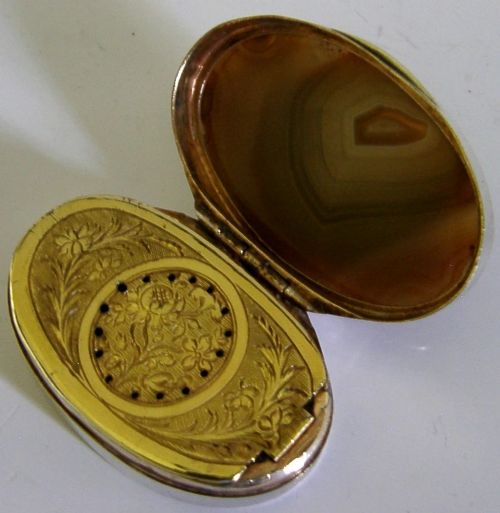
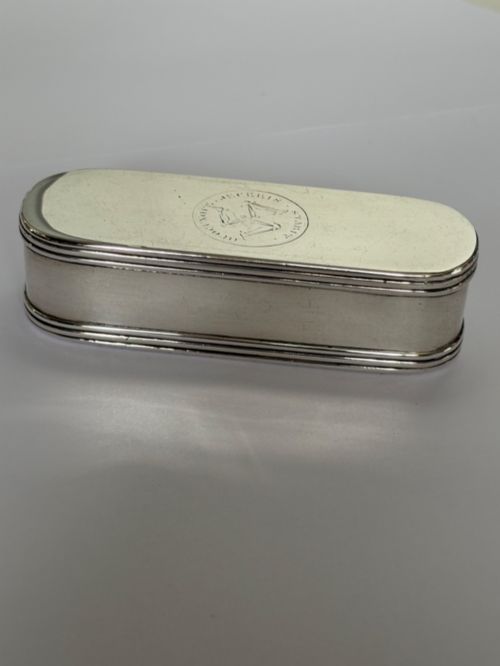
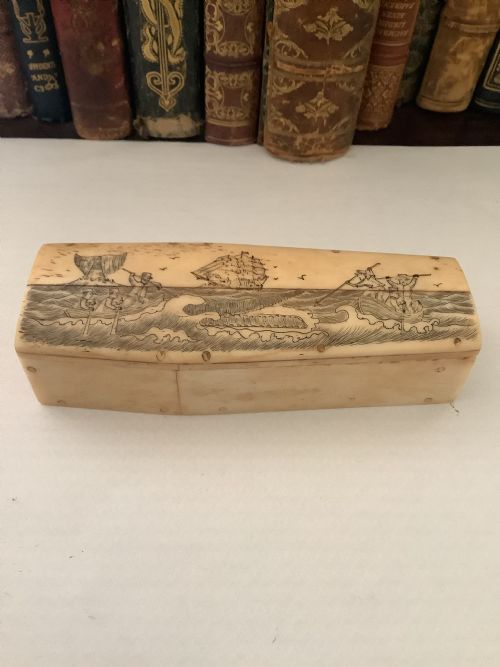
Specialist engravers scored names, dates, mottoes, and pictorial scenes directly into the metal surface using sharp gravers. Interior gilding, known as silver gilt or wash gold, was applied to silver boxes to prevent the acidic tobacco from tarnishing the metal.
A brass miser box from 1914 opens with a secret mechanism designed to guard its contents from borrowing friends.
What varies in quality
Quality rests in the crispness and depth of the engraving, distinguishing a fluid, hand-cut scroll or detailed crest from a shallow, mechanical scratch. Weight and gauge of the metal also dictate standard, heavier solid silver boxes offering a more substantial feel in the hand.
The precision of the box's hinge and the tightness of its closure determine functional excellence, ensuring the lid snaps shut flush against the body. Maker attribution further elevates a piece, with recognised silversmiths commanding greater regard for their refined proportions and interior finishes.
Samuel Pemberton·Thomas Johnson·Cornelius Bland·Robert Thornton·Edward Smith·Joseph Willmore·John Bettridge·John Taylor·Jane Brownett·Alexander Jones·David McDonald
The Engraved Snuff Box Glossary
- Vinaigrette
- A small ornamental box featuring an internal pierced grille that held a sponge soaked in aromatic vinegar. These pieces date predominantly from the Georgian and Victorian eras.
- Silver Gilt
- Sterling silver that has been coated with a thin layer of gold, often found on the interior surfaces of snuff boxes to protect against corrosion. It is also referred to as wash gold.
- Engine-Turning
- A mechanical decoration technique that cuts intricate, precise geometric patterns into metal surfaces using a lathe. It provides a durable background texture for crests and ciphers.
- Chasing
- A metalworking technique where the artisan pushes and displaces metal from the front using hammers and punches rather than cutting it away. This creates raised relief borders and floral motifs.
- Assay Mark
- A stamp or series of stamps indicating the purity of the metal, the city of testing, and the year of manufacture. British pieces typically show a standard mark, a town mark, and a date letter.
Engraved Snuff Box: Frequently Asked Questions
What is the difference between a snuff box and a vinaigrette?
A snuff box is built simply to store and dispense dry powdered tobacco for the user. A vinaigrette includes a hinged inner grille meant to hold a sponge soaked in scented vinegar.
You can tell them apart by opening the lid to check for that perforated internal metal plate, which distinguishes the perfume container from the tobacco holder.
How do I date a silver snuff box?
British silver boxes carry hallmarks that include a specific letter denoting the exact year of assay and testing. Checking these stamped assay marks against standard regional charts reveals the precise year and town of creation.
Style clues like Rococo Revival curves or plain Georgian cartouches also help narrow down the decade when hallmarks are rubbed.
Why are some snuff box interiors gold?
The gold appearance on silver boxes comes from a process called silver gilt, where a thin layer of gold is applied to the interior. This protected the silver base metal from the corrosive acids found in tobacco.
Finding gilt inside a box indicates a higher grade piece intended to withstand regular daily use without tarnishing the metal.
Who used brass and copper snuff boxes?
Working-class men, soldiers, and tradesmen carried brass, copper, and steel snuff boxes inscribed with personal names, occupations, and dates. Miners and railway workers often owned these utilitarian pieces as personal mementos.
These base-metal boxes frequently record specific historical events or workplace affiliations through contemporary hand-engraving scratched onto the surface.