




Engraved Silver Sugar Bowl
An engraved silver sugar bowl brings tactile weight to the table, and this selection ranges from Georgian baskets to Victorian bowls.
Engraved Silver Sugar Bowl
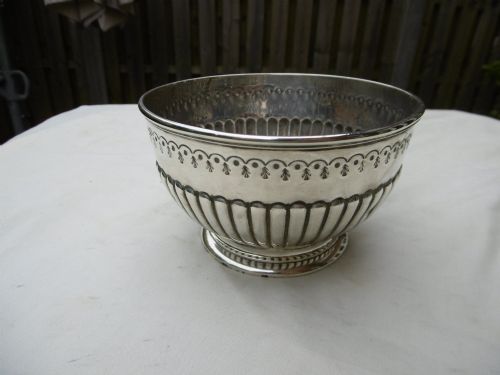
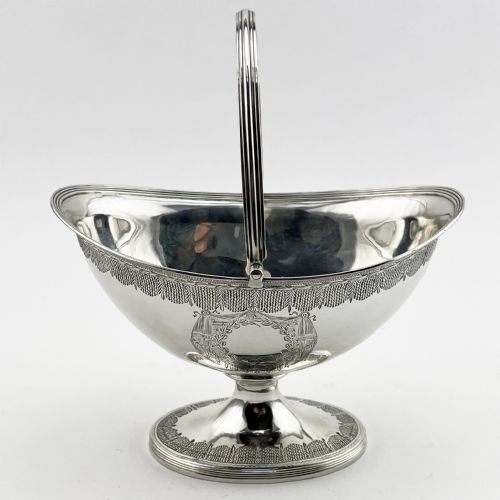
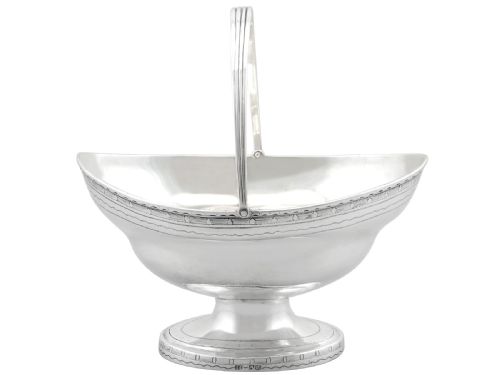
When you search for an engraved silver sugar bowl, you are looking at hollowware designed for the formal tea service, principally taking the form of open bowls, basins, or swing-handled baskets. The pieces on this page span the Georgian, Victorian, and Edwardian periods, stretching from the late eighteenth century into the opening years of the twentieth.
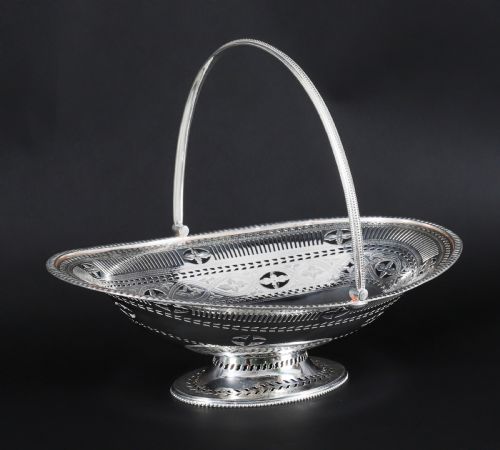
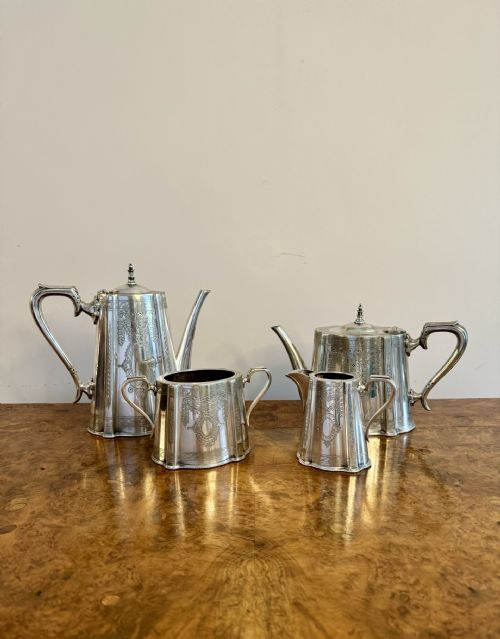
The most common forms you will meet here are footed bowls and handled sugar baskets, alongside occasional sweetmeat baskets and matched cream and sugar sets. Origins stretch across English, Irish, Scottish, and Russian workshops, reflecting diverse regional assay offices and maker marks.
Materials and construction
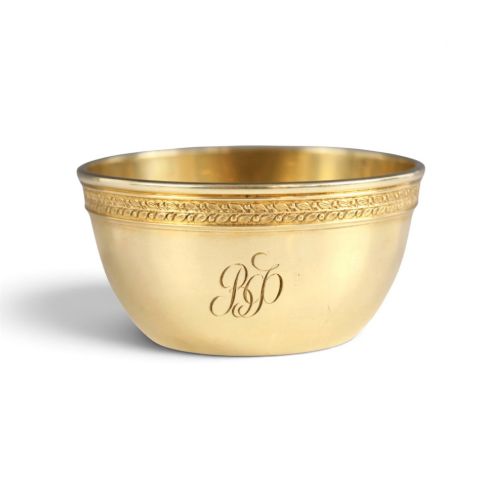
The primary material across these listings is solid sterling silver, accompanied by silver plate, Old Sheffield plate, and electroplated nickel silver, sometimes finished with silver-gilt, vermeil, or a gold wash. Makers shaped these metals through casting, hammering, and piercing, then applied detailed hand-engraving.
Surface ornament relies on crisp graver work, creating floral cartouches, bright-cut banding, and neoclassical swags that catch the light. Handles and swing-bails are frequently pinned or cast separately before being attached to the main body.
Listings feature sterling silver, silver plate, and gold wash across Georgian, Victorian, and Edwardian periods.
Assessing quality and execution
Quality rests on the crispness of the chasing and engraving, where deeper, hand-cut lines hold their definition better than worn or shallow tooling. Heavy gauge silver provides a reassuring balance in the hand, whereas plated items reveal differences in the durability of the underlying base metal.
The distinction between standard commercial production and masterwork output shows in the finish of interior gilding, the clean joinery of applied feet or handles, and legible hallmarks that confirm the maker and date of assay.
Peter and William Bateman·Stephan Wekeva·Walker and Hall·Henry Chawner·Robert Hennel
The Engraved Silver Sugar Bowl Glossary
- Sterling silver
- A silver alloy containing 92.5 percent pure silver and 7.5 percent other metals, usually copper, chosen for durability. This is the standard metal for fine British tableware.
- Old Sheffield plate
- An early form of composite metal made by fusing a thin sheet of sterling silver to a thicker copper base. It is identified by a thin line of exposed copper along cut edges.
- Bright-cut engraving
- A technique using faceted gravers to cut shallow angled trenches that reflect light like tiny mirrors. It creates brilliant geometric and floral borders on Georgian silver.
- Sweetmeat basket
- A small, often footed or handled vessel designed to hold sweet confections, nuts, or dried fruits. They frequently feature pierced and engraved sides.
- Silver-gilt
- Sterling silver that has been coated with a thin layer of gold on its surface. It provides a rich, warm two-tone effect, particularly inside open bowls.
Engraved Silver Sugar Bowl: Frequently Asked Questions
How do I date a silver sugar bowl?
Dating relies primarily on the stamped hallmarks found on solid silver pieces, which include maker marks, standard marks, and date letters corresponding to specific assay offices.
Style also offers clear clues, moving from the neoclassical restrained lines of the Georgian period to the heavier, ornate embossing favoured by Victorian silversmiths.
What is the difference between a bowl and a basket?
Sugar bowls are typically rigid, open-topped vessels intended to sit steadily on a tea tray or sideboard during service.
Sugar baskets generally incorporate a movable swing-handle and often feature pierced or openwork bodies, reflecting their origins in the presentation of refined table sweets.
Can I use antique silver for daily dining?
Solid silver is durable enough for regular use, provided it is washed by hand in warm soapy water and dried immediately with a soft cloth.
Avoid abrasive cleaners and modern dishwashers, which can damage hand-engraved details and strip away delicate gilding.
Why are some interiors gold coloured?
Gold wash or vermeil was applied to the inside of silver sugar bowls to protect the metal from the corrosive effects of acidic contents like refined sugars and jams.
This technique also created a striking contrast between the polished silver exterior and the rich, warm interior finish.