



Engraved Silver Claret Jug
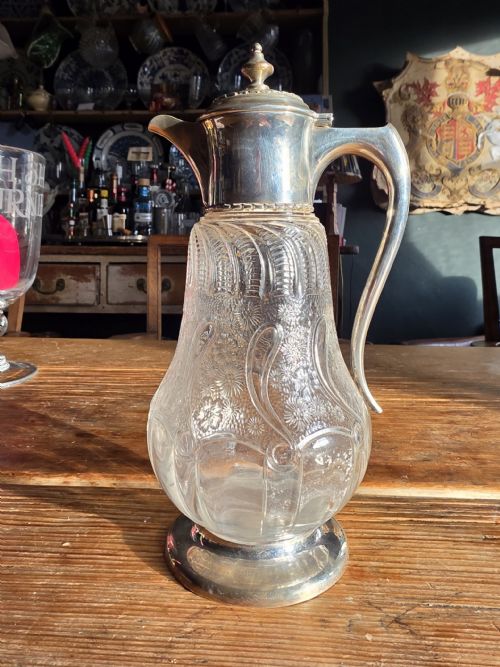
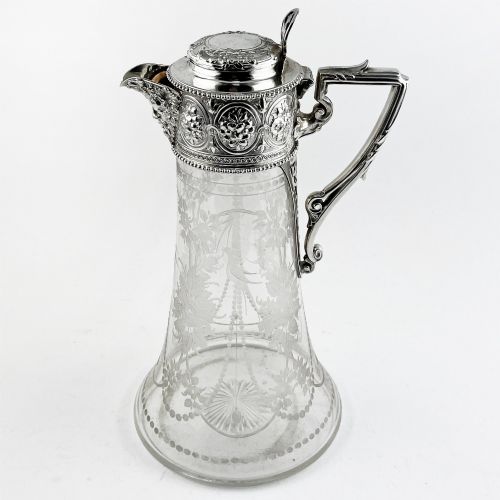
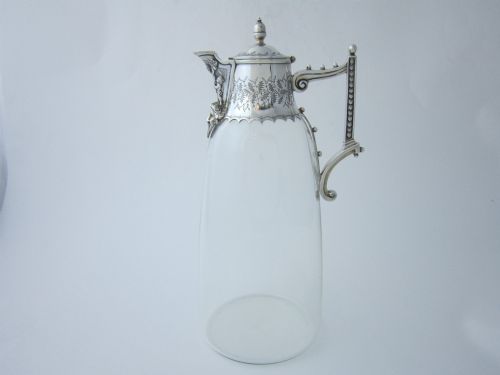
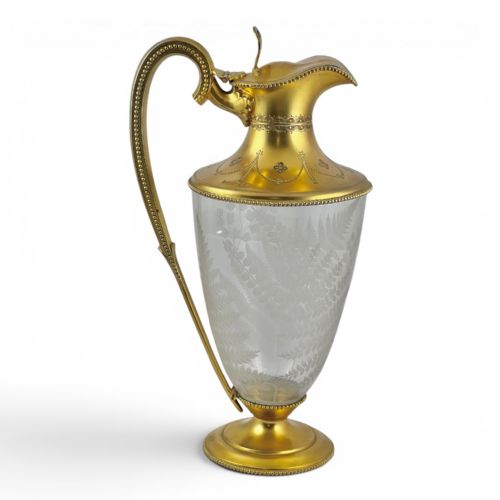
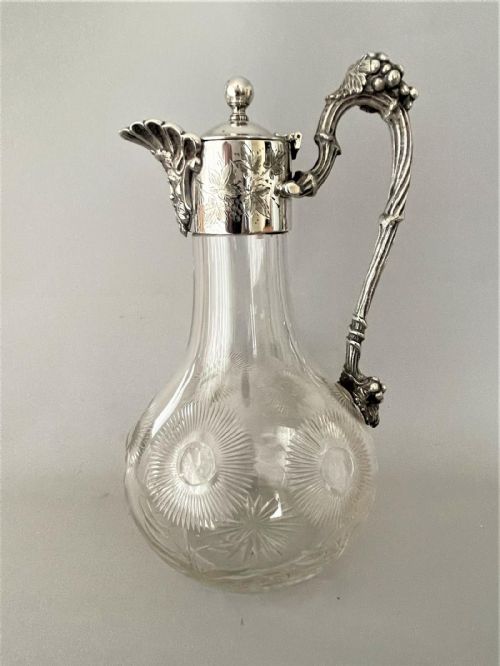
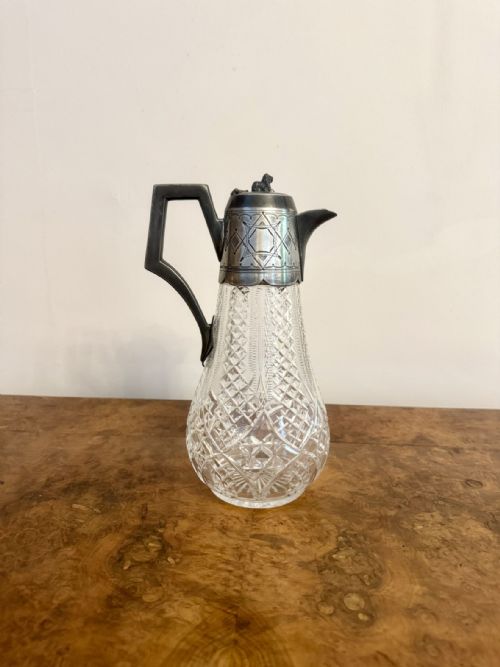
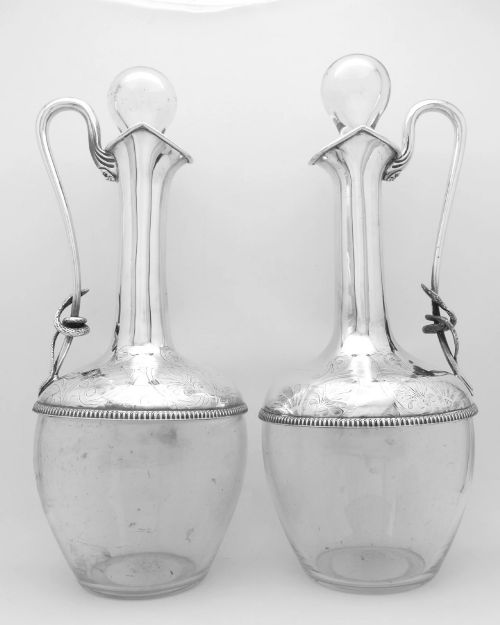
These pieces are an engraved silver claret jug, combining glass bodies with precious metal mounts for serving wine.
Engraved Silver Claret Jug
When you examine an engraved silver claret jug, you encounter a vessel designed for the formal dining table. The form combines a glass body with metal mounts, handles, and hinged lids, originating primarily from the Victorian and Edwardian periods.
The body of the vessel takes various shapes, including globe forms, ewers, and tall decanters. The glass portion frequently displays wheel-engraved or cut decoration depicting floral motifs, ferns, or birds.
Makers utilised both sterling silver and silver plate for the mounts. The overarching style reflects the period of manufacture, ranging from Neoclassical elegance to elaborate Victorian Rococo Revival and organic Art Nouveau forms.
How they were made
Makers produced the glass bodies using blowing techniques before applying wheel engraving or deep cutting. The designs often incorporated botanical subjects, such as vines, grapes, and leaves, etched directly into the crystal or glass surface.
The metal mounts, handles, and collars were cast and chased separately in sterling silver or silver plate, sometimes finished with silver gilt. These mounts were then secured to the glass body, often incorporating hinged domed covers and specialised spouts, such as Bacchus masks.
Several examples incorporate mischievous pineapples, swans, and serpents directly into the handle and finial designs.
What varies in quality
The distinction between average and exceptional pieces rests upon the crispness of the glass engraving and the weight of the metal. Superior examples display deep, hand-cut facets and intricate wheel engraving rather than light, acid-etched surfaces.
The architectural balance of the handle and the detail in cast elements, such as serpent handles or Bacchus spouts, determine the caliber of the work. Maker attribution to known firms also influences the standing of the piece.
William Comyns·Asprey and Co. Ltd·William Davenport·William Hutton
The Engraved Silver Claret Jug Glossary
- Silver plate
- A base metal, such as copper or nickel silver, coated with a thin layer of pure silver. Old Sheffield Plate involves fusing silver to a copper core.
- Silver gilt
- Sterling silver that has been coated with a thin layer of gold on the surface. This technique provides a rich interior or accent finish.
- Bacchus mask
- A decorative motif depicting the face of Bacchus, the god of wine, often incorporated into the spout or handle terminal of a jug.
- Wheel engraving
- A technique where a glass vessel is held against rotating abrasive wheels of various sizes to cut intricate designs into the surface.
Engraved Silver Claret Jug: Frequently Asked Questions
How were these jugs used?
These vessels served claret and other red wines at formal nineteenth-century dining tables. Hosts used them to decant and present wine from larger bottles.
The hinged lid kept the contents covered between pours while allowing the server to operate the vessel with one hand.
Are the glass bodies original?
Most pieces retain their original glass bodies, which were fitted specifically to the metal mounts by the maker. The glass and metal show matching wear consistent with age.
Replacement glass bodies are uncommon due to the precise dimensions required for the collar and handle attachments.
How do I clean the silver and glass?
Cleaning requires mild soap and warm water for the glass interior, avoiding abrasive brushes that might scratch the surface. Silver mounts should be treated with a gentle silver polish applied with a soft cloth.
Submerging pieces with hollow handles or cement-secured mounts in hot water should be avoided to prevent damage.
What periods do these jugs represent?
The selection spans the nineteenth and twentieth centuries, with a heavy concentration of Victorian and Edwardian examples. Production dates range from the Regency era through the Art Nouveau period to mid-century pieces.
Stylistic shifts trace the transition from Neoclassical restraint to Victorian ornamentation and subsequent organic forms.