



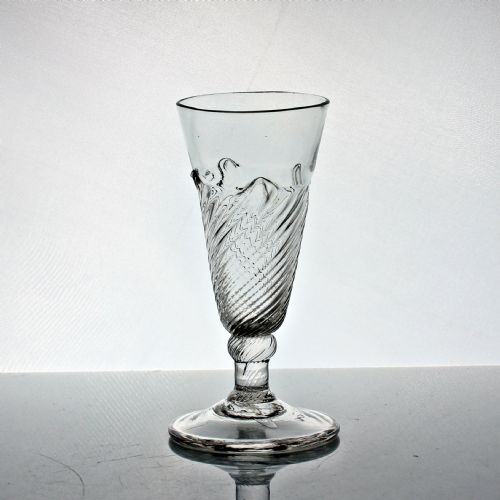


Engraved Glass Ale Goblet
An engraved glass ale goblet brings the tactile weight of Georgian and Edwardian drinking traditions directly to your table.
Engraved Glass Ale Goblet
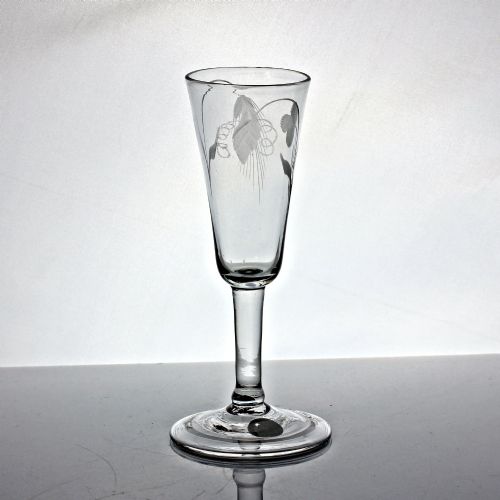
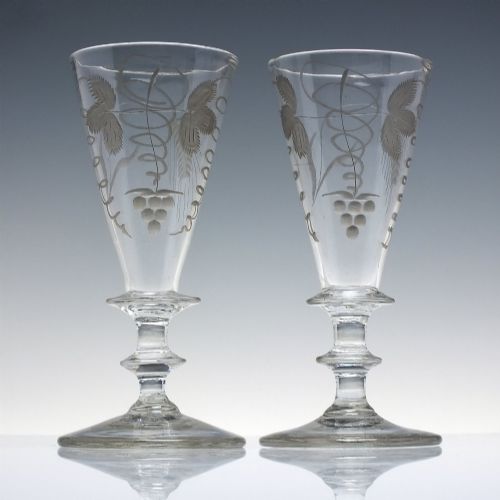
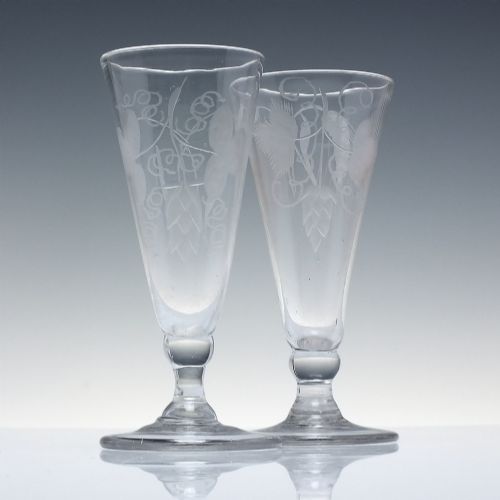
An engraved glass ale goblet is a drinking vessel designed for malt beverages, typically featuring wheel or diamond-engraved decoration. The form spans several centuries, with examples appearing across the Georgian, Regency, and Edwardian periods.
You are most likely to meet Georgian pieces on this page, often tall and narrow in form, designed to preserve the head on strong ales and barley wines. These vessels frequently display botanical engravings such as hops and barley.
The material presence ranges from eighteenth-century lead glass and flint glass to later crystal and clear glass. Formats extend from dwarf ale glasses and plain stem variants to large serving rummers.
Materials and construction methods
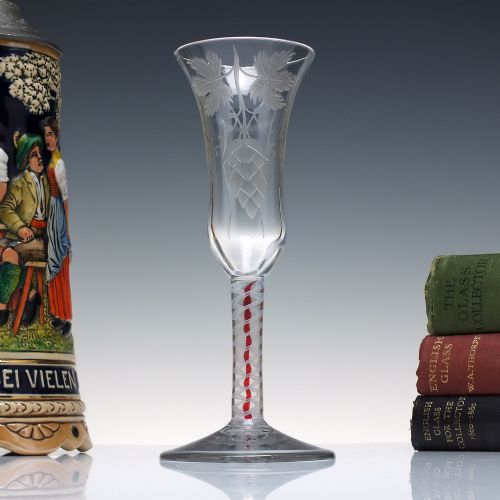
The manufacture of these drinking vessels relies heavily on lead glass and flint glass, which provided the clarity and heft required for deep wheel engraving. Makers also utilised specialised techniques like air twists, red colour twists, and double series opaque twists within the stems.
Surface decoration was achieved through wheel engraving or diamond point work, frequently depicting agricultural motifs. Enamel details occasionally supplement the glass surface on specific pieces from the period.
Engraved Glass Ale Goblet Retail Price Guide 2026
Typical asking prices for engraved glass ale goblet among the pieces listed under this phrase on Sellingantiques today, from the lower quarter to the upper quarter. They describe what is for sale here now, not the wider market.
Assessing quality in historical glassware
Quality in an engraved glass ale goblet rests upon the crispness of the wheel work and the optical purity of the metal. Fine examples exhibit deep, articulate engraving of hops and barley that catches the light without blurring.
The elegance of the stem formation also dictates distinction, separating simple drawn forms from complex air twists or colour twists. Proportions matter greatly, particularly in how the bowl balances against the foot.
Richardson
The Engraved Glass Ale Goblet Glossary
- Ale glass
- A tall, narrow drinking vessel specifically shaped to serve historical malt beverages and retain carbonation. These pieces often feature trumpet bowls.
- Air twist
- A decorative stem formation created by drawing out internal air bubbles during the glassblowing process. This technique produces spiral threads running down the length of the stem.
- Opaque twist
- A stem style incorporating white or coloured enamel glass rods twisted within the clear metal. Double series versions combine multiple twist patterns.
- Rummer
- A large, heavy-balled drinking glass introduced in the late eighteenth century for heavier wines, rum, and ales. They frequently rest on a short stem and conical foot.
- Flint glass
- An early British term for high-quality lead glass prized for its brilliance and refractive index. It offered a resonant ring when struck.
Engraved Glass Ale Goblet: Frequently Asked Questions
How do I date an ale glass?
Dating relies heavily on form, manufacturing technique, and material composition. Eighteenth-century examples often display pontil marks, simpler metal characteristics, or specialised stem twists.
Later Edwardian pieces tend to show heavier proportions and more mechanised finishing. Comparing the engraving style against known period motifs provides further chronological context.
What is an air twist stem?
An air twist is an internal spiral optical effect created when trapped air bubbles are elongated during the drawing of the stem. It produces a delicate, shimmering column beneath the bowl.
This technique is predominantly associated with mid-eighteenth-century English lead glass production.
Why are hops and barley engraved?
Hops and barley motifs served as direct thematic references to the contents of the vessel, celebrating brewing and agriculture. These agrarian symbols were standard decorative choices for tavern and domestic drinking glasses.
Their presence helps confirm the original intended function of the stemware.
Can I use these glasses today?
These historical vessels can be used carefully, provided they are washed by hand in lukewarm water without harsh detergents. Sudden temperature changes must be avoided to protect the aged glass.
Many collectors prefer to display them or reserve them for very special occasions.