









Engraved Clear Glass Stemware
These pieces of engraved clear glass stemware are drinking vessels bearing wheel-cut or etched decoration, offering collectors tactile connection to centuries of social history.
Engraved Clear Glass Stemware
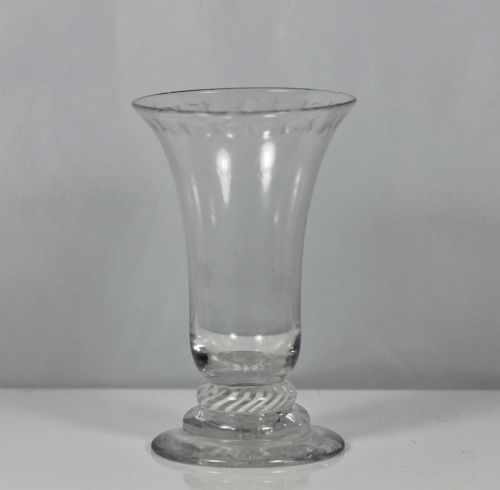
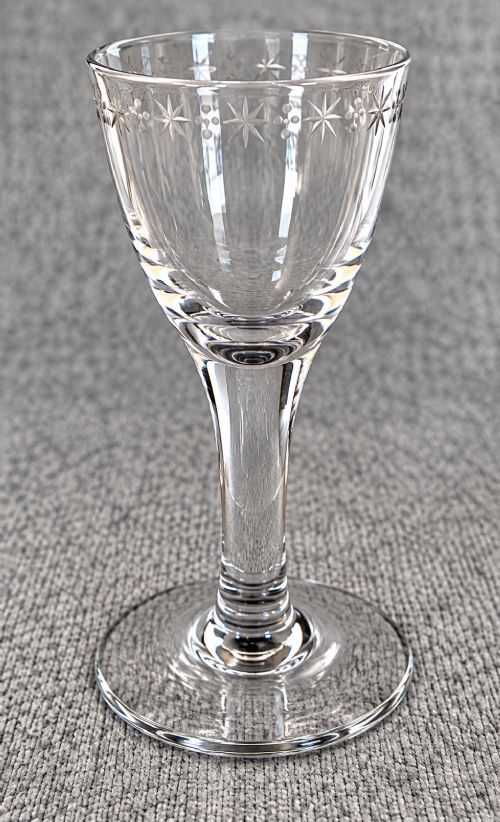
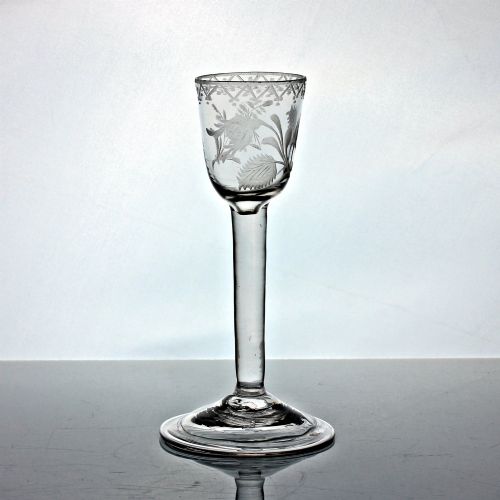
Engraved clear glass stemware encompasses drinking vessels ranging from mid-18th-century dram glasses and wine goblets to 19th-century rummers and Edwardian services. Collectors encounter diverse forms on this page, including ale glasses, champagne coupes, and rinsers.
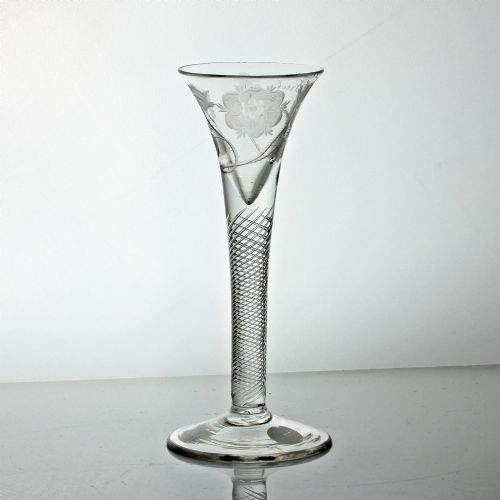
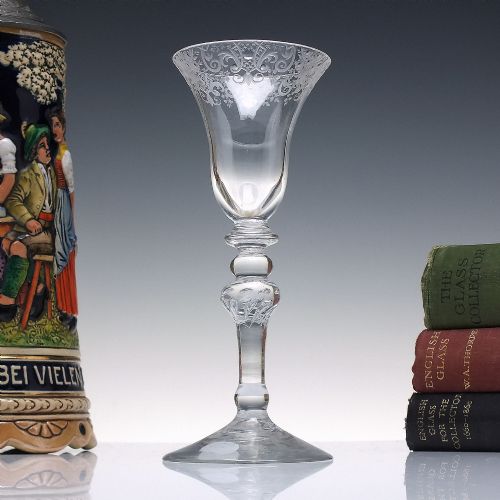
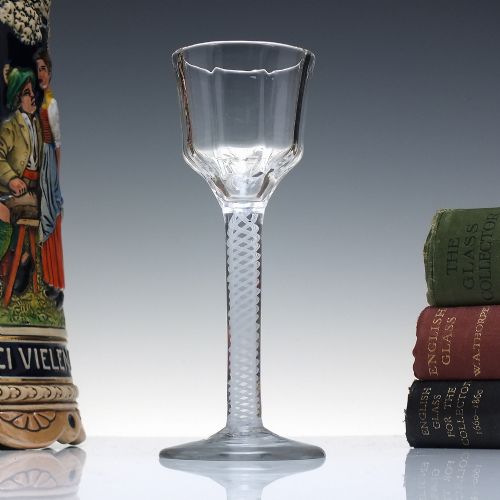
The 18th-century examples frequently feature baluster, plain, or air twist stems supporting decorated bowls, while later Victorian and Art Deco pieces demonstrate shifts toward suites and facet-cut profiles.
Materials and Techniques
Makers utilised lead glass, flint glass, and clear lead crystal, materials prized for their weight, clarity, and capacity to hold crisp wheel-engraving or etching.
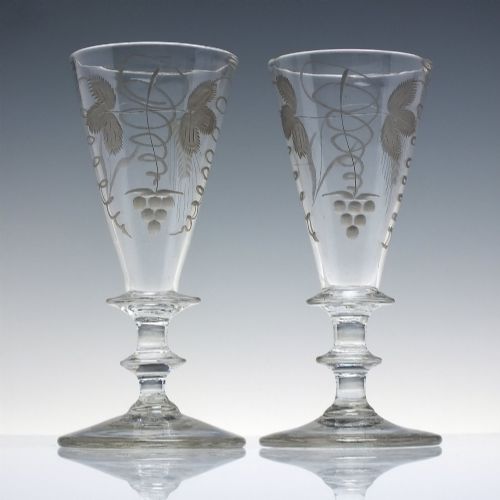
Decoration was applied by hand using abrasive wheels or acid etching, producing motifs such as hop and barley, armorial crests, and floral swags on bowls and stems.
Engraved Clear Glass Stemware Retail Price Guide 2026
Typical asking prices for engraved clear glass stemware among the pieces listed under this phrase on Sellingantiques today, from the lower quarter to the upper quarter. They describe what is for sale here now, not the wider market.
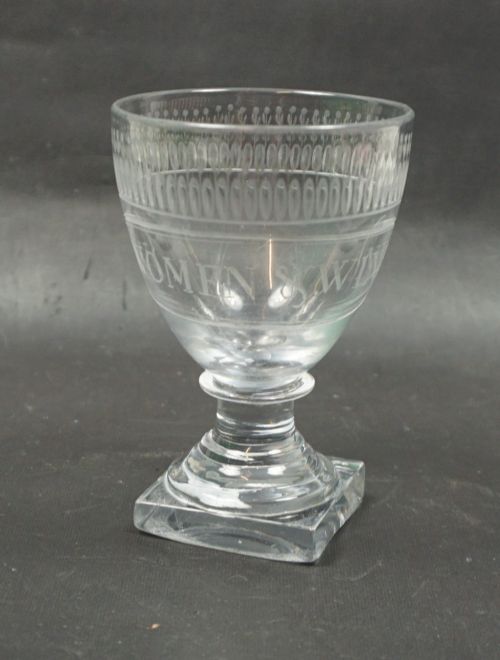
One cheerful rummer carries the hearty social sentiment 'Women & Wine' engraved across its bowl.
Quality and Execution
Quality rests on the depth and precision of the engraving, where skilled wheel-work displays clean lines and dimensional shading rather than surface scratching.
The proportion of the vessel, the clarity of the metal free from heavy internal striae, and the integrity of the foot rim distinguish superior specimens.
Moser Bohemian·Webb Corbett
The Engraved Clear Glass Stemware Glossary
- Air twist
- A stem enclosing elongated spiral channels of air created by drawing bubbles within the molten metal before twisting.
- Baluster stem
- A heavy, swelling stem shape reminiscent of architectural columns popular in mid-18th-century drinking vessels.
- Rummer
- A large, capacious goblet form used for wine, punch, or ale, emerging strongly in the late 18th and early 19th centuries.
- Ogee bowl
- A bell-shaped drinking vessel bowl curving outward at the rim and inward toward the base.
- Folded foot
- A glass foot possessing a rim turned underneath to add strength and stability to the base.
Engraved Clear Glass Stemware: Frequently Asked Questions
How do I identify an 18th-century glass?
Look for characteristics such as pontil marks on the base, folded feet, and traditional stem formations like air twists or balusters.
Material composition also assists, as lead metal exhibits specific heft and refractive qualities unique to the period.
What are Jacobite wine glasses?
These are 18th-century vessels engraved with secret political symbols, such as roses and oak leaves, used by supporters of the exiled Stuart dynasty.
They form a distinct collecting category due to their historical association and covert iconography.
Can I use antique stemware today?
Many collectors enjoy using robust rummers and wine glasses for special occasions, treating the glass with careful hand-washing.
Fragile items with delicate twists or thin bowls receive more conservative handling and display.
How do air twist and opaque twist stems differ?
Air twists contain entrapped spiral threads of air within the clear stem material, formed while the glass is hot.
Opaque twists incorporate white or coloured enamel glass rods drawn into spiral patterns inside the stem.