
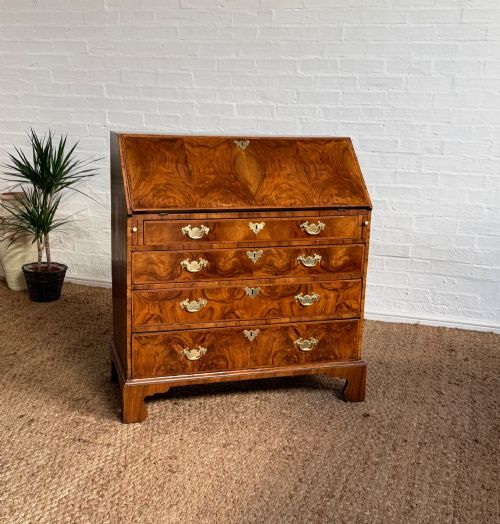
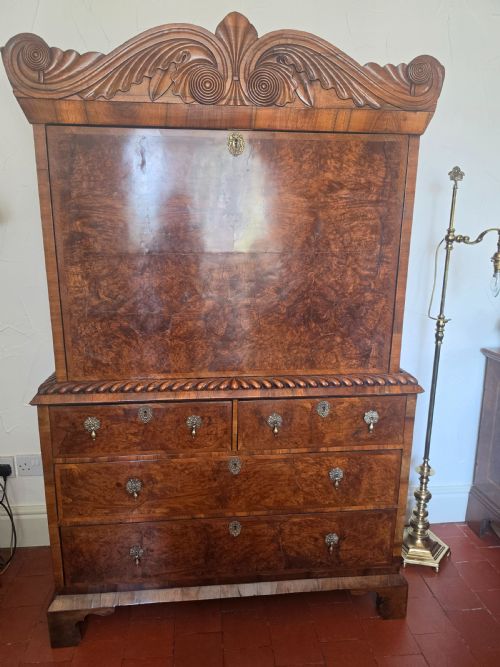
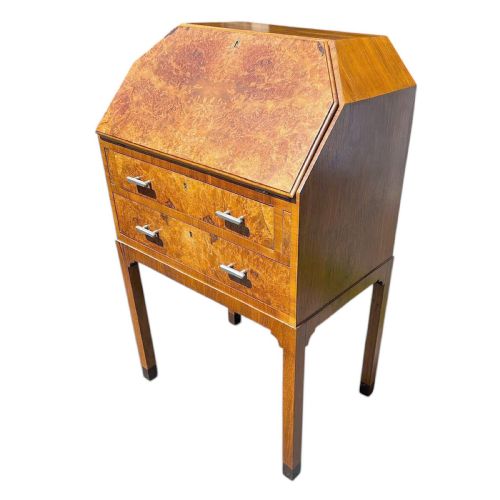
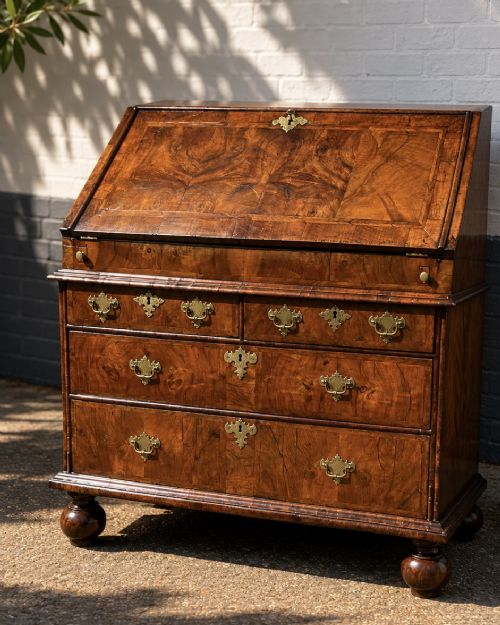




English Walnut Secretary Desk
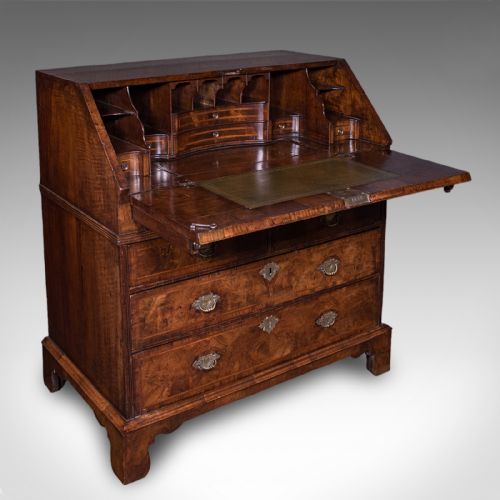
An english walnut secretary desk brings warmth and practical storage together, offering a hinged writing surface and fitted interior that appeals to traditional and modern interiors alike.
English Walnut Secretary Desk
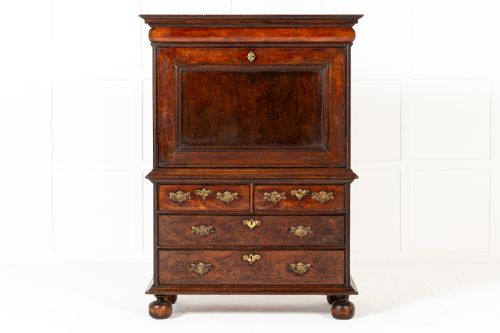
An english walnut secretary desk encompasses fall-front bureaus, escritoires, and tall bureau bookcases spanning from the late seventeenth century through the Georgian era, alongside later twentieth-century Art Deco interpretations.
The pieces on this page range from compact kneehole writing desks to monumental bureau bookcases equipped with glass doors and internal compartments.
Early examples frequently date to the William and Mary, Queen Anne, and George I periods, while subsequent pieces reflect Edwardian craftsmanship and nineteen-thirties modernist designs.
Materials and construction
Cabinetmakers utilised solid walnut and decorative veneers, often selecting burr walnut to create highly figured patterns across the drop-front writing flaps and drawer fronts.
Secondary timbers such as oak provide structural integrity to the carcasses and internal drawer linings, while brass handles, escutcheons, and hinges secure the hardware.
Writing surfaces frequently incorporate fitted leather panels, and specialised pieces integrate glass panels within upper bookcase sections.
Listings span seventeenth-century William and Mary forms through Georgian eras to Art Deco burr walnut writing desks from nineteen thirty.
Assessing quality
The refinement of the timber figure and the symmetry of the walnut veneers set the visual standard for each piece.
Original patination and the survival of early brass hardware contribute significantly to the standing of an individual secretary desk.
The complexity of the internal configuration, including secret drawers and pigeonholes behind the fall-front, distinguishes standard bureaus from exceptional cabinetwork.
The English Walnut Secretary Desk Glossary
- Escritoire
- A writing cabinet featuring a fall-front flap that lowers to reveal a fitted interior of small drawers and pigeonholes. This term appears frequently on seventeenth and early eighteenth-century examples.
- Burr walnut
- A specialised timber cut from walnut tree growths, prized for its swirling grain patterns and luxurious appearance on drawer fronts and writing surfaces.
- Fall front
- A hinged writing flap that pulls down to horizontal for correspondence and pushes back up to conceal the interior. It serves as the defining operational feature of these desks.
- Kneehole bureau
- A compact desk design featuring a central recess for the user's legs, flanked by pedestals of small drawers.
- Bureau bookcase
- A tall case piece combining a lower writing desk with an upper shelving or display cabinet enclosed by doors.
English Walnut Secretary Desk: Frequently Asked Questions
How do I use a secretary desk?
The drop-front writing surface lowers to provide a stable desk area for writing or placing a laptop, while the internal compartments organise correspondence and stationery.
When not in use, the flap folds up to conceal the workspace and presents a tidy cabinet front to the room.
Where does walnut come from in these desks?
English walnut was widely utilised by cabinetmakers during the late seventeenth and early eighteenth centuries before landowners began planting continental walnut varieties.
Craftsmen sliced the timber into thin veneers to display rich grain patterns across large flat surfaces like fall-fronts and cabinet doors.
How do I distinguish a George I desk?
George I period desks, dating from the early eighteenth century, often feature highly figured walnut veneers and herringbone banding framing the drawer edges.
These pieces typically display restrained proportions and clean lines without the heavy ornamentation seen in later periods.
Will an antique desk fit a modern chair?
Kneehole desks and certain fall-front bureaus require careful measurement of the knee clearance height, as historical seating heights differ from contemporary standards.
Checking the clearance beneath the lowered writing flap ensures comfortable daily use in a modern study.