


Early English Furniture Bureau
An early english furniture bureau combines secret compartments and a sloping writing flap in walnut, oak, and yew wood.
Early English Furniture Bureau
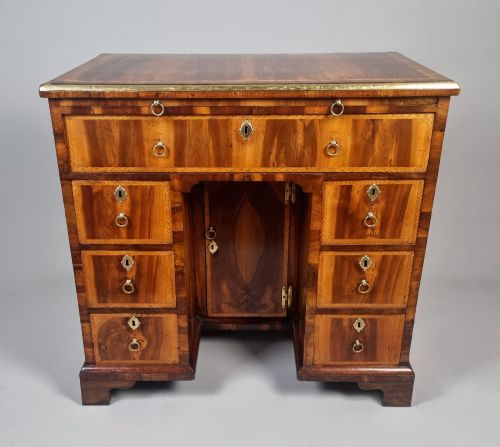
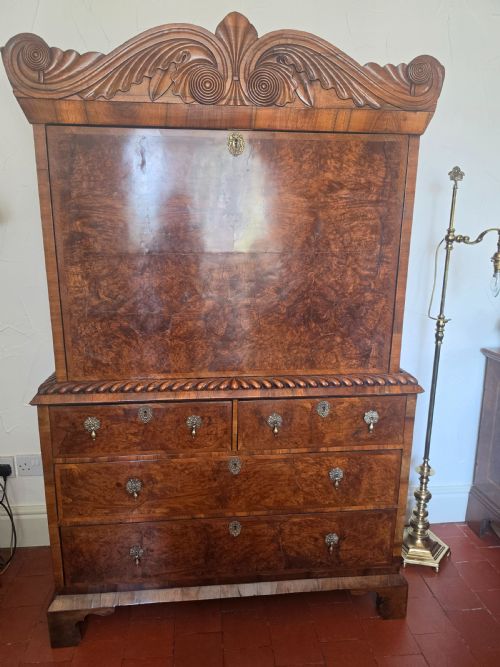
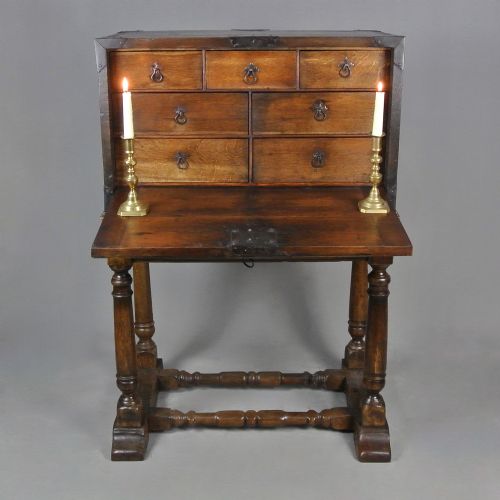
When you search for an early english furniture bureau, you encounter writing furniture built during the seventeenth and eighteenth centuries. These pieces encompass oak strong boxes, walnut kneehole desks, and bureau bookcases spanning the Charles II, William and Mary, Queen Anne, and Georgian periods.
The versions you are most likely to meet on this page include walnut bureaux and kneehole desks with fitted interiors. These items originated across the 17th Century, 18th Century, 1700, and Georgian eras, showcasing utilitarian writing cabinets and chests of drawers alongside dedicated desks.
Makers constructed these early english furniture bureau designs to provide secure storage and a stable writing surface. The forms range from compact veneered bureau cabinets to heavy oak boxes and large secretaire cabinets utilising traditional joinery.
Materials and construction
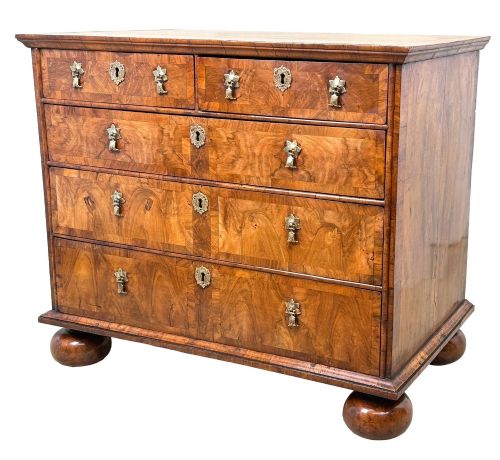
Craftsmen utilised solid oak and walnut, frequently applying walnut veneers and feather-banded borders to flat surfaces. Yew wood also appears in the construction of specialised tables and desks from the period.
Metalwork played a functional and decorative role, with iron used in robust strong boxes and brass fitted for handles and escutcheons. Glass panels were incorporated into tall secretaire cabinets and bureau bookcases.
An early seventeenth-century oak strong box kept household valuables safe long before built-in wall safes existed.
Assessing quality
The standard of an early english furniture bureau rests upon the selection of timber veneers and the intricacy of the interior fittings. Pieces featuring figured walnut and detailed feather-banding demonstrate a higher grade of cabinet-making.
Original brass hardware and intact surface patination elevate the standing of a desk or bureau. The retention of early glass and period drawer linings distinguishes finer examples from heavily restored pieces.
The Early English Furniture Bureau Glossary
- Bureau
- A writing desk featuring a sloping lid that opens to reveal pigeonholes and small drawers. These items date across the seventeenth and eighteenth centuries.
- Kneehole desk
- A compact writing table with a central recess flanked by pedestals of small drawers. This form frequently dates to the William and Mary and Queen Anne periods.
- Secretaire cabinet
- A tall cabinet incorporating a pull-down writing drawer or flap. They often feature upper shelving enclosed by glass doors.
- Feather-banding
- A decorative inlay technique using veneer strips arranged in a herringbone pattern around drawer edges. This ornamentation appears on walnut pieces from the early eighteenth century.
Early English Furniture Bureau: Frequently Asked Questions
What is a kneehole desk?
A kneehole desk is a form of writing furniture featuring a central recess beneath the work surface, flanked by banks of small drawers.
These pieces typically date to the late seventeenth and early eighteenth centuries, constructed in walnut with fitted desk interiors.
How do I identify a walnut bureau?
Walnut bureaux feature a sloping fall-front that opens to disclose internal compartments for correspondence and ledgers.
They often incorporate burl or figured veneers and feather-banded borders, supported by bracket feet or bun feet.
What periods do these desks cover?
The available selection spans the seventeenth and eighteenth centuries, encompassing the Charles II, William and Mary, Queen Anne, George I, and Georgian eras.
Construction styles shift from heavy seventeenth-century oak to refined walnut and yew wood designs of the 1700s.
Where were these cabinets used?
These items functioned as writing and storage furniture in domestic parlours, libraries, and private studies.
Owners stored valuable documents, ledgers, and correspondence within the secure internal drawers and compartments.