

English Victorian Glass
English victorian glass captures the colour and dexterity of nineteenth-century domestic design through tableware, lighting and decorative vessels.
English Victorian Glass
When searching for english victorian glass, collectors encounter a diverse array of nineteenth-century objects ranging from functional tableware to decorative display pieces. The selection includes richly coloured vessels such as ruby, pink, yellow, and green lustres, alongside intricate multi-horn epergnes and tall table lamps.
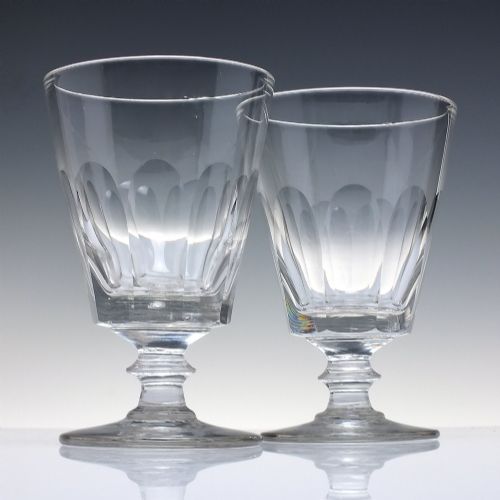
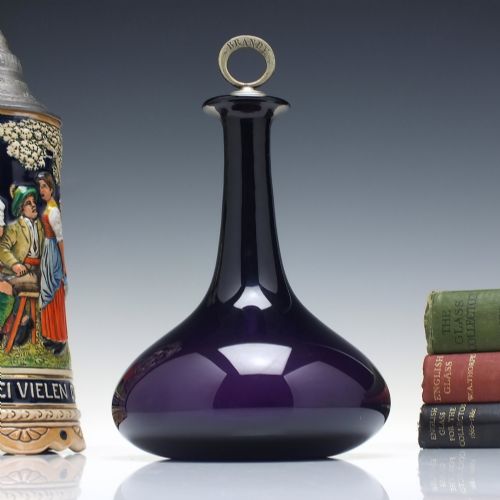
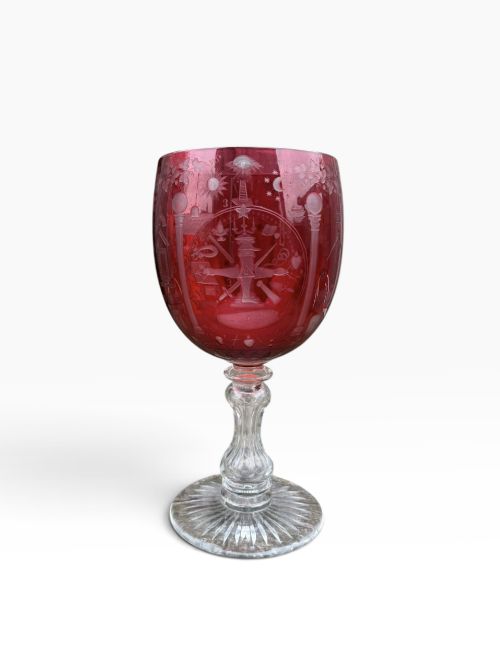
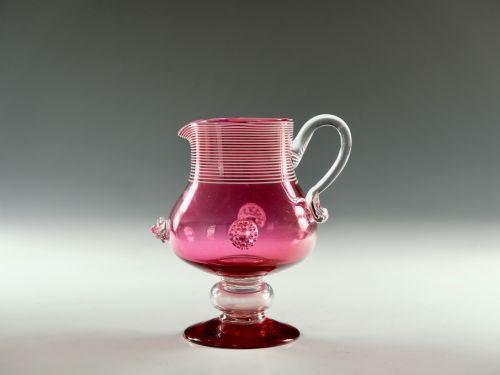
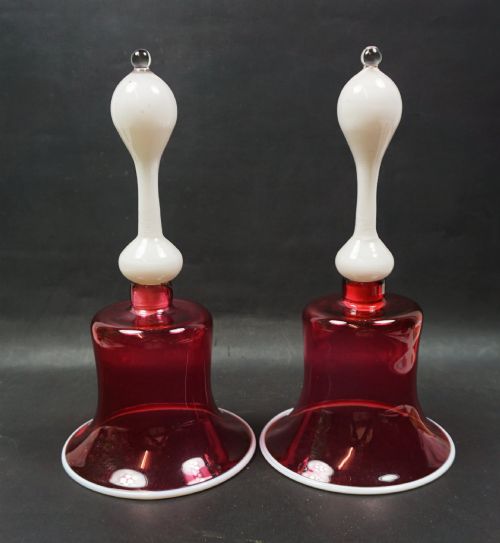
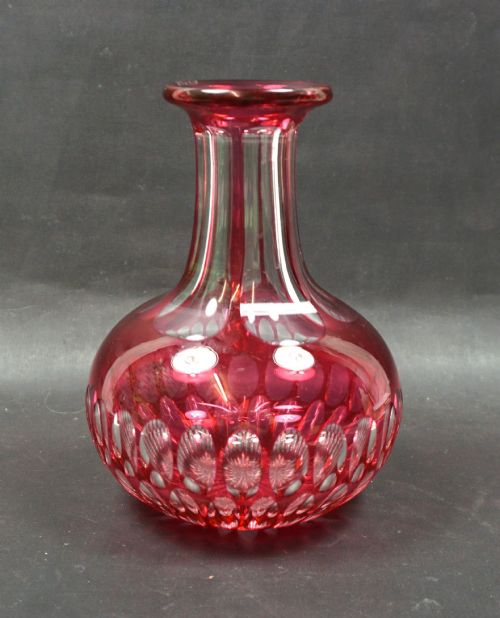
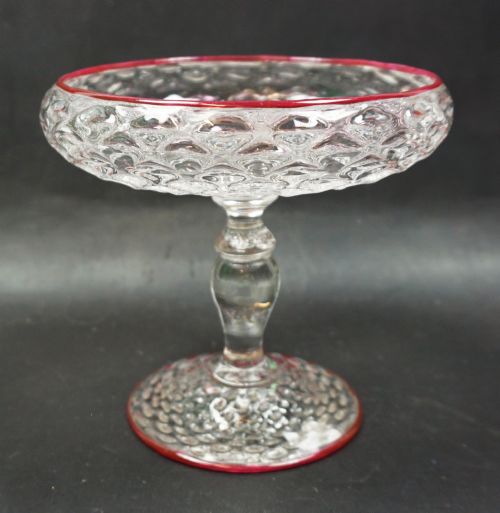
Domestic glassware from this era spans simple drinking vessels like rumblers and whiskey tumblers to elaborate table centrepieces and decanters. Many items incorporate contrasting hues, such as cranberry glass paired with white handles or crystal bodies enhanced with red cane decoration.
The material also extends into functional household items, including apothecary measuring cups, decorative flower-pot dumps, and glass display domes. These pieces originate from the broader nineteenth-century manufacturing period, reflecting both everyday utility and ornamental display.
Materials and Techniques
Makers shaped these items using traditional blowing, moulding, and cutting techniques applied to lead crystal and coloured glass. Cranberry and vaseline glass varieties achieved their distinct tints through specific mineral additions during the melting process.
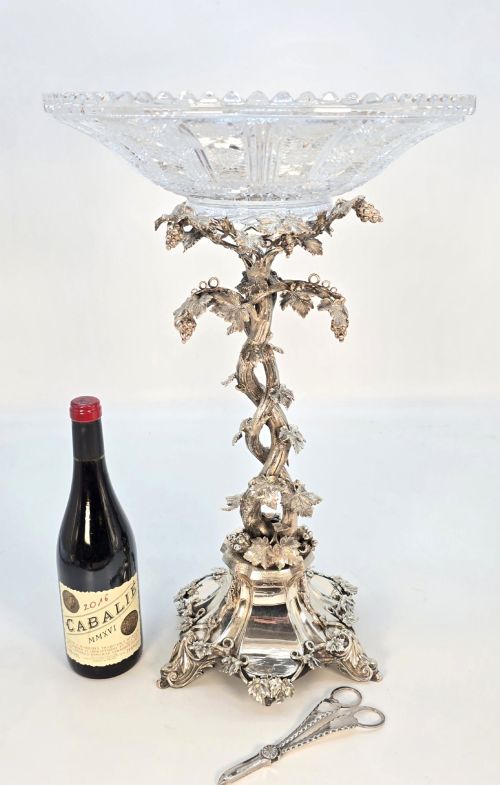
Many domestic objects combine glass components with metal mountings, utilising silver plate, brass, or bronze for handles, rims, and structural frames. Epergnes and lustres frequently integrate blown glass bodies with applied crystal prisms or contrasting glass thread decorations.
Materials paired with the glass across the site include brass, silver plate, walnut, and gesso.
Evaluating Craftsmanship
Quality in these glass objects rests on the clarity of the metal, the precision of the cutting, and the depth of the colour achieved in the kiln. Superior examples show crisp moulding seams, well-balanced proportions, and cleanly applied decorative details without excessive surface distortion.
The integration of mixed materials also defines the hierarchy of pieces, where finely cast brass mounts or substantial silver plating complement the glass rather than overpower it. Intricately worked epergnes and multi-tiered lustres demonstrate greater technical ambition than standard single-form vessels.
Hinks·Taylor Tunnicliff·Goldsmiths Alliance Ltd·Richard Winter of Chieveley·Walker And Hall
The English Victorian Glass Glossary
- Cranberry glass
- A transparent red glass produced by adding gold chloride to the molten batch. It became particularly popular for Victorian tableware and decorative novelties.
- Lustre
- A mantelpiece ornament featuring a bowl or vase fitted with hanging cut-glass prisms. These pendants catch and refract ambient light.
- Epergne
- A large table centrepiece featuring multiple branching horns or baskets for fruit and flowers. They are frequently blown from coloured glass.
- Vaseline glass
- A transparent yellowish-green glass containing uranium dioxide that glows under ultraviolet light. It is heavily associated with nineteenth-century decorative production.
English Victorian Glass: Frequently Asked Questions
What is cranberry glass?
Cranberry glass is a distinctive transparent red material created by introducing gold into the glass-making mixture. It gained widespread popularity during the Victorian era for decorative tableware and mantel displays.
Craftsmen utilised this vibrant medium to produce decanters, epergnes, and small vessels, often pairing the rich red hue with clear crystal or applied white glass edgings.
How were glass lustres used?
Glass lustres served as decorative mantelpiece ornaments designed to catch and reflect light in nineteenth-century drawing rooms. Their hanging crystal prisms refracted illumination from candles or lamps.
While primarily ornamental, these paired objects demonstrated the household's taste for colourful glass and elaborate decorative accessories.
How do I identify vaseline glass?
Vaseline glass is recognised by its characteristic translucent yellow-green tint, which resembles the petroleum jelly of the period. This coloration is achieved through the inclusion of a small amount of uranium.
When exposed to ultraviolet light, genuine pieces emit a bright green fluorescent glow, making them distinct from other green nineteenth-century glass varieties.