


Antique Mantelpiece Lustres
Antique mantelpiece lustres are decorative two-part glass or bronze table ornaments set with dangling prisms, designed to catch the flickering light of nineteenth-century rooms.
Antique Mantelpiece Lustres
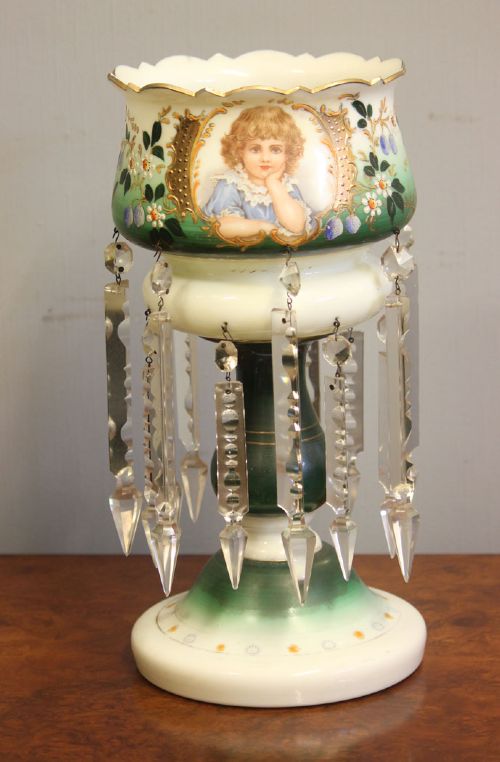
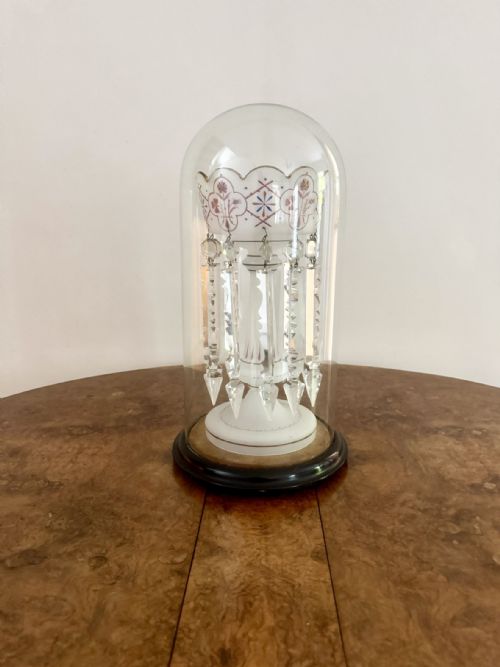
Antique mantelpiece lustres are decorative glass or bronze vessels fitted with detachable crystal prisms that suspend from a central bowl or sconce. When people search for antique mantelpiece lustres, they encounter nineteenth-century English, French, and Bohemian pieces designed to sit upon a fireplace mantel.
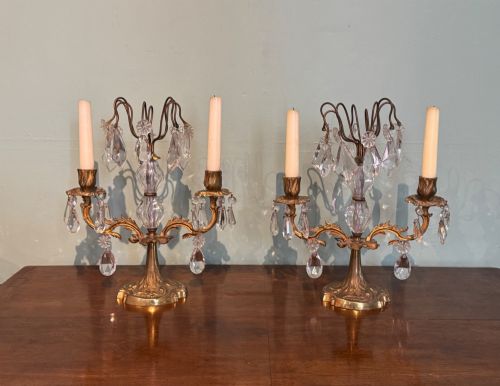
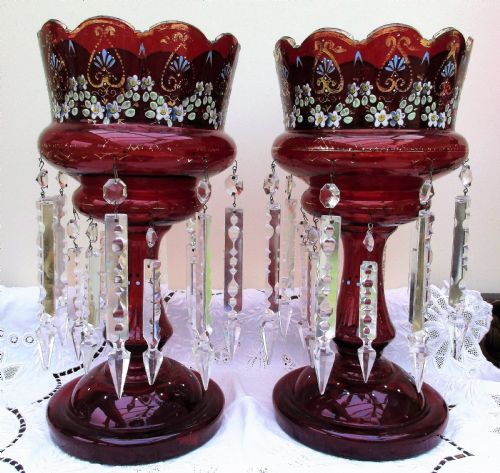
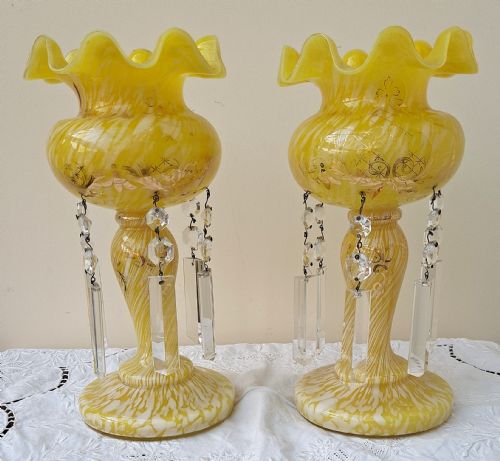
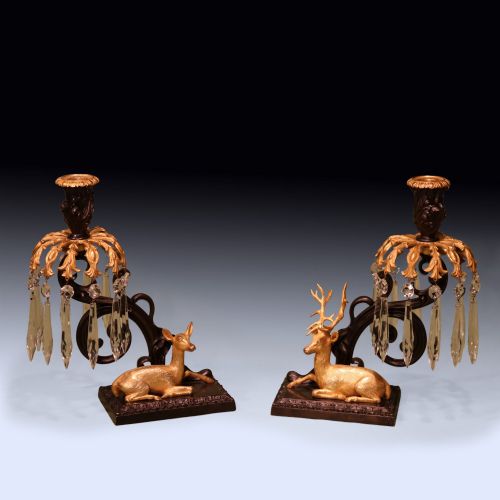
The forms span simple table candlesticks to pairs of ruby, cranberry, and opaline glass vessels, alongside bronze and ormolu mounts depicting stags, does, or griffins. Most examples appear as symmetrical pairs or sets intended to anchor either end of a mantel shelf.
Makers and manufacturers during the Victorian and Regency periods utilised deep saturated colours and overlay glass techniques to create high-impact ornamental pieces. These items served both as functional candleholders and as shimmering focal points for nineteenth-century drawing rooms.
How they were made
Makers produced these pieces using coloured or clear glass that was blown, pressed, or moulded into distinct table forms before undergoing extensive hand-cutting. Overlay techniques involved fusing a layer of coloured glass over a clear or white base, which artisans then cut through to reveal contrasting lower layers.
Metal components relied on bronze casting and ormolu gilding, securing glass bodies into elaborate bases shaped as animals or classical motifs. Prisms were hand-faceted with sharp geometric edges to maximise refraction and hung from brass pins around the rim.
Materials span cranberry glass, opaline, copper lustre glaze, and gilt bronze across English and French origins.
What varies in quality
Quality rests upon the depth of the glass colour, the crispness of the hand-cutting on the prisms, and the weight of the metal mounts. Heavy lead glass and deeply saturated ruby, cranberry, or yellow hues indicate superior manufacturing standards.
The finesse of the bronze casting separates standard production from exceptional work, particularly where animals or classical creatures form the base. Complete sets of matching, undamaged hanging crystal prisms determine the overall integrity of the piece.
The Antique Mantelpiece Lustres Glossary
- Lustre
- A decorative table vessel featuring hanging glass prisms designed to reflect candle or daylight. These objects sit upon mantelpieces and side tables.
- Prism
- A cut-glass pendant suspended from the rim of a lustre to refract light. They hang on wire pins and sway gently.
- Overlay glass
- A technique where a layer of coloured glass is fused over a contrasting base layer. Artisans cut away sections of the top layer to create patterns.
- Ormolu
- Gilded bronze created by applying a mercury and gold paste to cast bronze and firing it. This finish provides a rich metallic lustre.
- Opaline glass
- An opaque, pastel-hued glass popular in nineteenth-century French decorative objects. It often exhibits soft blue, pink, or white tones.
Antique Mantelpiece Lustres: Frequently Asked Questions
What are antique mantelpiece lustres?
Antique mantelpiece lustres are decorative nineteenth-century glass or bronze vessels featuring hanging crystal prisms designed to catch and refract light.
They were placed on mantelpieces or tables as decorative ornaments rather than primary light sources.
How were lustres used?
They functioned as ornamental showpieces on fireplace mantelpieces, often holding candles in their central sconces.
The dangling crystal prisms multiplied the flickering candlelight to brighten dark Victorian and Regency rooms.
How do I clean antique lustres?
Dust the glass bodies and metal mounts gently with a soft, dry brush.
Prisms can be removed and washed individually in lukewarm soapy water, then dried thoroughly before rehanging.
Are missing prisms common?
Because the crystal drops hang loosely from wire pins, individual prisms frequently separated or broke over the decades.
Finding matching replacement period prisms requires patience and careful measurement of the hanging length.