

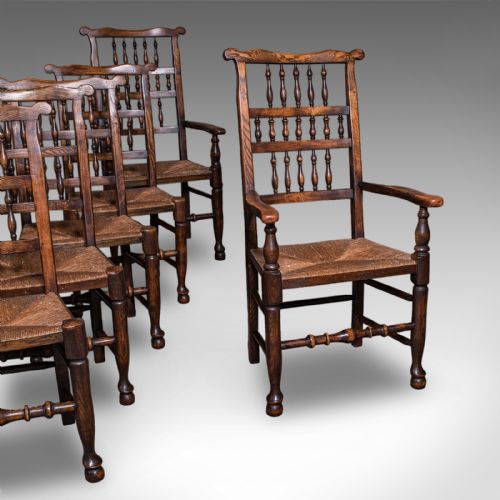


English Vernacular Dining Chairs
English vernacular dining chairs bring sturdy country character to the table, fashioned from honest local woods by regional makers.
English Vernacular Dining Chairs
English vernacular dining chairs comprise regional seating forms shaped by local tradition rather than strict metropolitan design canons. These pieces range from simple side chairs to generous armchairs intended for everyday domestic use.
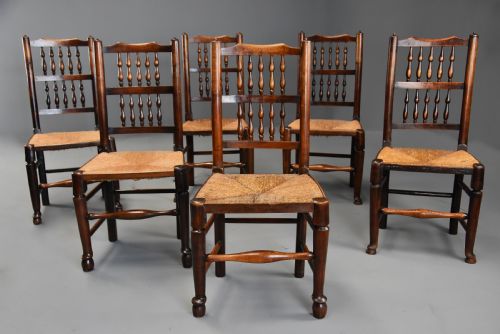
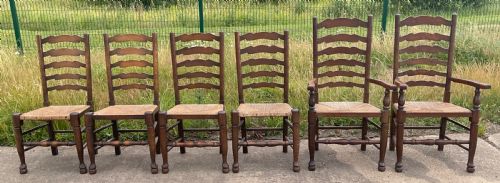
The selection here draws heavily on eighteenth and nineteenth-century examples, spanning periods from Georgian country to the Edwardian era. Buyers will frequently encounter spindlebacks, ladderbacks, and Windsor forms across these listings.
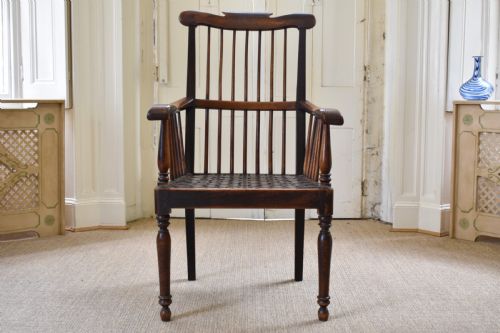
Regional variations dominate the form, featuring chairs identified with counties such as Lancashire, Shropshire, Suffolk, and Westmoreland. Most examples employ robust combinations of timbers such as elm, ash, and beech.
How they were made
Maker-joiners utilised locally available timbers, pairing sturdy elements like ash or beech for frames with characterful elm for shaped solid seats. Rush seating also appears, providing a flexible surface woven directly into the chair frame.
Turning lathes shaped spindles and legs, while steam-bending techniques curved wooden components such as Windsor hoops and comb backs. Joinery relied on traditional pegging and mortise and tenon construction to ensure lasting strength.
Listings feature eighteenth and nineteenth-century pieces alongside Edwardian examples, constructed primarily from elm, ash, beech, and oak.
What varies in quality
Quality rests in the integrity of the timber selection and the retention of original surfaces, particularly the surface wear that develops over generations of use. Better examples maintain strong structural joints without excessive replacement parts.
Proportion and the skill of the turning distinguish finer regional pieces from heavier, utilitarian workshop output. Chairs that retain their original rush seats or undamaged bentwood hoops command greater interest from collectors.
Fred Walker Rockley
The English Vernacular Dining Chairs Glossary
- Spindleback
- A chair back constructed with a series of slender turned vertical wooden rods. These rods support the user while keeping the upper frame lightweight.
- Windsor
- A chair style featuring a solid wooden seat into which the legs, back and arms are independently fitted. The back often incorporates steam-bent hoops and shaped spindles.
- Ladderback
- A chair back formed of horizontal arched slats resembling the rungs of a ladder. This regional style remained popular across English country workshops for centuries.
- Rush seat
- A seating surface woven from dried marsh reeds stretched across the chair rails. This traditional method creates a resilient and slightly yielding pad.
- Carver
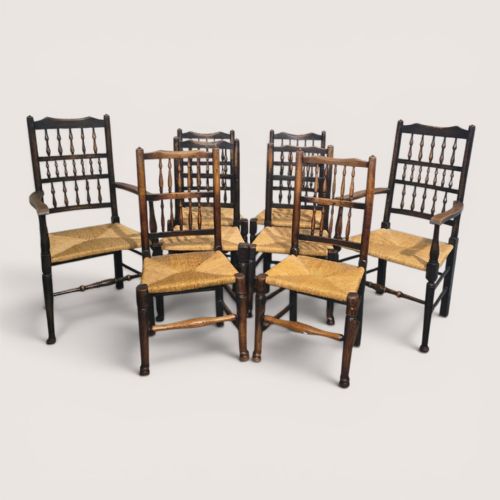
- A traditional term for an armchair, often used in the context of dining sets where two armchairs accompanied a set of side chairs.
English Vernacular Dining Chairs: Frequently Asked Questions
How do I date an English vernacular dining chair?
Dating relies upon observing construction methods, tool marks, and timber shrinkage patterns. Earlier eighteenth-century pieces often display hand-carved details and deeper patination.
Later nineteenth-century examples may show greater standardisation in turned elements and machine assistance in timber preparation.
Are these chairs comfortable for daily dining?
Many country chairs offer surprisingly supportive seating due to ergonomically shaped solid elm seats and supportive spindle backs. Their generous proportions accommodate everyday modern dining.
Consider adding loose pads if you prefer softer seating on rush or wooden bases.
What is a harlequin set of chairs?
A harlequin set is a collection of dining chairs that share similar periods, materials, or regional styles rather than being from a single matched suite. This practice reflects how country dining sets accumulated over time.
Matching heights and arm styles helps create a cohesive arrangement around a table.
How should I care for antique elm and ash?
Maintain these timbers by keeping them away from direct heat sources and sudden humidity changes to prevent wood splitting. Regular dusting with a soft cloth preserves the historic surface.
Applying occasional appropriate wax feeds the dry wood and protects the patina.