



English Silver Bowl
These pieces range from seventeenth-century porringers to modernist silver bowls, offering functional elegance for any table.
English Silver Bowl
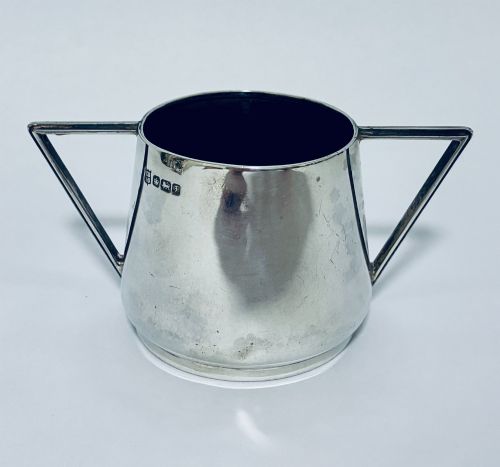
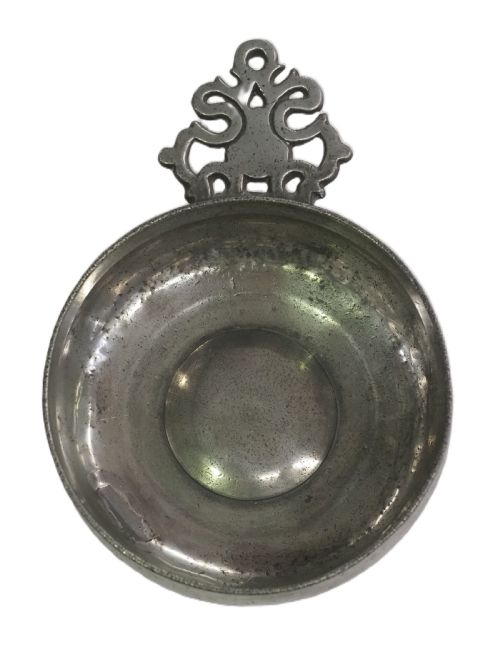
When searching for an english silver bowl, collectors examine forms spanning centuries of domestic metalwork, from heavy seventeenth-century porringers to Edwardian swing-handled baskets and Art Deco table pieces.
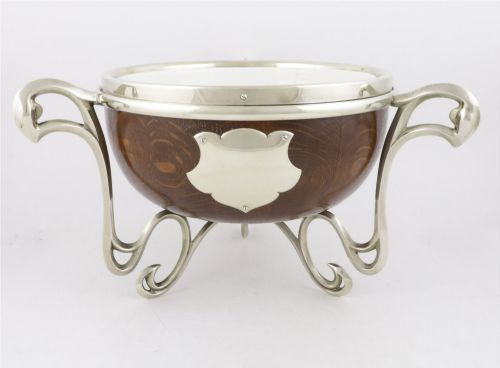
The selections on this page frequently include solid sterling silver vessels alongside silver plate, pewter, and mixed-media creations featuring oak, ceramic, and cut glass.
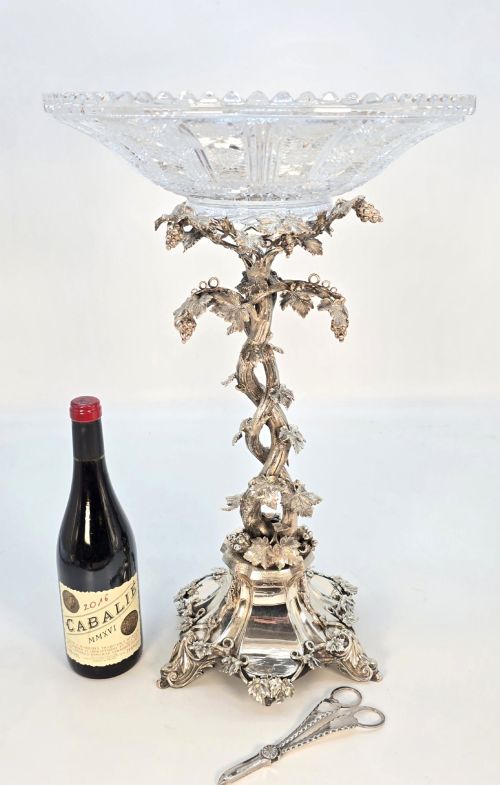
Origins trace through Victorian, Georgian, and Arts and Crafts workshops, presenting everything from simple sugar dishes to large decorative table centrepieces and monteith bowls.
How They Were Made
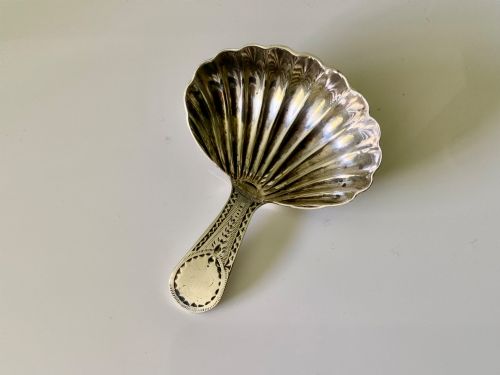
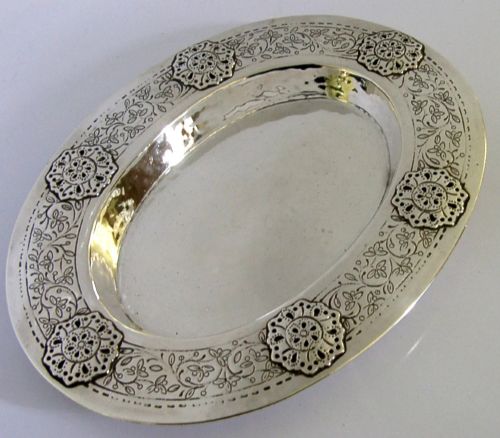
Silversmiths utilised traditional hammering, piercing, and embossing techniques on solid sterling silver, often shaping metal into fluted, footed, or handle-fitted vessels.
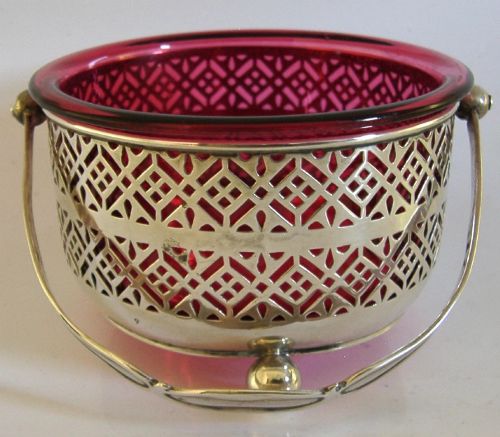
Makers combined silver plate and solid silver with contrasting materials such as cut glass liners, oak bases, tortoiseshell, and ceramic bodies to create textured serving dishes.
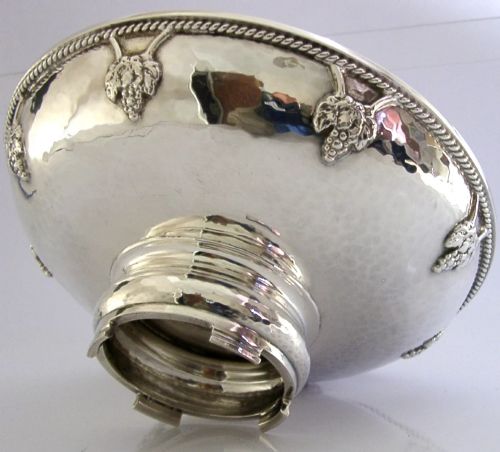
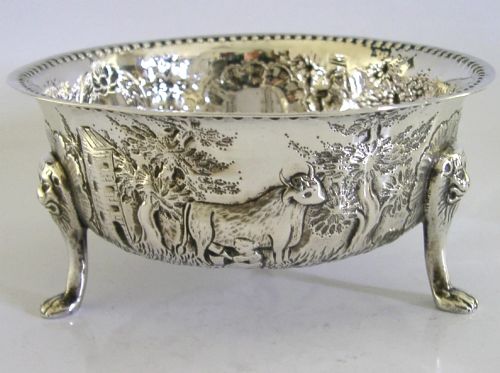
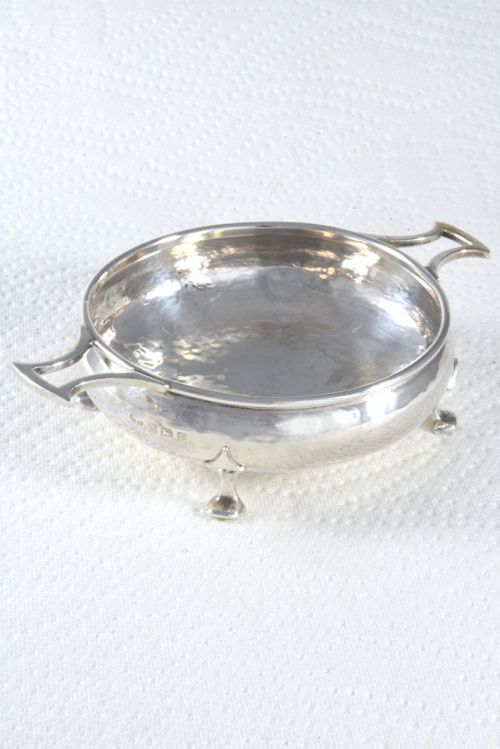
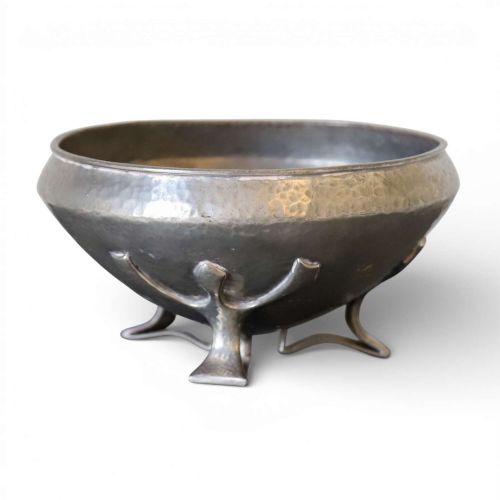
Hand-wrought arts and crafts examples display visible planished surfaces and applied wirework, distinguishing them from heavily embossed Victorian floral designs.
Object forms include porringers, monteiths, sugar basins, tea strainers with drip bowls, and handled fruit baskets.
What Varies in Quality
Evaluation rests upon the crispness of the chasing, the thickness and weight of the metal relative to the size of the vessel, and the integrity of any applied handles or pierced ornamentation.
Makers' marks, clear hallmarks, and the presence of original components such as fitted glass inserts or matched drip stands elevate the standing of a piece.
Design ambition distinguishes standard production items from workshop-specific creations featuring hand-planished surfaces, bespoke gilding, or unusual structural forms.
A E Jones·Liberty And Co·Walker And Hall·Alexander Clarke And Co·Oliver Baker
The English Silver Bowl Glossary
- Porringer
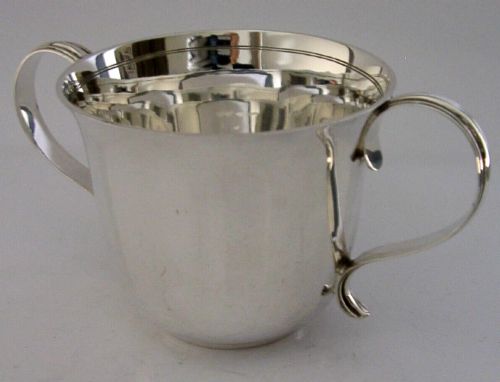
- A two-handled bowl used historically for porridgies or broths, frequently dating from the seventeenth century with ear-shaped handles.
- Monteith
- A large decorative bowl featuring a scalloped or notched rim designed to hold wine glasses by their bases.
- Tazza
- An ornate shallow bowl or cup elevated on a central foot or pedestal, often utilised for serving fruit or small cakes.
- Quaich
- A traditional two-handled drinking vessel or shallow cup originating in Scotland and interpreted by later arts and crafts silversmiths.
- Planished
- A metal surface finish showing the controlled, textured hammer marks left by the silversmith during the final shaping process.
English Silver Bowl: Frequently Asked Questions
What is an english silver bowl used for?
These vessels served diverse domestic purposes across different eras, functioning as sugar basins, fruit dishes, monteiths for cooling wine glasses, or ceremonial presentation prizes.
Over time, their roles shifted from practical dining items to decorative table centrepieces and prized display pieces within wealthy households.
How do I identify the date of my bowl?
Dating relies heavily upon stamped hallmarks, which include maker's marks, standard marks indicating sterling quality, and date letters assigned by specific assay offices such as London or Birmingham.
Stylistic indicators also help narrow the period, contrasting the heavy embossing of Victorian pieces with the clean geometric lines typical of Art Deco design.
Are these bowls made of solid silver?
The inventory includes both solid sterling silver pieces and silver-plated items, alongside alternative compositions like pewter, ceramic, and oak mounts.
Examining the hallmarks or stamp marks on the base reveals whether the piece is solid sterling or plated over a base metal.
How do I care for antique silver?
Maintenance requires occasional gentle cleaning with specialised silver polish and a soft cloth to remove tarnish while preserving the original surface texture and hallmarks.
Storing pieces away from direct moisture and handling them carefully helps protect delicate elements like applied handles, swing baskets, and integrated glass liners.