

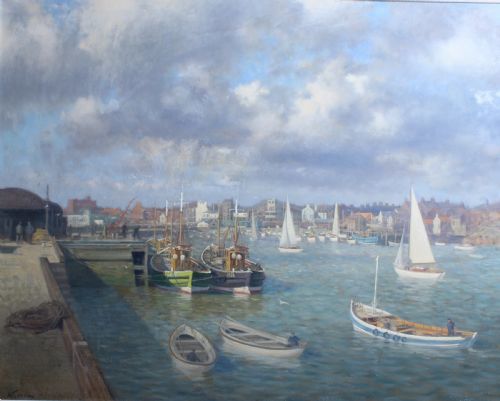


English Seascape Painting
When considering an English seascape painting, you are looking at coastal views, harbours and fishing vessels captured across the nineteenth and twentieth centuries.
English Seascape Painting
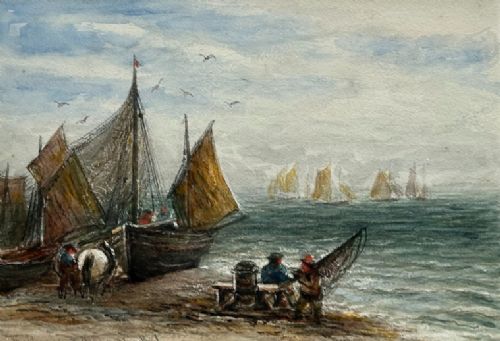
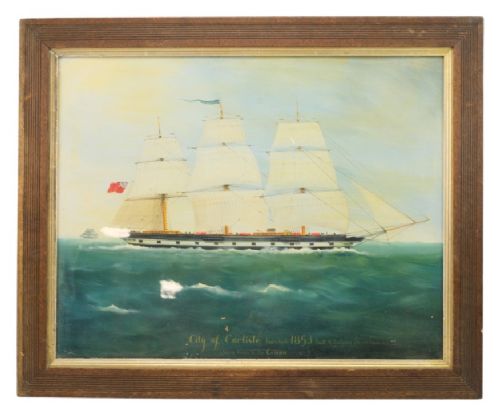
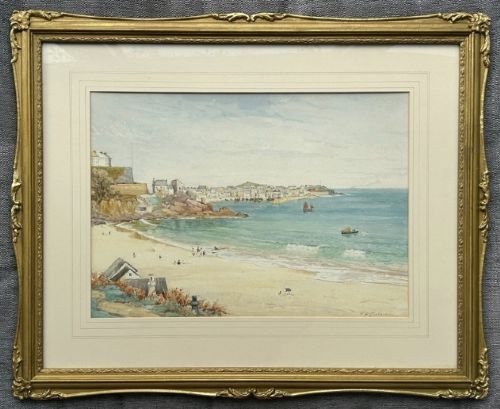
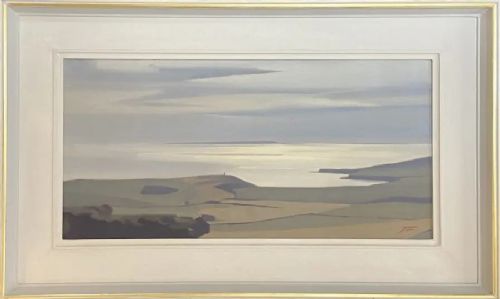
An English seascape painting captures the changing moods of the coastline, from bustling Cornish fishing harbours to stormy Yorkshire headlands. The works appearing here span the nineteenth and twentieth centuries, offering a record of maritime life, local shipping and coastal topography.
You will most commonly encounter nineteenth-century watercolours and oils on canvas, depicting familiar coastal spots such as Whitby, St Ives, Scarborough and various southern shores. These range from detailed topographical watercolours by named Victorian artists to broader impressionistic oil paintings on canvas, board or card.
The subjects frequently include local fishing fleets, trawling luggers, piers and beach scenes with fisher folk, reflecting the close relationship between coastal communities and the sea. Whether executed in a precise Victorian style or with the looser brushwork of later British impressionism, each piece documents a specific stretch of the British coastline.
How they were made
Artists relied primarily on oil on canvas, panel or card, alongside delicate watercolours on paper, capturing light and atmospheric conditions directly by the shore or finished in the studio. Canvas supports often received a preparation layer of gesso before the application of oil paint, while watercolours utilised washes built up on absorbent paper.
Framing forms an integral part of these works, with many retaining period giltwood or moulded frames that complement the tonal range of the maritime subject matter. Surface textures vary from smooth, finely blended academic applications to thick impasto that mimics the choppy movement of coastal waves.
English Seascape Painting Retail Price Guide 2026
Typical asking prices for english seascape painting among the pieces listed under this phrase on Sellingantiques today, from the lower quarter to the upper quarter. They describe what is for sale here now, not the wider market.
Listings feature works executed in oil on canvas, board and card, alongside traditional watercolours and gouache on paper.
What varies in quality
Quality rests upon the artist's ability to render light, water movement and atmospheric perspective convincingly, transforming a simple coastal record into a compelling composition. The finest examples demonstrate a confident handling of pigment, whether in the translucent layering of a watercolour sky or the thick, purposeful brushstrokes defining a turbulent sea.
Provenance and documentation also distinguish the pieces, with signed works by established Victorian and twentieth-century painters commanding greater attention than anonymous or provincial school examples. Furthermore, the survival of the original giltwood or gesso frame adds considerable integrity to the overall piece.
James Orrock·William Banks Fortescue·Charles Napier Hemy·Thomas Bush Hardy·Helen Layfield Bradley
The English Seascape Painting Glossary
- Gouache
- An opaque watercolour medium often combined with traditional transparent watercolour to add highlights of light on water or foam. It provides a dense, matte finish that stands out against thinner washes.
- Impasto
- Paint applied thickly to a canvas or board, leaving visible brush or palette knife strokes. This technique effectively renders the heavy texture of breaking waves and churning seas.
- Coble
- A traditional type of open fishing boat native to the north-east coast of England, featuring a high bow and a flat bottom. These vessels frequently appear in Yorkshire and Northumbrian coastal scenes.
- Giltwood
- Timber carved and coated with gold leaf, forming the decorative surface of traditional picture frames. These frames often feature gesso mouldings beneath the gilding.
- Watercolour
- A paint consisting of pigment suspended in a water-based solution, typically applied to paper. It allows for luminous, transparent effects particularly suited to capturing coastal mists and skies.
English Seascape Painting: Frequently Asked Questions
How do I identify the location in a painting?
Artists often inscribed the specific harbour, beach or town on the reverse of the canvas, on the mount, or directly within the lower corners of the composition alongside their signature. Contemporary labels and framing inscriptions also frequently point to exact spots like St Ives, Whitby or Scarborough.
Comparing topographical details such as cliffs, piers and local boat designs helps narrow down the coastal region if no written record remains on the work.
Were these paintings created outdoors?
Many nineteenth and twentieth-century marine artists produced initial watercolours, pencil sketches and oil studies directly in front of the subject on the beach or from a clifftop. These rapid plein-air observations captured fleeting weather conditions, changing tides and local shipping activity.
Larger, more finished oil paintings on canvas were then frequently completed back in the studio using these field studies and observational sketches as primary references.
How should I care for a coastal oil painting?
Protect the canvas or panel from direct sunlight and sudden fluctuations in temperature or humidity, which can cause the paint layer or wood support to warp and crack. Keep the surface clean using a soft, dry brush to gently remove dust from the paint and the crevices of the frame.
Avoid using liquid cleaners or moisture on the painted surface, and consult a professional conservator if the varnish darkens or requires attention.
What distinguishes a watercolour from an oil painting?
Watercolours are executed on paper using water-soluble pigments that rely on the white of the paper shining through transparent washes to create light. They are typically framed behind glass to protect the delicate paper surface from atmospheric moisture and dust.
Oil paintings utilise pigments bound in drying oils applied to canvas, board or panel, resulting in a heavier texture with a continuous paint layer that is usually displayed unglazed.