




English Regency Sofa Table
An English regency sofa table is a refined, drop-leaf piece designed to sit behind a sofa, offering elegant utility in period interiors.
English Regency Sofa Table
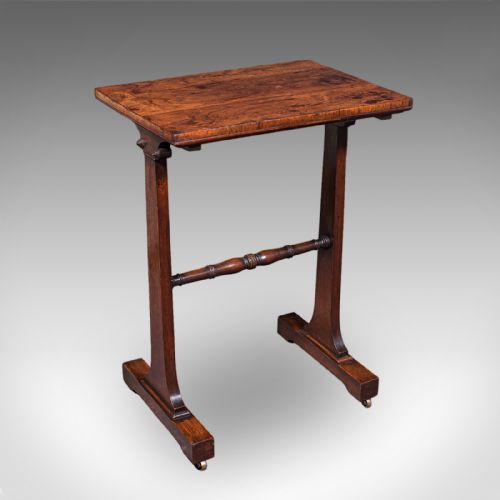
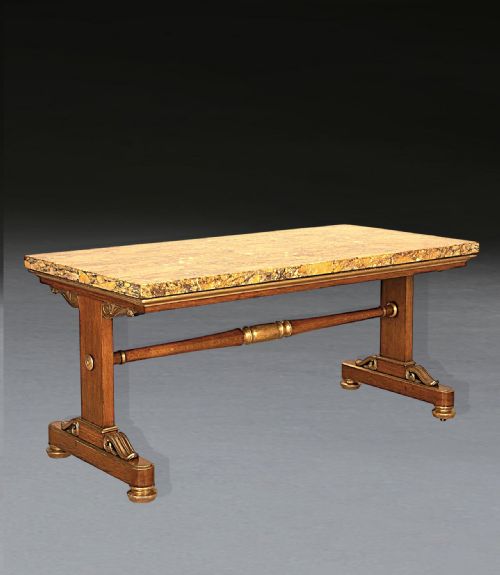
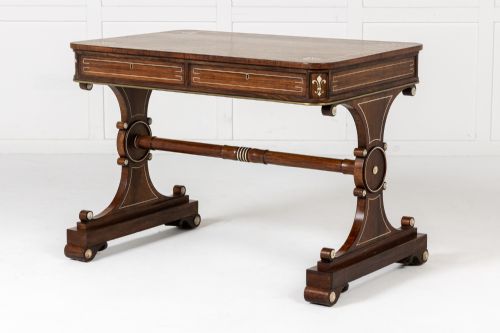
An English regency sofa table stands out for its versatile rectangular top flanked by drop leaves, historically positioned in the drawing room or behind a central couch. The pieces meeting this search phrase predominantly date from the Regency era and the wider nineteenth century, spanning stylistic revivals such as William IV and Georgian influences.
Makers constructed these tables to serve multiple functions, frequently incorporating end supports, trestle bases, or stretcher designs alongside concealed drawers. Alongside dedicated sofa tables, buyers encounter related forms including library tables, writing desks, and Pembroke variations sharing the characteristic drop-leaf configuration.
The aesthetic vocabulary encompasses classic Regency lines alongside late Regency and English Empire manifestations, reflecting a period of confident cabinet-making. These tables bridge formal drawing-room display and practical writing use, anchored by traditional proportions.
Markers of Quality
Quality reveals itself in the selection and book-matching of timber veneers, where superior examples exhibit symmetrical flame figures across the top and drop leaves. The crispness of brass inlay, the integrity of the structural joints, and the retention of original patination separate utilitarian pieces from workshop masterworks.
Makers of distinction incorporated thoughtful interior arrangements in the drawers, finely turned stretcher supports, and robust underframes that ensure the drop leaves operate smoothly without sagging.
Listings feature rosewood, mahogany, pollard oak, and amboyna, demonstrating the Regency preference for richly figured exotic hardwoods.
Gillows of Lancaster and London·Marsh and Tatham·George Smith·Williamson
The English Regency Sofa Table Glossary
- Sofa Table
- A freestanding table with drop leaves on opposing sides, originally built to stand behind a sofa for writing or serving tea.
- Drop Leaf
- A hinged flap on either side of a table top that can be raised to extend the surface area or lowered when space is restricted.
- Flame Mahogany
- A highly figured mahogany veneer featuring tongue-like flame patterns created by slicing across the bough of the tree.
- Pollard Oak
- Oak timber taken from pollarded trees, noted for its dense, clustered knot formation that creates a decorative speckled grain.
- Stretcher
- A horizontal wooden bar connecting the legs of a table to provide structural rigidity and balance.
- Library Table
- A large, substantial table finished on all sides, designed to hold books and writing materials in a study or library.
English Regency Sofa Table: Frequently Asked Questions
What is an English regency sofa table?
An English regency sofa table is a movable nineteenth-century table featuring a central top and hinged drop leaves on either end. Cabinet-makers designed them to sit behind a sofa for casual writing, sewing, or serving.
These tables typically include small drawers fitted into the frieze and rest upon twin-pillar end supports or stretcher bases. Their versatile proportions made them central to the arrangement of Regency drawing rooms.
Where were sofa tables placed?
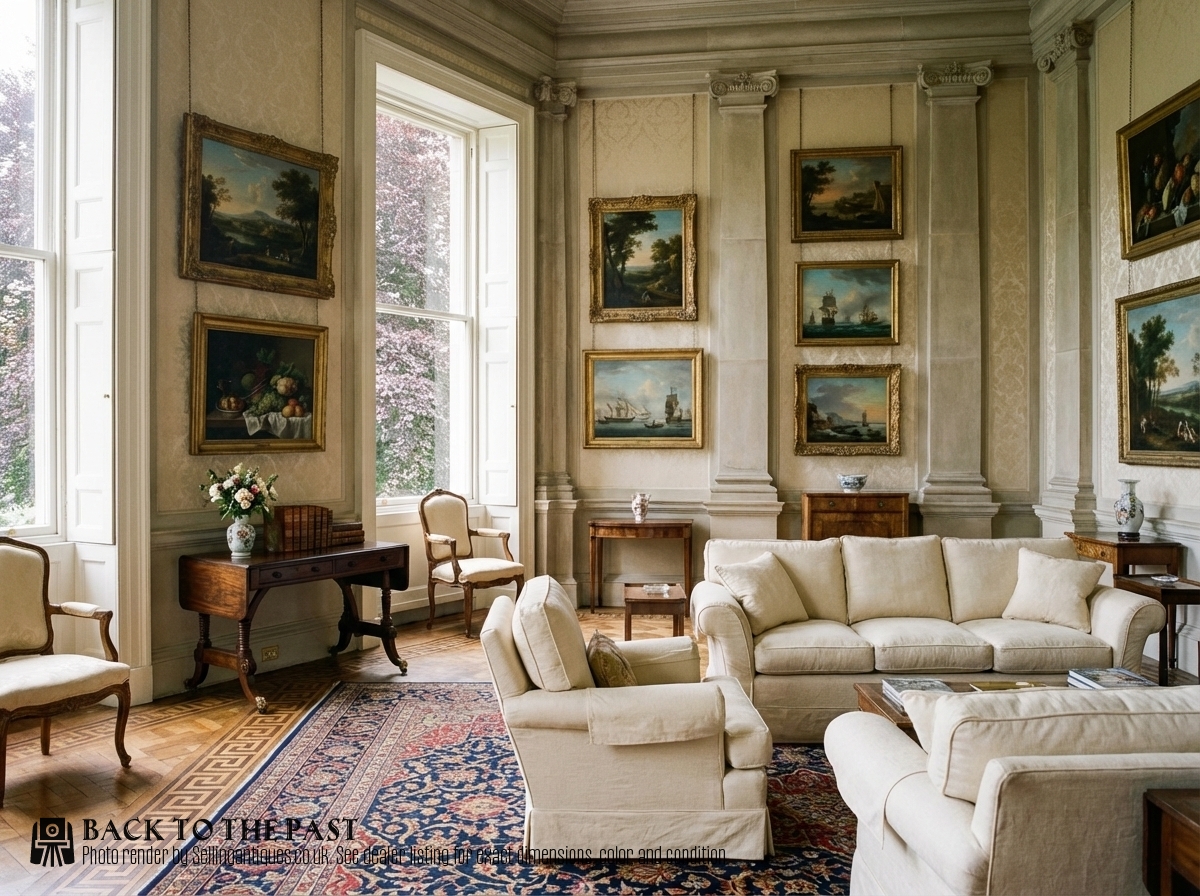
Sofa tables were traditionally positioned directly behind a sofa or settee in the drawing room, allowing easy access to the surface without moving heavy furniture. When guests arrived, the drop leaves could be raised to accommodate reading materials or tea.
They also functioned as independent centre tables or writing desks when pulled away from the wall. Their finished backs and polished timbers ensured they looked correct from every angle in the room.
How do I care for a rosewood sofa table?
Rosewood surfaces require gentle maintenance using traditional beeswax to nourish the timber and preserve the natural sheen. Avoid placing these tables in direct sunlight or near heat sources, which can dry out the old veneers and cause cracking.
Use coasters and felt pads beneath objects to protect the polish from moisture and scratches. Regular dusting with a soft cloth keeps the brass details and wood grain clear.