



English Regency Screen
An English regency screen brings the architectural precision and rich textiles of the early nineteenth century straight to the hearth.
English Regency Screen
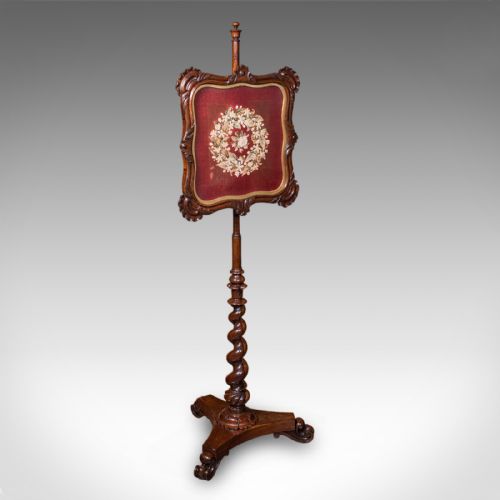
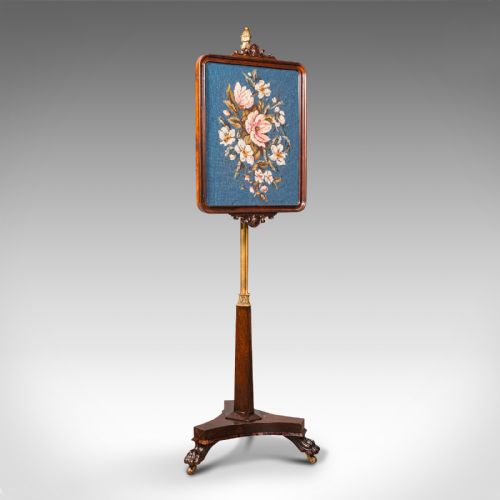
An english regency screen primarily takes the form of a pole screen designed to manage the intense heat of an open fireplace or a folding room divider for privacy. The pole screens stand on slender timber shafts, supporting an adjustable shield or panel that slides up and down.
The versions most commonly met on this page date from the Regency and William IV periods, executed in traditional English cabinet woods. Alongside these vertical fireside pieces, folding multi-panel room dividers appear in needlepoint and textile.
Makers of the period concentrated their efforts on functional elegance, balancing heavy timber bases with delicate needlepoint panels. Each piece reflects the refined domestic interiors of the early nineteenth century.
Indicators of Quality
Quality rests heavily on the crispness of the timber turning and the stability of the weighted base supporting the vertical shaft. Finer examples display superior hand-carved details and balanced proportions that prevent the tall stand from tipping.
The execution of the needlepoint or tapestry panel dictates much of the visual merit, with dense, finely worked stitches outlasting loose textile panels. Original brass adjustment mechanisms operating smoothly without slipping mark the superior pieces.
Nineteenth-century ladies used delicate face screens to stop their makeup from melting by the fireplace.
The English Regency Screen Glossary
- Pole screen
- A freestanding fireside accessory featuring a vertical wooden shaft and an adjustable panel to block radiant heat. The sliding shield could be angled to protect the face from an open coal fire.
- Needlepoint
- A type of canvas work embroidery used extensively for the decorative panels of fireside screens. Skilled artisans stitched intricate pictorial or geometric patterns using wool and silk threads.
- William IV
- A stylistic transition period bridging late Regency and early Victorian design, spanning the 1830s. Furniture from this era often incorporates heavier proportions and rich mahogany or rosewood timbers.
- Penwork
- A delicate decorative technique utilising ink drawings directly onto a prepared wooden or parchment surface. This method frequently appeared on small face screens before being sealed with a protective varnish.
- Face screen
- A small handheld or mounted screen designed specifically to shield a lady's complexion from the direct heat of the fire. They complement the taller floor-standing pole screens in domestic settings.
English Regency Screen: Frequently Asked Questions
What is a pole screen used for?
A pole screen served a practical purpose in the nineteenth-century parlour by shielding a person's face from the intense glare and heat of an open fireplace. The adjustable panel could be raised or tilted as needed.
Over time, these pieces transitioned from strict utility items into decorative focal points for the drawing room. Today, they function well as sculptural elements in traditional or contemporary interiors.
How do I adjust the panel?
Most pole screens utilise a small brass collar or thumbscrew mechanism set into the back of the sliding panel frame. Loosening this fixture allows the textile shield to glide freely up and down the wooden pole.
Tightening the mechanism secures the panel at the desired height. Care should be taken with vintage brass fittings to avoid stripping the threads.
What woods were used?
Cabinet makers predominantly selected dense, richly grained hardwoods such as mahogany and rosewood for the structural poles and bases. Walnut also appears across several pieces from the period.
Selected examples feature giltwood or specialised penwork decoration to enhance the visual appeal of the frame. These timbers were polished to a deep lustre that reflects traditional nineteenth-century finishing techniques.
How do I care for the needlepoint?
Needlepoint panels require protection from direct sunlight to prevent the coloured wool threads from fading over decades of exposure. Gentle dusting with a soft brush keeps surface particles from settling into the fabric.
Moisture and harsh cleaning agents must be avoided entirely to preserve the integrity of both the textile and the surrounding wooden frame.