
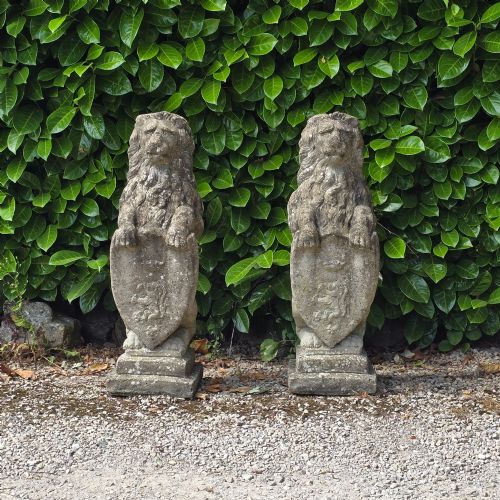


Antique Standing Shield
These antique standing shield pieces are decorative screens and mirrors designed to protect against hearth heat or assist with grooming, combining utility with fine period craftsmanship.
Antique Standing Shield
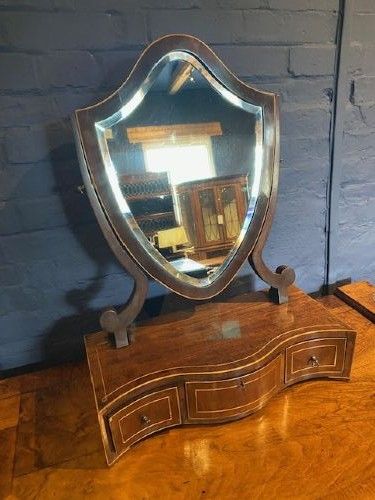
When you search for an antique standing shield, you encounter a specialised group of furnishings that span the Georgian, Regency, and Victorian eras. These objects primarily take the form of pole screens, dressing mirrors, and shaving stands designed for domestic utility and display.
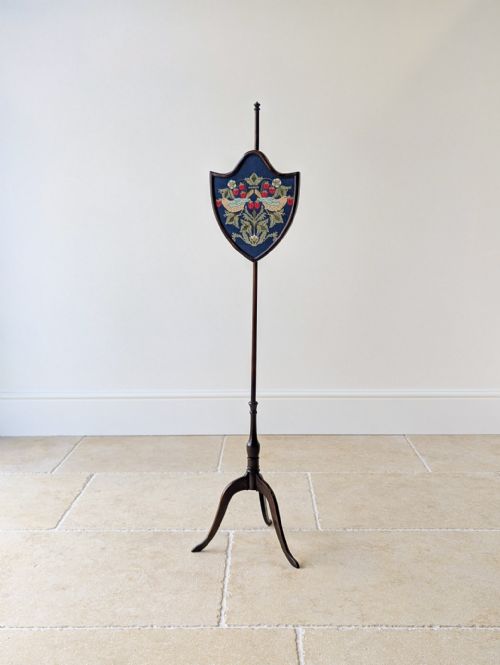
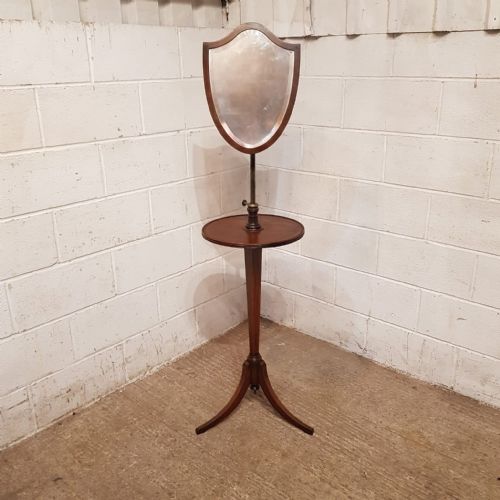
The versions most commonly met on this page include adjustable pole screens featuring needlepoint tapestry or poker work panels, alongside mahogany shaving stands and cheval mirrors. Makers of these pieces utilised varied forms to serve specific domestic functions in the drawing room or bedroom.
Origins stretch across English country house and continental lodge traditions, encompassing Gothic Revival motifs and classic Regency proportions. Each form reflects the specific interior requirements of its period, from hearthside heat deflection to personal grooming.
Materials and construction methods
Craftsmen built the structural frameworks of these pieces using dense hardwoods such as mahogany, satinwood, and rosewood, often turning supports on a lathe. Brass fittings allowed for the adjustment of screens and mirrors, while tripod bases provided stability on uneven floorboards.
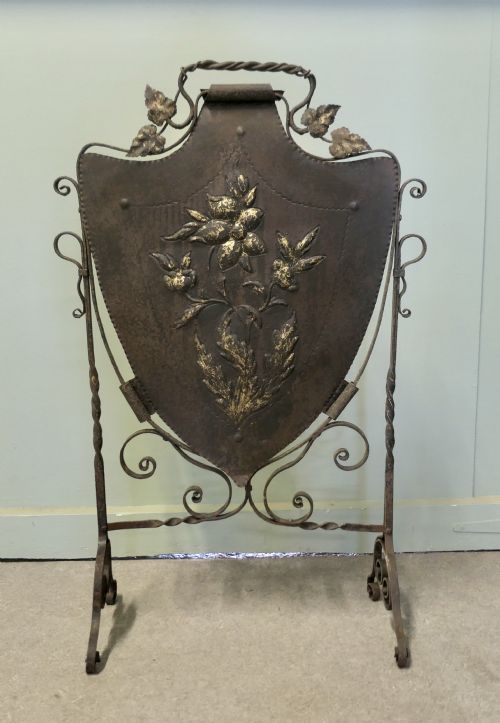
Panels and shields incorporate textile elements, including needlework samplers and tapestry, alongside glass mirrors and painted surfaces. Wrought iron and brass appear in fire screens, pairing structural metalwork with decorative shields.
Some items include patent candle shields designed to keep flickering wax safely away from evening reading material.
Distinctions in execution and material
Quality in these pieces rests upon the selection of timber and the precision of the turning and joinery. Finer examples display carefully figured mahogany or satinwood paired with intricate needlework panels rather than plain textiles.
The sophistication of the adjustable mechanism dictates the execution standard, with smooth movement in brass ratchets and pole mounts separating standard production from superior workshop output.
The Antique Standing Shield Glossary
- Pole screen
- A vertical stand supporting an adjustable shield or panel designed to protect the face from the heat of an open fire. These items typically feature a tripod base and a central turned shaft.
- Cheval mirror
- A large freestanding mirror suspended within a frame that allows it to tilt. The design permits the viewer to see their entire outfit.
- Poker work
- A method of decorating wood or other materials by burning designs with heated tools. This technique frequently appears on the wooden shields of Regency pole screens.
- Tripod base
- A three-legged support structure commonly found on pole screens and shaving stands. This configuration ensures stability on floor coverings.
- Needlework tapestry
- Hand-stitched textile art mounted within the frame of a shield or fire screen. These panels often display floral or pictorial compositions.
Antique Standing Shield: Frequently Asked Questions
What is an antique standing shield used for?
These items served various practical purposes in historic interiors, primarily shielding faces from open hearth flames or aiding personal grooming.
Fire screens positioned panels between occupants and the fireplace, while shaving stands and dressing mirrors facilitated daily toilet routines.
How do I date a pole screen?
Dating relies on timber choice, base turning styles, and the method used to mount the shield. Regency examples often display delicate tripod legs and brass adjustment screws, whereas Victorian pieces tend to be heavier with more ornate carving.
Examining the needlework or painted panel provides further clues to the period of manufacture.
Where should I place a pole screen at home?
These pieces fit naturally beside a fireplace, reading chair, or in a corner where their decorative panels can be appreciated. Their narrow tripod footprints make them adaptable to smaller spaces.
Positioning them away from direct sunlight protects textile panels and polished timber surfaces from fading.
What woods were used in these pieces?
Cabinetmakers utilised dense, richly grained timbers such as mahogany, rosewood, and satinwood for frames and stands. These materials were chosen for their durability and capacity to take a fine polish.
Secondary woods supported internal framing where visible grain was unnecessary.