





English Regency Console
An English regency console brings architectural precision and striking timber grain into a hallway, pairing rich rosewood or mahogany with neoclassical lines.
English Regency Console
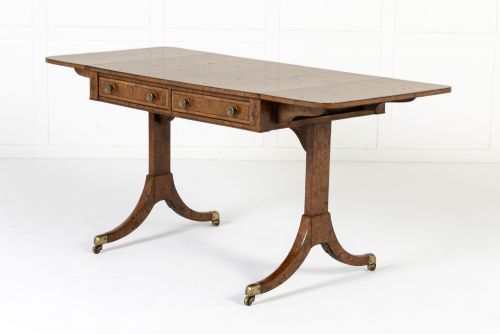
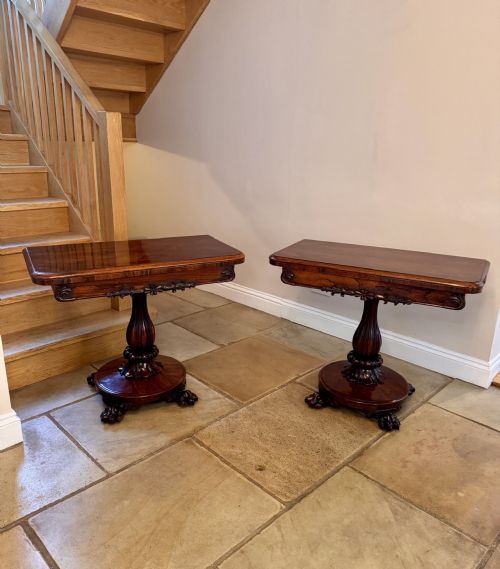
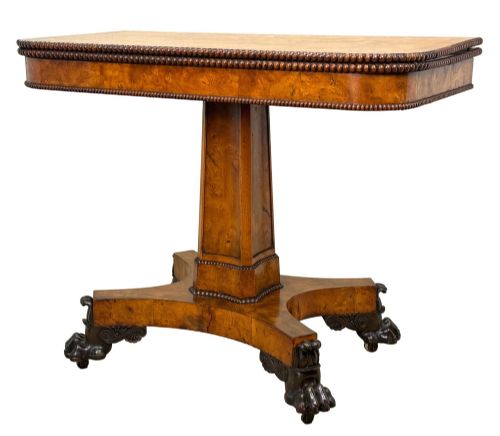
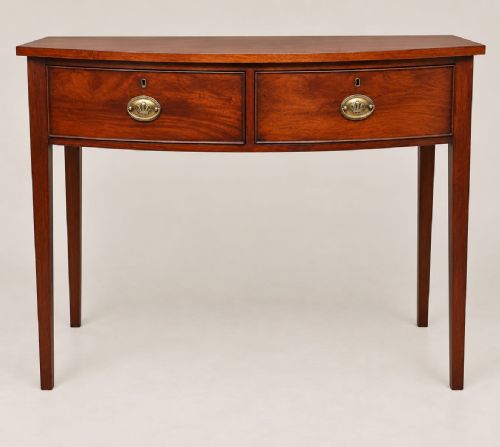
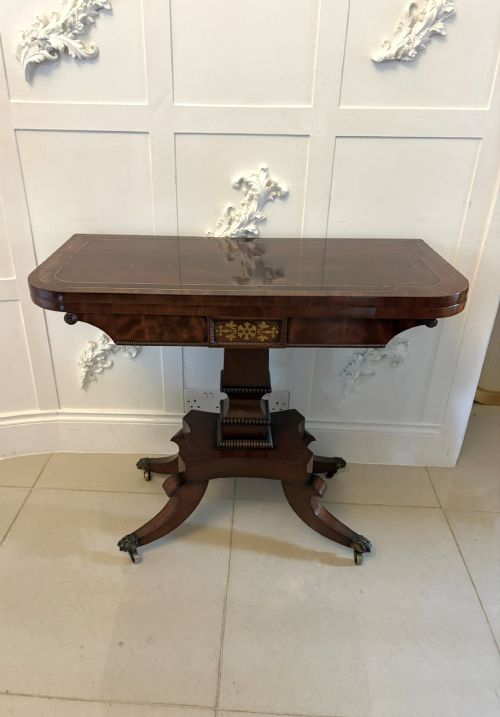
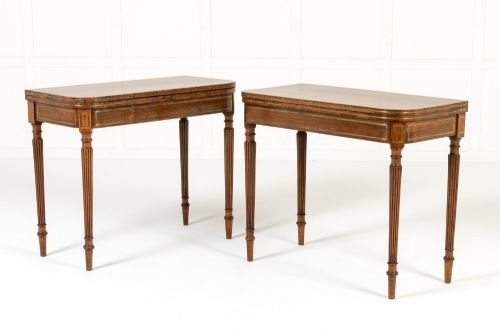
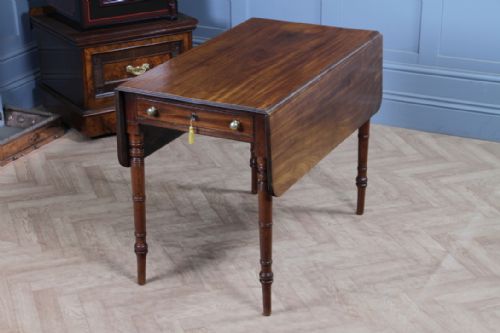
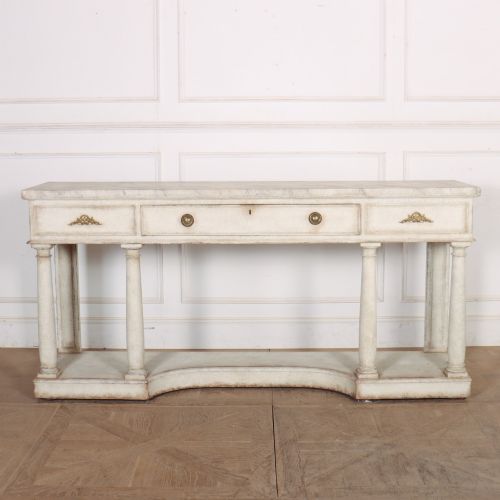
When you search for an english regency console, you enter a field dominated by formal side tables, serving pieces, and serving tables from the early nineteenth century and the wider Regency period. These pieces fulfill the classic requirement for a narrow wall table, often taking a demi-lune, bow-front, or rectangular form designed to sit neatly against a drawing room or hallway wall.
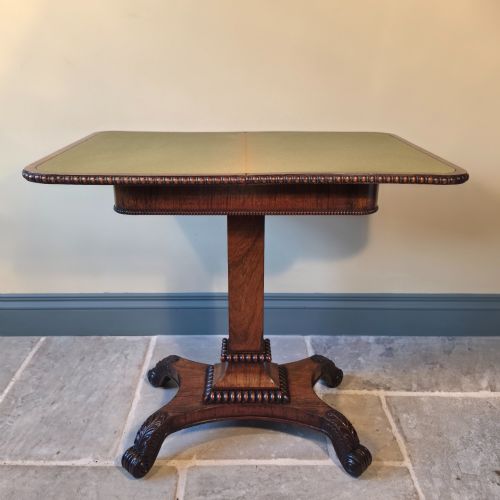
The selection on this page shows strong representation from the Regency era alongside related Georgian and William IV pieces, incorporating stylistic cousins like card tables, library tables, and Pembroke tables. Makers of the period utilised rich timbers and balanced proportions to create furniture that functioned equally well as a side table, writing desk, or serving surface.
Many examples demonstrate the enduring appeal of painted wood, faux bamboo, and polished marble tops, reflecting the varied tastes of early nineteenth-century interiors. Whether you encounter a modest painted beech table or an elaborate rosewood piece, these items share a distinct architectural clarity characteristic of the style.
Materials and Construction
Cabinet makers of the period relied heavily on dense tropical hardwoods like mahogany and rosewood, frequently selecting figured veneers such as pollard oak and flame mahogany to create visually striking surfaces. Timber selection was paramount, allowing craftsmen to showcase natural grain patterns across flat drawer fronts and expansive table tops.
Decoration often involved intricate brass inlay, giltwood highlights, and marquetry, integrating metal and wood into cohesive neoclassical designs. Painted finishes also appear frequently, utilising oil-based paints and techniques such as faux bamboo work to achieve specific decorative effects.
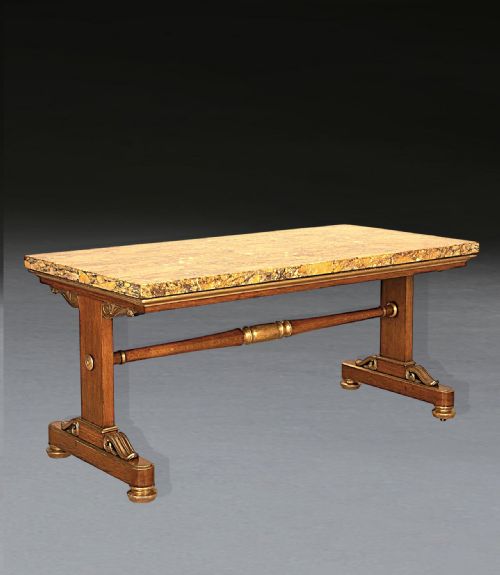
Structural integrity was maintained through traditional joinery, supporting heavy stone elements like Siena marble tops alongside folding mechanisms for card and games tables. The combination of solid secondary timbers with choice primary veneers ensured these pieces withstood decades of domestic use.
English Regency Console Retail Price Guide 2026
Typical asking prices for english regency console among the pieces listed under this phrase on Sellingantiques today, from the lower quarter to the upper quarter. They describe what is for sale here now, not the wider market.
Several tables feature hidden compartments for silver or gaming counters, ready for clandestine Regency card games.
Distinguishing Quality in Regency Tables
The division between standard production and top-tier furniture rests entirely on the sophistication of the timber selection and the precision of the cabinet work. Superior pieces exhibit continuous grain matching across expansive surfaces and meticulous attention to structural proportions.
Decorative elements reveal much about a piece's original standing, distinguishing workshops that employed delicate brass stringing and fine marquetry from those producing simpler, utilitarian items. The integration of high-status materials like Siena marble or original painted surfaces elevates certain examples well above standard domestic grade.
Attribution to documented workshops, such as Gillows, separates standard cabinet work from pieces bearing the hallmark of elite Regency design. The crispness of carved details, the weight of the brass mounts, and the preservation of original finishes all contribute to an item's standing.
Gillows
The English Regency Console Glossary
- Demi-lune
- Half-moon shape. This semicursal profile allowed console and side tables to sit flush against a wall while projecting minimally into the room.
- Console Table
- A wall-mounted or freestanding table designed for display. These pieces typically feature decorative legs or brackets supporting a rectangular or curved top.
- Siena Marble
- A yellow Italian marble with dark veining. It provides a luxurious, brightly coloured surface frequently utilised on top-tier Regency tables.
- Marquetry
- The art of applying veneer pieces in decorative patterns. Craftsmen used various coloured woods to create intricate pictorial or geometric designs on table tops.
- Faux bamboo
- Simulated bamboo carved into wood. This whimsical decorative technique gained popularity during the Regency period for painted side and occasional tables.
English Regency Console: Frequently Asked Questions
Where should I place a console table?
These tables find a natural home in entrance halls, living rooms, and dining spaces where floor space is at a premium. Their shallow depth allows them to sit against walls without obstructing pathways.
Pairing a console with a mirror or placing a lamp upon its surface creates a balanced focal point in a room. They also function well as serving surfaces during gatherings.
How do I care for antique rosewood?
Rosewood requires stable humidity levels and protection from direct sunlight to prevent the timber from drying out or fading. Regular dusting with a soft, dry cloth preserves the polished surface.
Avoid using modern silicone-based polishes, opting instead for traditional beeswax applied sparingly. This maintains the natural lustre of the wood without building up a sticky residue.
What is the difference between a console and a side table?
Console tables traditionally stood against a wall, sometimes supported by wall brackets or distinct legs at the front. Side tables are typically freestanding pieces designed to be viewed from multiple angles.
In modern usage, the terms often overlap, but older console forms tend to emphasise architectural decoration on the front and sides while leaving the back plain.
How do I identify a Regency piece?
Look for neoclassical design motifs such as sabre legs, reeding, brass inlay, and classical proportions. The period spans roughly from the early nineteenth century up to the reign of William IV.
Construction details, including hand-cut dovetails and secondary woods like pine or oak, help confirm the period alongside timber choices like dark mahogany and figured rosewood.