


English Pottery Dog Pair
An english pottery dog pair brings mantelpieces alive with the quiet charm of nineteenth-century hearths.
English Pottery Dog Pair
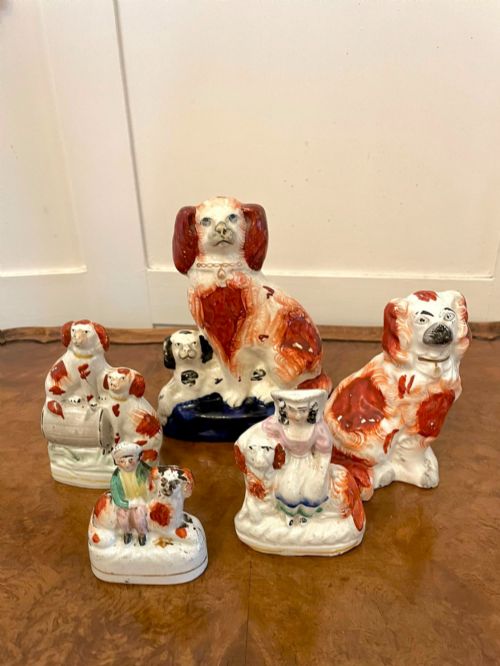
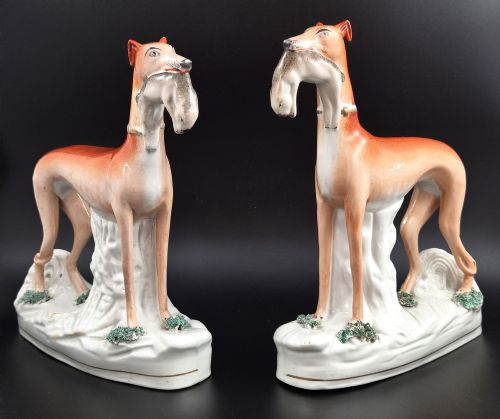
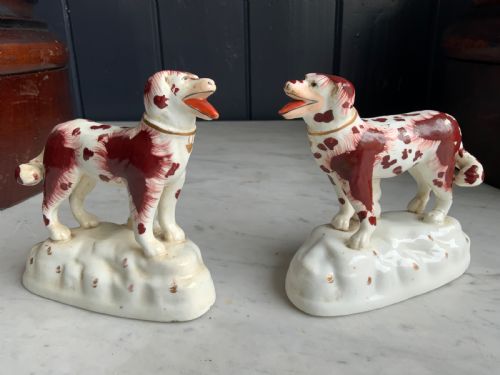
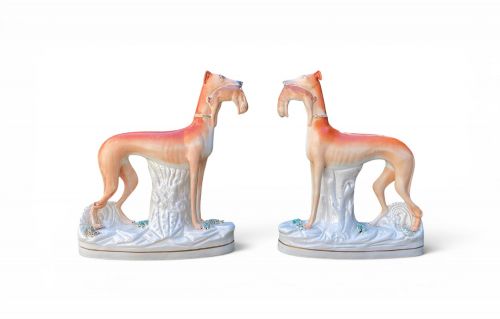
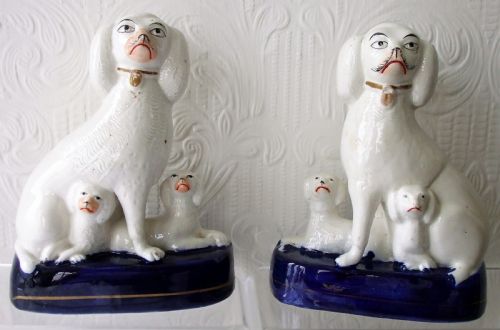
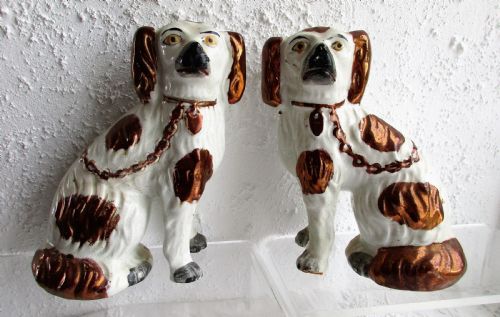
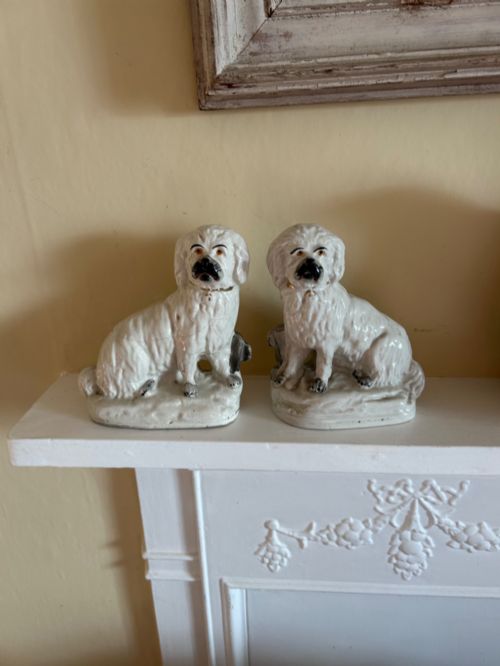
These pairs of figures represent breeds such as spaniels, greyhounds, poodles, and maltese terriers, shaped to sit facing one another upon a mantelpiece or shelf. Most examples belong to the nineteenth century and the Victorian period, originating from the Staffordshire potteries.
The common form is the comforter spaniel, though greyhounds with hares, poodles with pups, and hunting dogs also appear. They range in scale from miniature models to large decorative figures and quill holders.
The evidence shows these ceramic figures modelled as symmetrical pairs, designed to guard the hearth or decorate the Victorian parlour. Buyers encounter various colour schemes, including black and white, red and white, plain white, and gilt-accented bodies.
Materials and construction
Makers applied gold leaf and gilt touches to highlight chains, lockets, and collars, while select nineteenth-century pieces incorporated glass eyes for added realism. The base materials remained straightforward earthenware, fired and decorated in workshops before reaching the domestic market.
Some nineteenth-century poodles arrived with tiny applied clay curls resembling frosting, while others brought along miniature pups for company.
Judging quality and character
The distinction between tiers rests upon the crispness of the modelling and the precision of the hand painting. Finer examples display carefully rendered fur texture, well-defined facial expressions, and cleanly applied enamels without blurring.
Scale and completeness also govern the hierarchy, as larger pairs or those featuring supplementary elements like pups, hares, or glass eyes demand greater skill. The application of gold leaf and the preservation of the original glaze integrity separate standard decorative items from superior specimens.
James Dudson
The English Pottery Dog Pair Glossary
- Earthenware
- A porous pottery body fired at lower temperatures, commonly used for nineteenth-century Staffordshire figures. It requires a glaze to become impermeable to liquids.
- Lead glaze
- A glossy coating containing lead oxide applied to pottery before firing. It provides a smooth, shiny finish characteristic of Victorian ceramics.
- Enamel
- A glassy coloured substance fused to the surface of fired pottery during a secondary low-temperature kiln run. This technique allows for bright surface decoration on animal figures.
- Gilt
- A thin layer of gold or gold-coloured material applied to highlights such as chains and collars. It adds a decorative flourish to the ceramic surface.
- Quill holder
- A desk accessory formed with a hollow or receptacle designed to hold writing feathers. Greyhound figures occasionally served this dual practical and decorative purpose.
English Pottery Dog Pair: Frequently Asked Questions
What are comforter spaniels?
Comforter spaniels are ceramic representations of the King Charles spaniel, traditionally kept by royalty and nobility. Victorian households placed them on mantelpieces as decorative ornaments.
Potters produced these dogs in symmetrical pairs to face one another across the hearth. They remain the most recognizable form of nineteenth-century pottery dog.
How do I date these figures?
Dating relies on stylistic clues, materials, and manufacturing techniques recorded across the nineteenth century. Victorian examples often feature lead glaze, hand-painted enamel, and occasional gilt highlights.
Earlier Regency pieces and later Victorian items from the eighteen-eighties show subtle shifts in modelling style and colour palettes. Examining the base and glaze type helps determine the approximate period of manufacture.
Were these dogs only decorative?
Most figures served a purely decorative function on parlour mantelpieces and shelves. They brought colour and a sense of domestic comfort to nineteenth-century homes.
Some specific variants, such as greyhound figures, doubled as quill holders for the desk. The vast majority, however, were intended strictly as ornamental pairs.
Why are they found in pairs?
Symmetrical arrangement was a central tenet of Victorian interior design, particularly around the fireplace. Facing pairs of dogs balanced the mantelpiece display.
Potters manufactured them simultaneously using matching moulds to ensure proper visual harmony. Finding them together preserves their original intended context.