


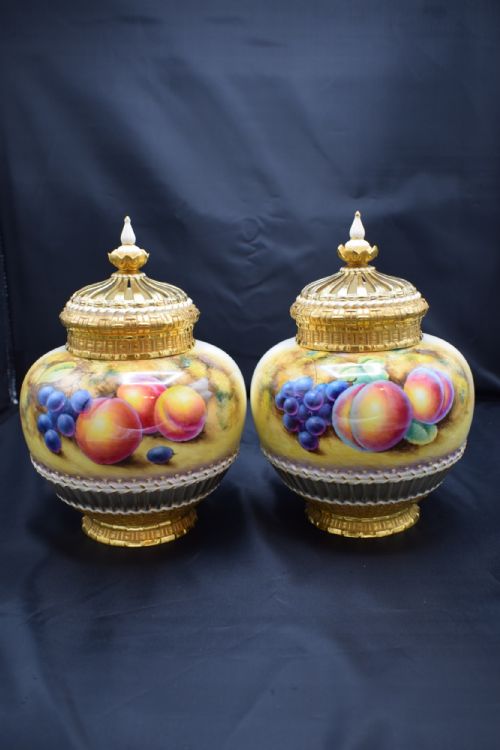
English Porcelain Pot Pourri
English porcelain pot pourri containers are fragrant vessels designed to diffuse dried herbs and flowers, combining utility with artistry.
English Porcelain Pot Pourri
English porcelain pot pourri pieces appear in various forms, including vases, jars, and urns. Buyers searching for english porcelain pot pourri will most frequently encounter nineteenth and twentieth-century examples.
The selection ranges from Victorian Rococo Revival styles to mid-twentieth-century pieces. Common vessel types include covered vases, three-piece sets, and bow vases intended to hold botanical mixtures.
Materials and construction
These vessels utilise fine porcelain and bone china as the primary body. Artisans decorated the surfaces using hand-painted motifs alongside gold leaf, gilt, and traditional gilding.
Techniques relied on skilled painters executing detailed scenes directly onto the glazed ceramic surface before final firing. Covers and lids incorporated pierced designs to allow the scent of botanical fillings to escape.
English Porcelain Pot Pourri Retail Price Guide 2026
Typical asking prices for english porcelain pot pourri among the pieces listed under this phrase on Sellingantiques today, from the lower quarter to the upper quarter. They describe what is for sale here now, not the wider market.
Listings span the nineteenth and twentieth centuries, featuring materials such as porcelain, bone china, enamel, and gold leaf.
Assessing quality and execution
Quality rests heavily on the skill of the artist and the precision of the hand-painted decoration. Pieces bearing named signatures demonstrate superior craftsmanship compared to standard factory production.
The application of gilding and gold leaf distinguishes finer items from simpler wares. Intricacy in vessel shape, such as Victorian Rococo Revival moulding, also marks higher standards of production.
Samuel Alcock·Royal Worcester
The English Porcelain Pot Pourri Glossary
- Pot pourri vase
- A ceramic vessel featuring a pierced cover designed to hold and diffuse dried scented plant material. These objects combine interior fragrance dispersal with decorative display.
- Bone china
- A type of porcelain incorporating animal bone ash for added strength and whiteness. This material provides a bright white base for painted ceramic decoration.
- Gilding
- The application of gold leaf or gold powder to the surface of porcelain. This technique highlights rims, handles, and moulded details.
- Rococo Revival
- A nineteenth-century design style characterised by asymmetrical scrollwork, naturalistic motifs, and elaborate ornamentation. This aesthetic influenced many Victorian ceramic forms.
English Porcelain Pot Pourri: Frequently Asked Questions
What is an english porcelain pot pourri?
An English porcelain pot pourri is a decorative ceramic vessel created to hold dried flowers and herbs infused with spices. The pierced covers allow the retained fragrance to gently scent a room.
These pieces were produced across various periods, ranging from Victorian times through to the mid-twentieth century.
How do I date these pieces?
Dating relies on identifying the factory marks stamped or painted on the underside of the porcelain. Stylistic indicators, such as Victorian Rococo Revival moulding or twentieth-century painted fruit motifs, also help determine age.
Evidence from this selection spans from the mid-nineteenth century through to the mid-twentieth century.
Who painted these porcelain containers?
Many fine pieces feature hand-painted decoration executed by named artists employed by factories such as Royal Worcester. Signatures on the body or base often identify the specific painter.
Artists specialised in subjects ranging from botanical studies to landscapes and wildlife.
How were these vessels used?
Historically, these jars and vases sat on mantelpieces or tables to freshen indoor air by releasing the scent of dried botanicals. The pierced lids kept the mixture contained while permitting airflow.
Over time, many survived purely as decorative cabinet pieces rather than functional scent diffusers.
What materials are used?
The primary body consists of porcelain or bone china, finished with a smooth white glaze. Decoration frequently incorporates hand painting, enamel colours, and applied gold leaf or gilding.
Covers often feature pierced or reticulated patterns cut into the ceramic body.