



English Porcelain Figure Group
An english porcelain figure group brings together modelled human or animal forms, often painted in enamel and finished with gilding, originating from eighteenth and nineteenth century kilns.
English Porcelain Figure Group
An english porcelain figure group comprises modelled ceramic pieces representing mythological subjects, pastoral scenes, or portrait groups from the eighteenth and nineteenth centuries. Buyers searching this phrase meet eighteenth century Derby porcelain works alongside nineteenth century Victorian Staffordshire pottery groups and spill vases.
The forms range from classical deities like Pluto and Cerberus or the Three Graces to domestic animal studies such as poodles and deer. Candlestick figures and spill vases integrate utilitarian functions into sculptural ceramic compositions.
How they were made
Makers utilised soft paste porcelain, biscuit porcelain, and earthenware body pastes, shaped by pressing clay into moulds or casting liquid slip. Firing in kilns set the ceramic body before artists applied enamel colours and gold leaf highlights.
English Porcelain Figure Group Retail Price Guide 2026
Typical asking prices for english porcelain figure group among the pieces listed under this phrase on Sellingantiques today, from the lower quarter to the upper quarter. They describe what is for sale here now, not the wider market.
Listings feature items from the eighteenth and nineteenth centuries, incorporating periods such as Georgian, Victorian, and Neoclassical styles.
What varies in quality
The standard of modelling defines the upper tier of these pieces, where facial expressions, hands, and drapery folds are sharply defined rather than softened by worn moulds. Crisp application of enamel painting and well preserved gilding elevate the visual impact of sculptural forms.
Intricate background elements such as bocage foliage require precise hand assembly prior to firing. Pieces retaining their original polychrome palette and structural integrity without heavy restoration represent the finer examples of the maker's output.
Derby·Staffordshire·Copeland·Royal Worcester·Walton
The English Porcelain Figure Group Glossary
- Biscuit porcelain
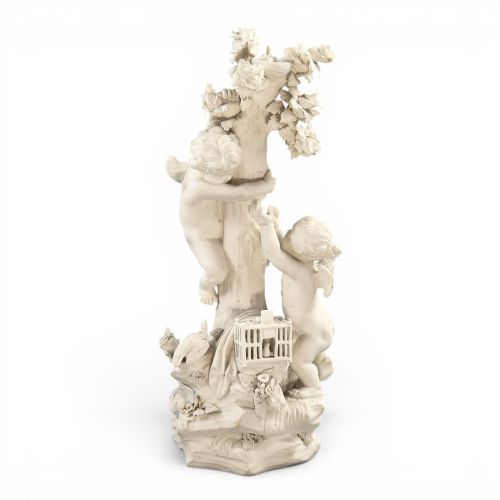
- Unfired or once fired porcelain left unglazed to produce a matte surface texture resembling marble. This finish became popular for neoclassical sculptural groups and allegorical figures.
- Bocage
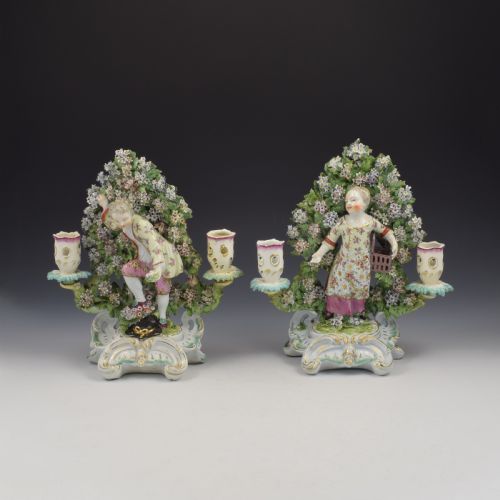
- Applied ceramic foliage and floral background work surrounding the main figures. It is commonly found on eighteenth century Derby candlestick groups.
- Spill vase
- A hollow vertical ceramic tube designed to hold wooden spills for lighting candles or fires. These vessels are frequently incorporated into animal and human figure compositions.
- Soft paste porcelain
- An artificial porcelain composition fired at lower temperatures than hard paste porcelain. It produced a warm, creamy body favoured by early English factories.
- Pearlware
- A refined earthenware developed with a thin glaze containing a small amount of cobalt. This created a bluish tint in the recesses of the ceramic body.
English Porcelain Figure Group: Frequently Asked Questions
What periods do these figures come from?
The listings span from the mid eighteenth century through to the end of the nineteenth century. Georgian and Victorian periods predominate among the surviving examples.
Early pieces often originate from eighteenth century Derby factories, while later pieces typically reflect nineteenth century Staffordshire and porcelain production.
How were spill vases used?
Spill vases served a practical household function by holding slender wooden tapers used to transfer flames from hearths to candles. Makers integrated these tubes into pastoral figure compositions.
This combined utilitarian purpose with the decorative appeal of sculptural ceramic groups in nineteenth century parlours.
What is biscuit porcelain?
Biscuit porcelain is ceramic material that has been fired without a final glaze coating. This leaves the surface with a smooth, matte white appearance.
Derby workshops utilised this finish for classical figure groups to mimic the texture of carved marble sculpture.
How do I identify Staffordshire pottery?
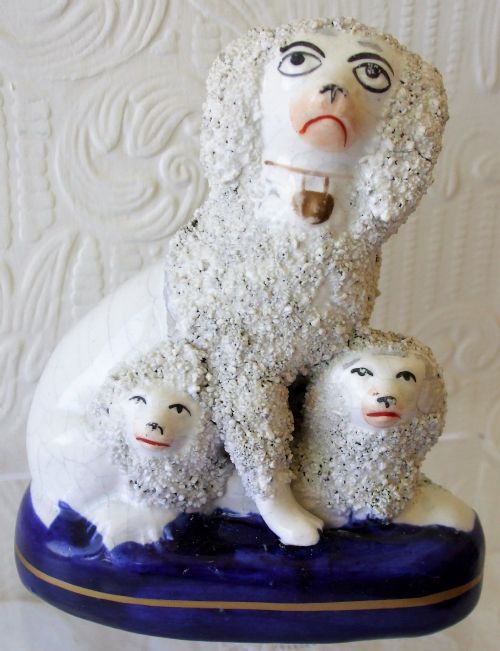
Staffordshire pottery pieces typically date from the nineteenth century and often feature earthenware bodies with hand painted enamel details. Common subjects include portrait groups and domestic animals like poodles.
Many examples take the form of flatback figures designed to be displayed on mantelpieces against a wall.