



Allegorical Porcelain Sculpture
Allegorical porcelain sculpture translates abstract concepts like seasons and elements into modelled figures that bring eighteenth and nineteenth century narrative charm to a room.
Allegorical Porcelain Sculpture
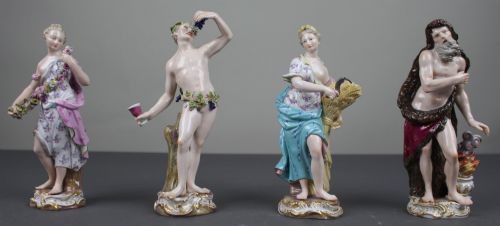
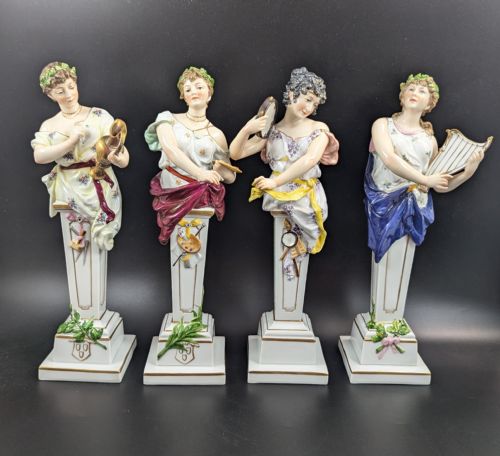
When you search for allegorical porcelain sculpture, you encounter figures and groups representing personified concepts such as the Four Seasons, the elements, or specific artistic pursuits. These pieces draw on classical myth and philosophical themes, translating intangible ideas into physical forms through modelled porcelain.
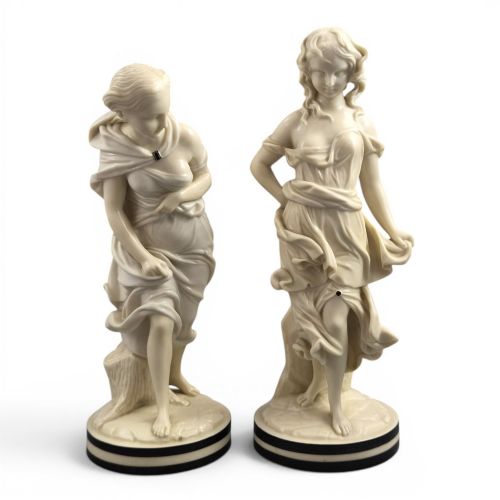
The versions you are most likely to meet on this page span from eighteenth-century soft-paste figures to nineteenth-century hard-paste and parian productions. They take the form of single figurines, pairs representing complementary themes like water and land, or complete sets depicting the changing seasons.
Originating from major European centres like Meissen, Bow, Derby, Volkstedt, and Frankenthal, these sculptures range from intimate cabinet pieces to substantial figural groups. Each workshop approached the allegorical subject matter through the lens of its prevailing style, whether rococo, neoclassical, or Victorian revival.
Materials and methods of manufacture
Makers shaped these allegorical porcelain sculpture pieces using soft-paste or hard-paste porcelain, as well as parian ware for unglazed biscuit effects. The figures were cast or modelled in sections, then assembled by hand before kiln firing.
Colour and detail were added using enamel painting and applied gilding, often highlighted with gold leaf to accentuate garments, attributes, and Rococo scroll bases. Meissen, Derby, and Bow utilised these precise ceramic techniques to achieve their characteristic finish.
Allegorical Porcelain Sculpture Retail Price Guide 2026
Typical asking prices for allegorical porcelain sculpture among the pieces listed under this phrase on Sellingantiques today, from the lower quarter to the upper quarter. They describe what is for sale here now, not the wider market.
The object forms range from single figures representing individual seasons to expansive groups depicting Father Time interacting with Cupid.
Distinctions in quality and execution
The primary distinction in an allegorical porcelain sculpture lies in the crispness of the modelling and the finesse of the hand-painted enamels. Finer examples retain sharp facial expressions, delicate hand-modelled floral elements, and precise detailing on drapery and attributes without blurring in the glaze.
The ambition of the composition also separates standard production from exceptional work, as seen in multi-figure groups depicting complex narratives like Father Time clipping Cupid's wings. Additionally, the preservation of fragile applied details and original gilding dictates the standing of a piece within its period.
Meissen·Royal Worcester·Bow Porcelain·Volkstedt·Derby Porcelain·Achille Mollica
The Allegorical Porcelain Sculpture Glossary
- Soft-Paste Porcelain
- An early ceramic composition of glass frit and white clay that produced a warm, creamy body beneath the glaze. It was widely used in eighteenth-century English factories before hard-paste formulas became standard.
- Hard-Paste Porcelain
- A true ceramic body containing kaolin and petuntse, fired at very high temperatures to create a vitrified, durable material. Continental factories like Meissen utilised this formula for its brilliant white surface.
- Parian Ware
- A fine-grained unglazed porcelain developed in the nineteenth century to imitate carved marble. It is particularly associated with classical and allegorical figures due to its smooth, sculptural finish.
- Gilding
- The application of gold leaf or gold paint to highlight architectural elements, scroll bases, and costume details. It provides contrast against the white porcelain body and enamel colours.
Allegorical Porcelain Sculpture: Frequently Asked Questions
What themes do these sculptures represent?
These figures portray abstract concepts, most commonly the Four Seasons or classical elements like water and land. Other subjects include personifications of art and time, drawing on mythological traditions.
Craftsmen translated these ideas into visible form through specific attributes held by the figures, such as sheaves of wheat for autumn or water urns for aquatic themes.
How do I identify eighteenth versus nineteenth century pieces?
Eighteenth-century examples often employ soft-paste porcelain bodies with distinct glaze textures and hand-modelled elements characteristic of early factories like Bow and Derby. Nineteenth-century pieces frequently utilise harder paste formulas and reflect revival styles like Rococo or Neoclassical.
Examining the paste under magnification and checking factory marks against historical records helps confirm the exact manufacturing period.
Where were these figures made?
Production was centred in prominent European ceramic hubs, particularly in Germany and England. Major output came from factories such as Meissen in Germany, along with Derby and Bow in England.
Continental workshops like Volkstedt and Frankenthal also contributed significantly to the tradition of allegorical figural art.
How should I display allegorical porcelain sculpture?
These sculptures suit secure placement on mantelpieces, in glass-fronted cabinets, or on dedicated console tables where their detailed modelling can be appreciated from multiple angles. Due to the delicate nature of applied elements like flowers and fingers, they require stable surfaces away from high-traffic areas.
Keeping them out of direct sunlight preserves the vibrancy of the hand-painted enamel colours and gold leaf highlights.