

English Porcelain Dessert Plates
English porcelain dessert plates bring the artistry of Georgian and Victorian dining tables directly into modern rooms.

English Porcelain Dessert Plates
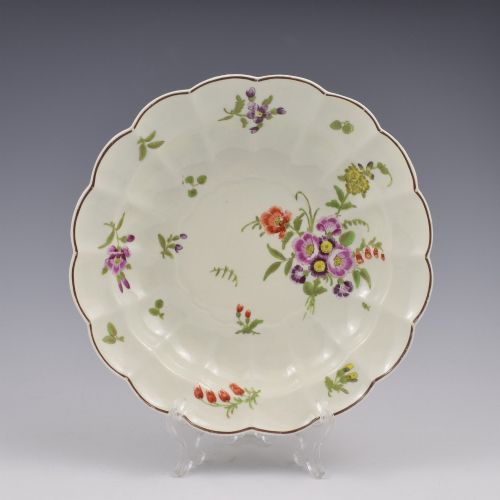
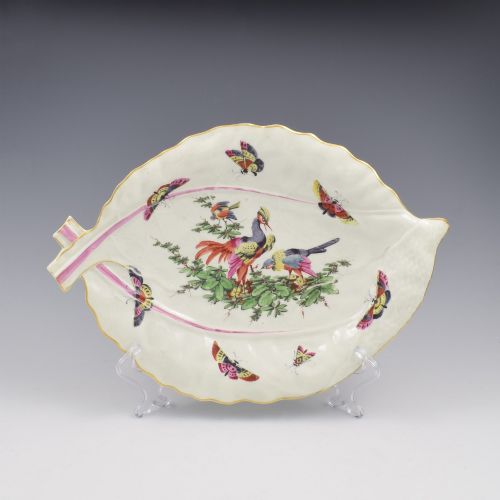
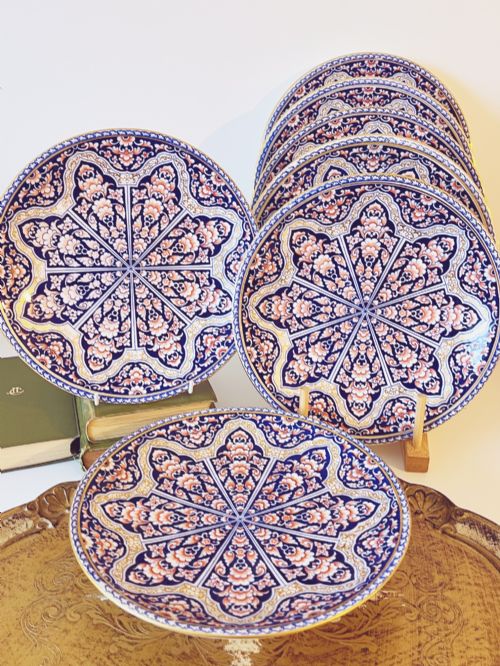
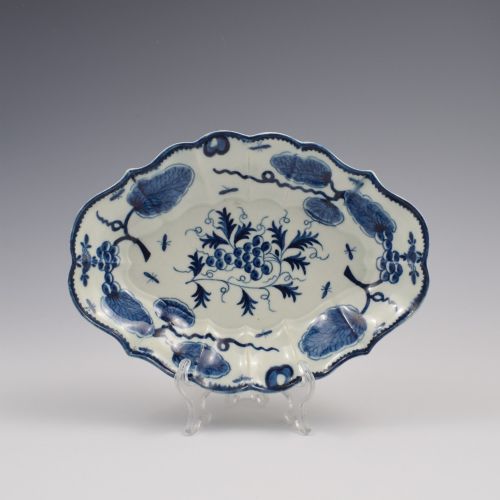
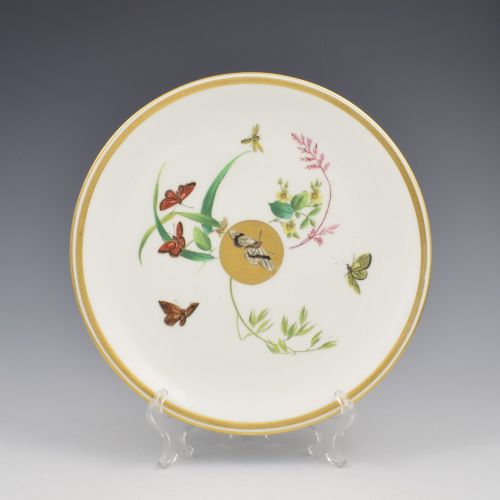
English porcelain dessert plates are formal tableware pieces designed for the final course of a grand meal, often forming part of larger matching services that included comports and serving dishes. These plates span the eighteenth and nineteenth centuries, taking forms from simple lobed circles to botanical leaf shapes and basketweave moulding. Collectors encounter eighteenth-century soft-paste pieces from factories such as Worcester, alongside nineteenth-century bone china and porcelain from makers like Minton, Spode, and Coalport.
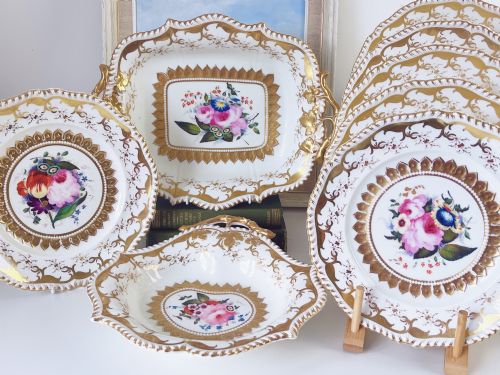
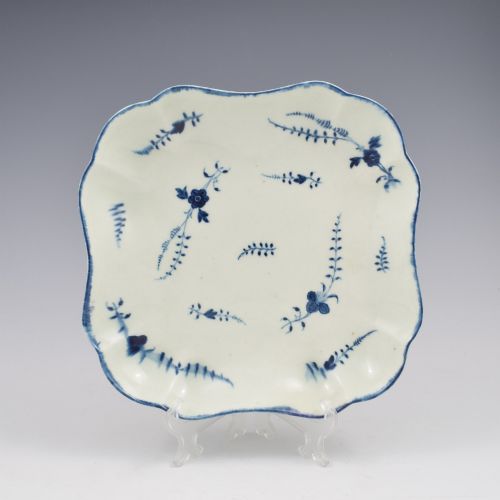
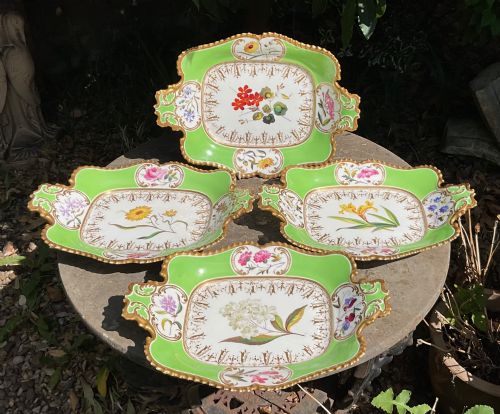
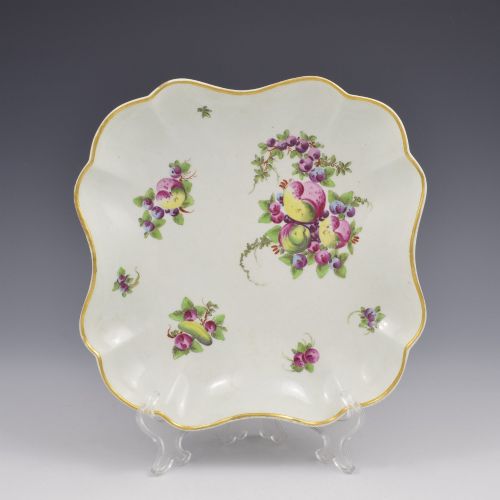
Beyond standard round profiles, the evidence shows specialist serving shapes including square lobed dishes, shell dishes, and oval dessert dishes intended for fruit, sweetmeats, or puddings at the conclusion of dinner.
Factors of quality and execution
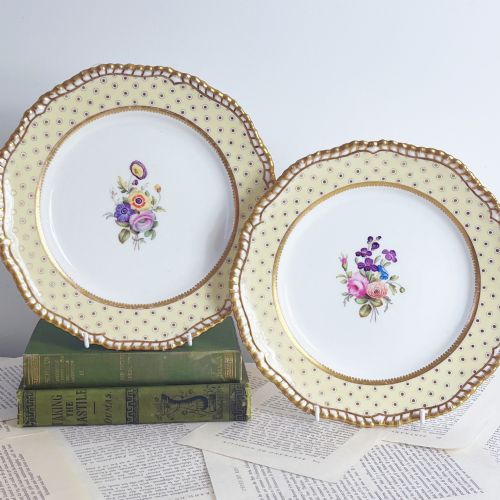
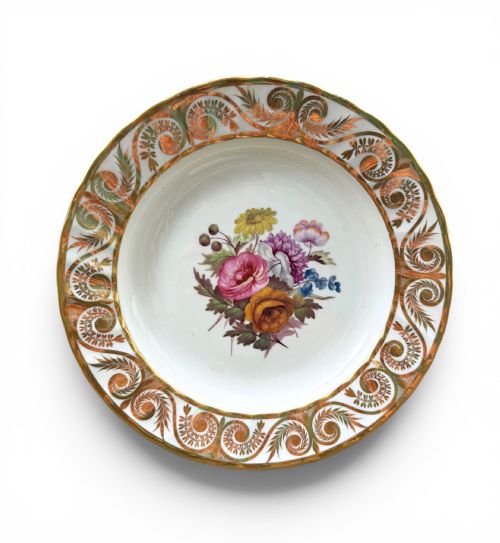
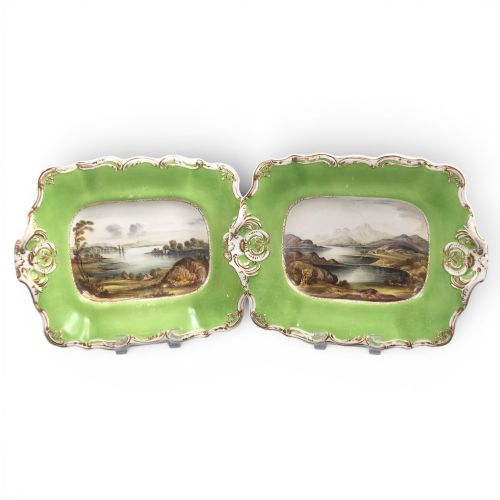
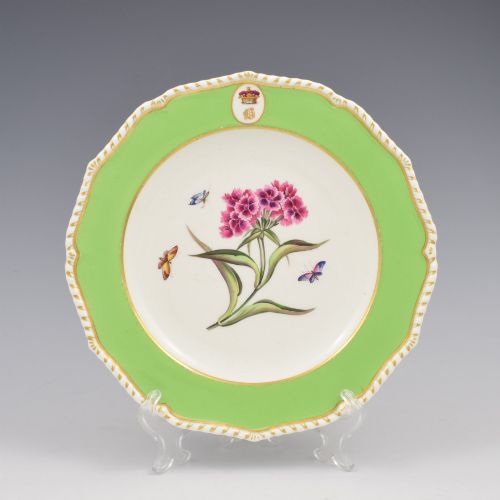
The distinction between standard factory output and the finest examples lies in the precision and artistry of the hand-painting. Plates featuring named botanical specimens, detailed topographical scenes, or complex armorial bearings by recognised artists demonstrate a higher level of workshop skill than simple printed or repeat-pattern florals.
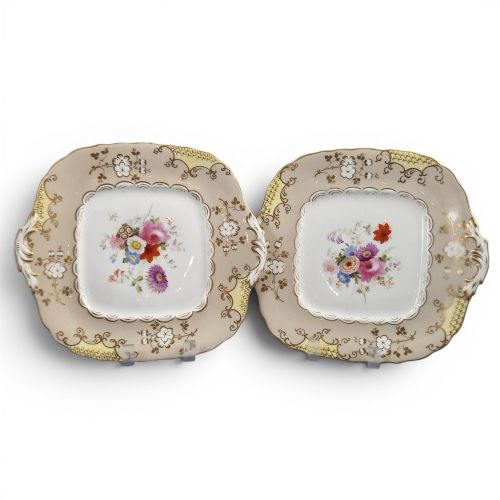
The quality of the porcelain body and the crispness of the moulding also define the grade of a piece. Finer plates exhibit an even glaze without pitting, well-preserved heavy gilding, and perfectly balanced forms whether circular, lobed, or shaped as leaves and shells.
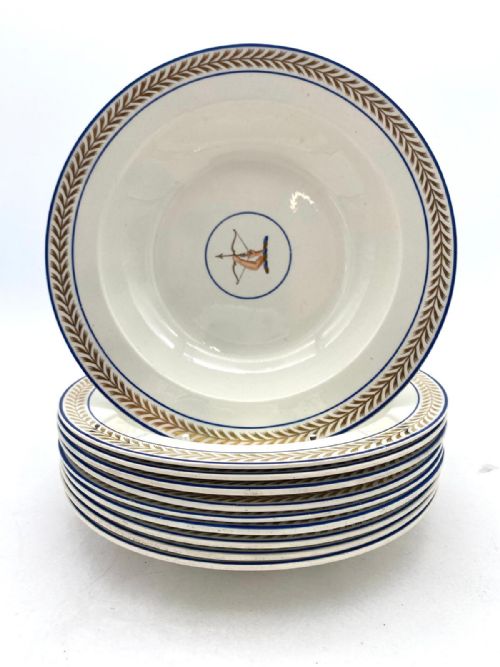
The listings show English porcelain dessert plates spanning the eighteenth, nineteenth, and early twentieth centuries, featuring bone china, soft-paste porcelain, and creamware.
Royal Crown Derby·Chamberlains Worcester·Flight Barr And Barr·Minton Porcelain·Coalport·Spode·Wedgwood
The English Porcelain Dessert Plates Glossary
- Armorial
- Bearing a family coat of arms or crest. These bespoke commissions were painted specifically for landed gentry and aristocratic families.
- Soft-paste porcelain
- An early artificial ceramic composition made from glass paste and white clay rather than hard-paste materials. It is characterised by a warm, creamy glaze and translucency.
- Comport
- A raised footed dish or bowl used for serving fruit or sweetmeats as part of a central table display. They frequently accompany dessert plates in matching services.
- Gilding
- The application of gold leaf or gold paint to the rims and borders of ceramics. High-quality pieces often feature burnished gold details.
- Kakiemon
- A style of Japanese enamelled porcelain design featuring asymmetrical motifs and floral or bird patterns. Eighteenth-century English factories frequently copied these palettes.
English Porcelain Dessert Plates: Frequently Asked Questions
What were dessert plates used for?
These plates were used exclusively for the final course of a formal meal, which typically consisted of fruit, nuts, cheeses, and delicate sweetmeats. They were brought out after the main dinner service had been cleared away.
Because dessert was a social affair often accompanied by wine, these plates were designed to be decorative and conversation-starting, featuring hand-painted botanical studies or armorial crests.
How do I date an antique dessert plate?
Dating relies on a combination of factory marks, paste composition, and painting style. Eighteenth-century pieces often feature crescent or square pseudo-markings and soft-paste bodies, while nineteenth-century items frequently display registration diamonds, pattern numbers, or printed factory names.
Stylistic shifts also provide clues, moving from the rococo scrollwork of the 1770s to the bright floral reserves of the Regency period and the eclectic revivals of the Victorian era.
Can I use antique porcelain plates for dining?
While these plates are structurally sound, most collectors prefer to display them rather than use them for daily dining. Historic glazes and delicate overglaze enamels, particularly those enhanced with gold leaf, can be worn down by modern cutlery and frequent washing in a dishwasher.
Hand-washing in lukewarm water with mild soap is essential if historic dessert plates are ever utilised for special dining occasions.
What is the difference between a plate and a dish?
In ceramic terminology, plates are generally flat or shallow items intended for individual portions during the dessert course. Dishes, such as square lobed dishes or leaf dishes, are deeper serving pieces meant to hold shared portions of fruit or sweetmeats in the centre of the table.
Matching dessert services usually combined one or two central serving dishes with a dozen or more individual plates.