






English Period Walnut Drawers
English period walnut drawers bring rich timber grain and restrained proportions into a room, offering both practical storage and deep historical presence.
English Period Walnut Drawers
English period walnut drawers encompass practical storage forms like chests of drawers, bureaus, and cabinets on stands originating from the seventeenth and eighteenth centuries. These pieces reflect the shift from oak to walnut in English cabinet making, introducing richer figuration and more sophisticated construction.
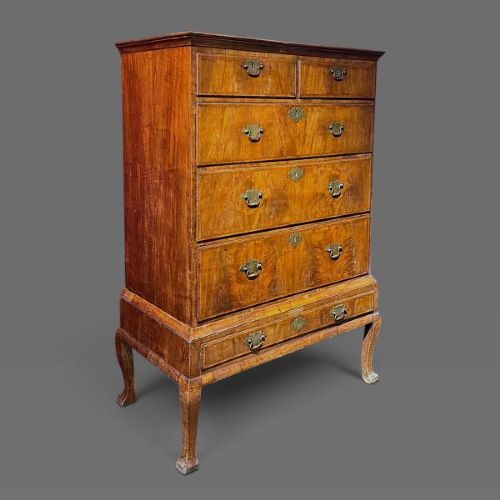
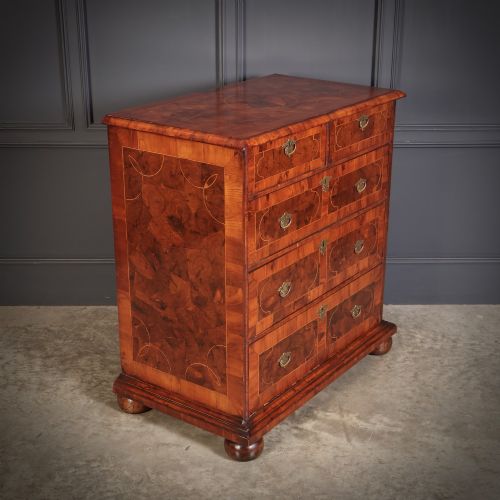
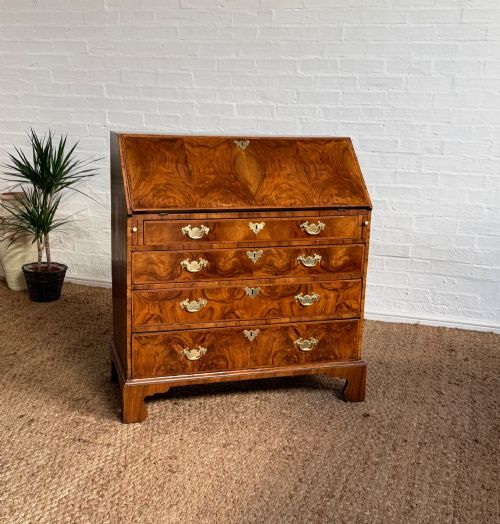
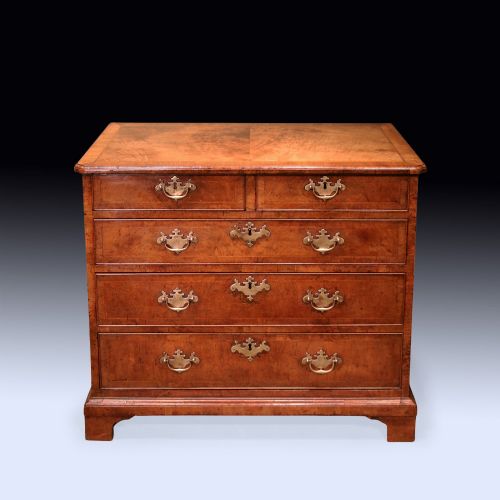
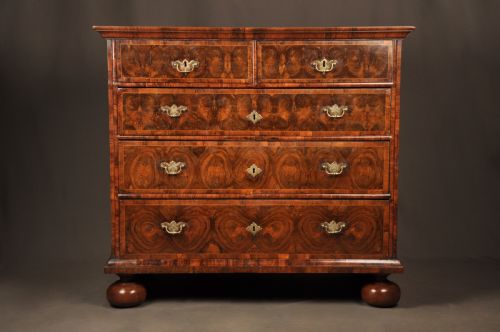
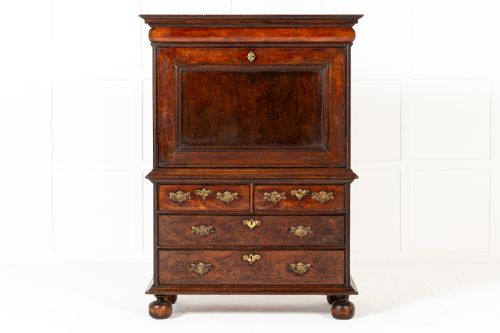
The versions most commonly met in this selection span the William and Mary, Queen Anne, and Georgian eras. Buyers encounter tall chests on stands, bureau desks, and straightforward chests featuring banded borders or oyster veneer.
Makers of these periods utilised domestic and continental walnut to create disciplined silhouettes that relied on timber figure rather than heavy carving for visual impact. Each form demonstrates the changing domestic requirements of homes across the seventeenth and eighteenth centuries.
Assessing quality
Quality rests on the selection and matching of timber veneers, where continuous grain patterns across multiple drawers indicate superior workshop practice. The crispness of feather-banding and cross-grained borders separates standard production from exceptional cabinet work.
Proportion and the retention of original surface patination dictate the desirability of a piece. Fine examples maintain their original brass hardware, timber thickness, and structural integrity without intrusive modern alterations.
English Period Walnut Drawers Retail Price Guide 2026
Typical asking prices for english period walnut drawers among the pieces listed under this phrase on Sellingantiques today, from the lower quarter to the upper quarter. They describe what is for sale here now, not the wider market.
Listings feature walnut chests, bureaus, and cabinets spanning the seventeenth century through the Georgian and Regency periods, incorporating brass and oak.
The English Period Walnut Drawers Glossary
- Oyster veneer
- A method of cutting branch wood transversely to produce small, circular or oval pieces with concentric growth rings. This decorative technique appeared frequently on late seventeenth-century carcases.
- Feather-banding
- Narrow strips of veneer cut diagonally and laid in a herringbone pattern around drawer perimeters. It provides a neat contrasting border to larger veneer panels.
- Bureau
- A desk form featuring a sloping fall-front that opens to reveal internal pigeonholes and small drawers. It combines writing utility with under-bench storage drawers.
- Chest on chest
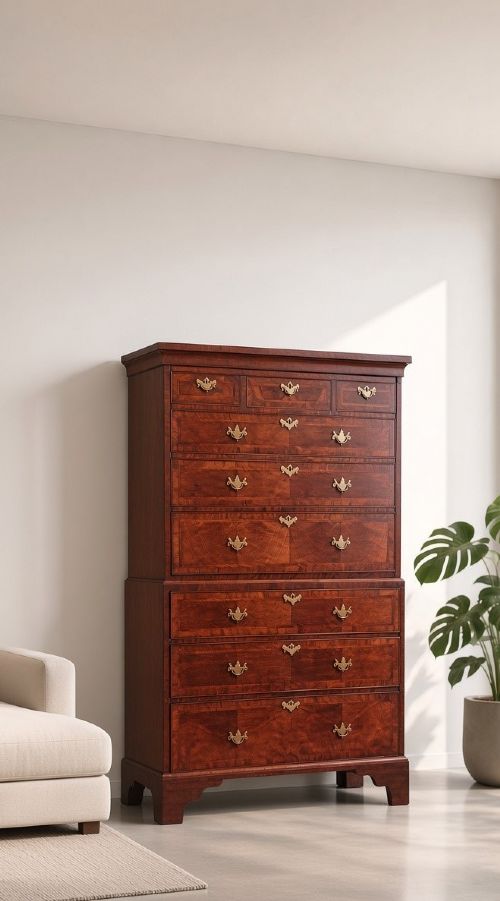
- A tall storage form comprising a lower chest section surmounted by a slightly narrower upper chest. Also known as a tallboy, it maximises vertical capacity.
- Marquetry
- The art of inlaying different coloured veneers into a ground to form decorative pictures or geometric patterns. Makers employed this technique on select William and Mary surfaces.
English Period Walnut Drawers: Frequently Asked Questions
How do I date an English walnut chest?
Examine the construction methods of the drawer linings and the timber species used in the carcase. Earlier pieces from the seventeenth century often employ oak carcases and oyster veneers, while eighteenth-century examples lean towards figured walnut and refined bracket feet.
Hardware placement and the presence of feather-banding also provide clear chronological markers. Lock plates and handle configurations evolved systematically across the William and Mary, Queen Anne, and Georgian periods.
Where should I place a walnut bureau?
Position the bureau in a study, drawing room, or hallway where ambient light highlights the figured grain of the fall-front. Keep the piece away from direct sunlight and strong heat sources to prevent timber shrinkage and veneer lifting.
Ensure adequate clearance for the drop-down writing surface and a chair. These pieces function well against neutral walls that allow the warm brown tones of the walnut to stand out.
How do I clean antique walnut furniture?
Apply a micro-crystalline wax sparingly with a soft cloth and buff gently to maintain the protective sheen. Avoid modern silicone sprays and water, which can penetrate old finishes and cloud the underlying timber.
Regular dusting with a dry lint-free cloth prevents abrasive particle accumulation. Consistent care preserves the natural patination built up over centuries of use.