


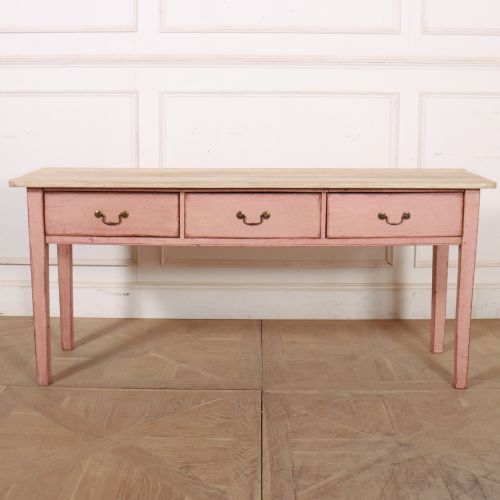
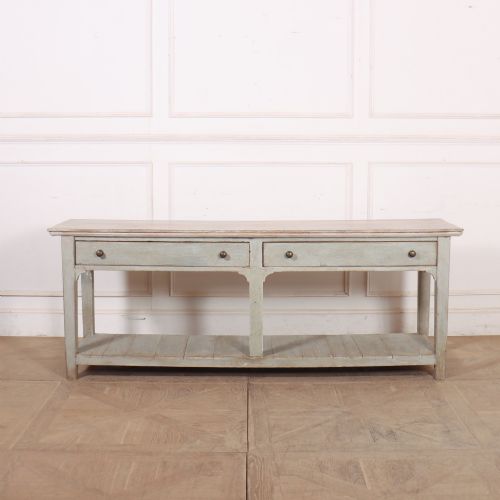


English Painted Country Table
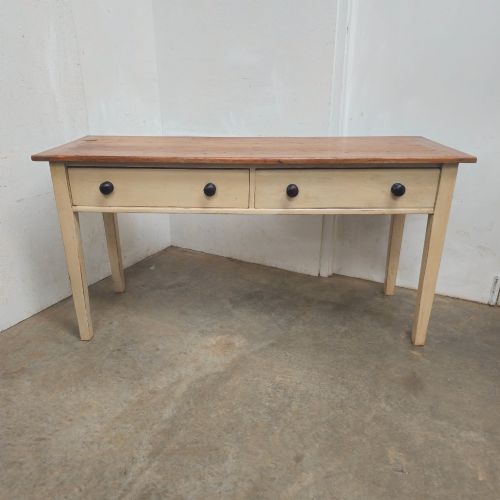
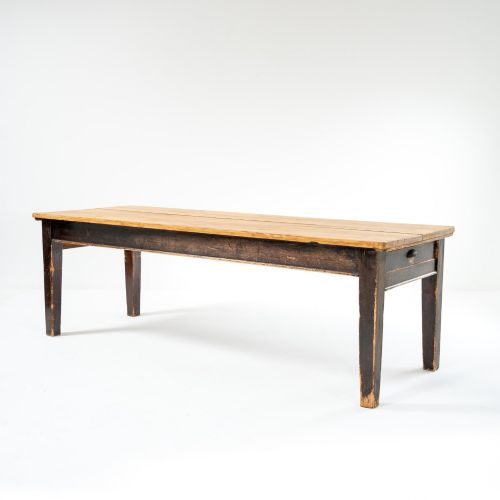
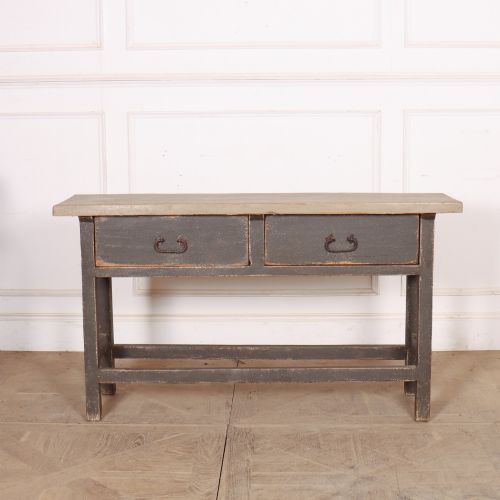
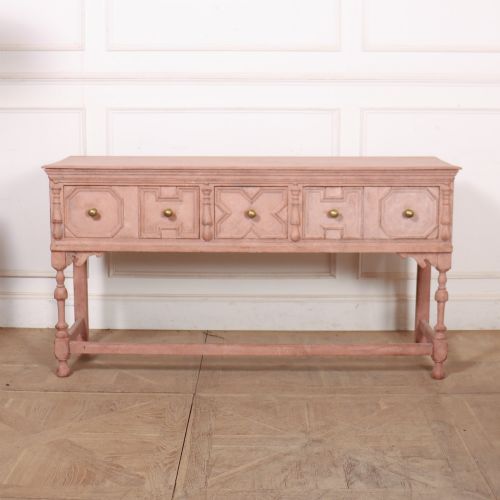
An English painted country table brings robust utility and characterful pigment into a room, offering sturdy pine and oak surfaces for daily use.
English Painted Country Table
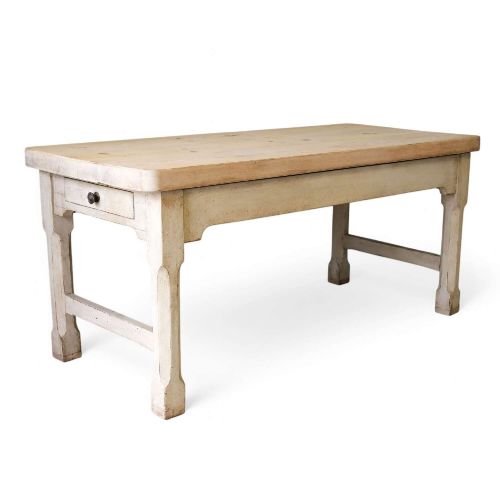
An english painted country table covers a diverse group of domestic furniture fashioned from pine, oak, and painted timber, originating from domestic and agricultural settings across several centuries. Buyers searching this phrase meet practical forms ranging from substantial harvest tables and prep surfaces to smaller side tables, tavern tables, and dresser bases.
The majority of pieces encountered here date from the nineteenth and eighteenth centuries, with occasional examples from the seventeenth century and the early decades of the twentieth. These furnishings span distinct aesthetic movements, including Georgian proportions, rustic farmhouse designs, Jacobean influences, and late Victorian styles.
Common functional forms include large serving tables, potboard dresser bases, console tables, and lamp tables, reflecting the practical needs of past country houses and rural properties. Many survivors display later paint finishes applied over earlier timber, while others retain original pigment on pine or oak carcasses.
How they were made
Carpenters constructed these pieces primarily from solid pine and oak, utilising sturdy timber frames suited to heavy domestic tasks. Surfaces were frequently treated with paint, giving utilitarian woods a protective and decorative coloured finish.
Construction techniques prioritized durability, visible in the heavy planking of harvest tables, the lower potboards of dresser bases, and the sturdy legs of side and tavern tables. Iron or brass hardware occasionally supplemented the wooden construction on drawers and supports.
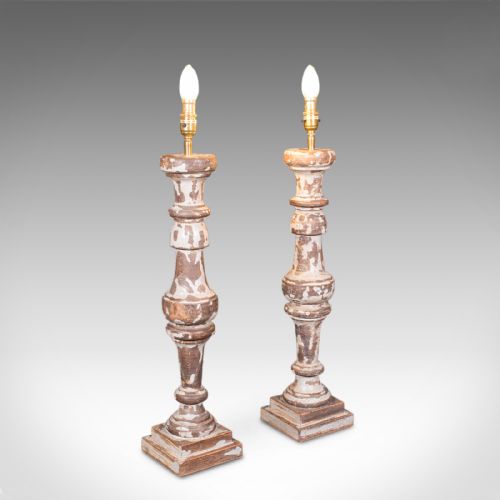
Some tables survived centuries of kitchen service only to be repurposed as electrical lamp bases.
What varies in quality
Quality in an english painted country table rests on the integrity of the underlying timber structure and the historical relationship between the wood and its painted surface. Pieces retaining original paint layers command particular interest compared to surfaces carrying later or renewed coats.
Proportion and scale also separate standard utility items from finer country house examples, with well-balanced dresser bases and large dining tables demonstrating superior joinery and more substantial regional craftsmanship.
The English Painted Country Table Glossary
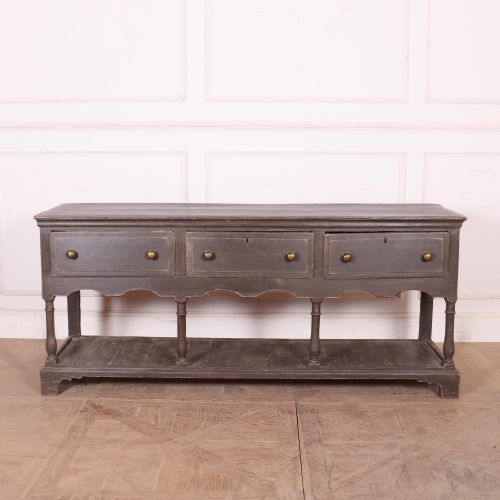
- Potboard dresser base
- A low storage unit featuring an open lower shelf, known as a potboard, positioned close to the floor for storing kitchen utensils. This form is frequently constructed from oak or pine.
- Harvest table
- A long, narrow dining table designed to accommodate large groups during seasonal agricultural gatherings. These surfaces are commonly fashioned from sturdy pine.
- Tavern table
- A small, sturdy wooden table traditionally used in public houses for drinking and dining. They typically feature heavy legs and simple rectangular tops.
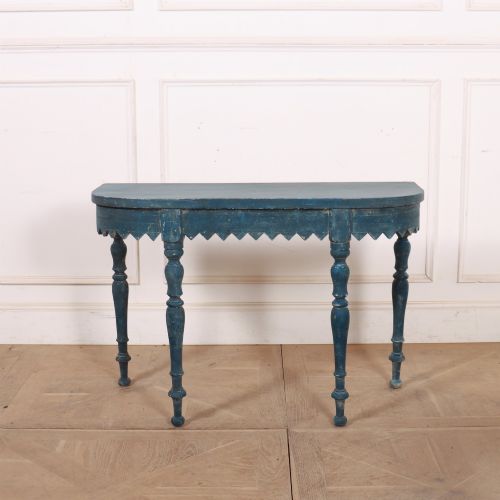
- Demi-lune console table
- A half-moon shaped table designed to stand flat against a wall. These pieces often appear in late nineteenth-century styles.
- Cricket table
- A small, lightweight three-legged table with a circular top. This traditional form provided stability on uneven flagstone floors.
English Painted Country Table: Frequently Asked Questions
What is an english painted country table?
An english painted country table is a utilitarian wooden furnishing, typically made from pine or oak, finished with a painted surface. These pieces include dining tables, side tables, and prep surfaces from rural homes.
Such tables reflect centuries of domestic use, often showing layers of wear and pigment that highlight their practical history in country houses and farmhouses.
How do I date an antique wooden table?
Dating involves examining the construction techniques, tool marks, timber selection, and style of the piece. Seventeenth and eighteenth-century examples often feature heavier oak framing, while nineteenth-century versions frequently employ pine.
Paint analysis also assists, as surfaces may show original decoration or later applications added during subsequent periods of use.
Where were these tables used?
These tables served primarily in kitchens, dairies, pantries, and dining rooms of rural properties and country houses. Their robust construction suited food preparation, serving, and everyday household labour.
Larger versions accommodated communal dining, while smaller side and lamp tables functioned in reception rooms and hallways.
How do I care for painted wood?
Caring for antique painted surfaces requires avoiding excess moisture and harsh chemical cleaners that can lift or dissolve historic pigment. Dusting gently with a dry or slightly damp cloth preserves the finish.
Keeping the timber away from direct heat sources prevents the wood from warping and protects the integrity of the paint layer.
What woods are used in country tables?
Country tables most frequently utilise pine and oak as primary structural materials. Pine provided a softer, abundant wood for painted surfaces, while oak offered exceptional strength for earlier dresser bases and heavy frames.
Other timbers occasionally appear in secondary components, supporting the sturdy construction characteristic of rural craftsmanship.