



Twin Drawer Desk
When you search for a twin drawer desk, you are looking at substantial writing furniture built to organise papers and anchor a study.
Twin Drawer Desk
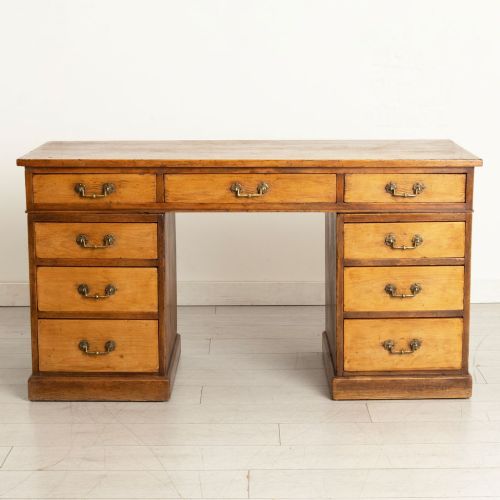
A twin drawer desk usually presents as a writing table or a compact pedestal form equipped with paired drawers for storage. The pieces meeting this description span several decades, crossing from Regency elegance into Victorian utility and Edwardian refinement.
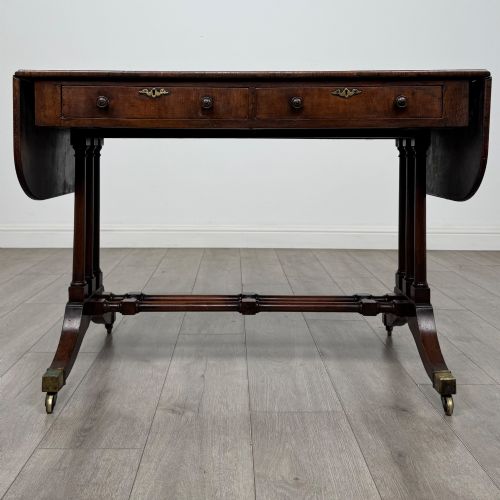
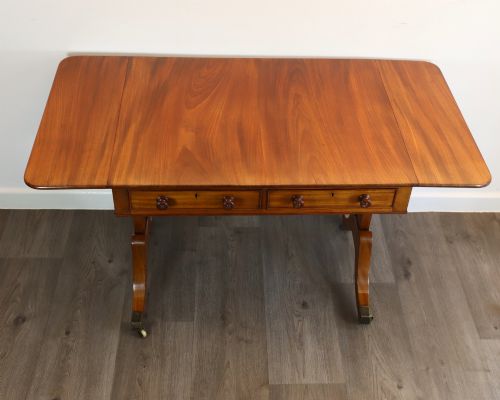
Many examples emerge in mahogany or oak, often finished with inset leather writing surfaces and turned supports. Others appear as sofa tables or side tables featuring twin drawer configurations designed for domestic writing tasks.
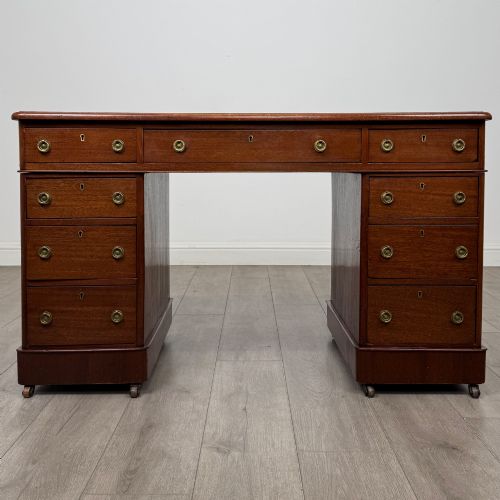
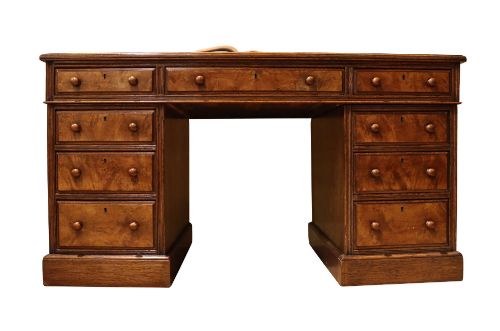
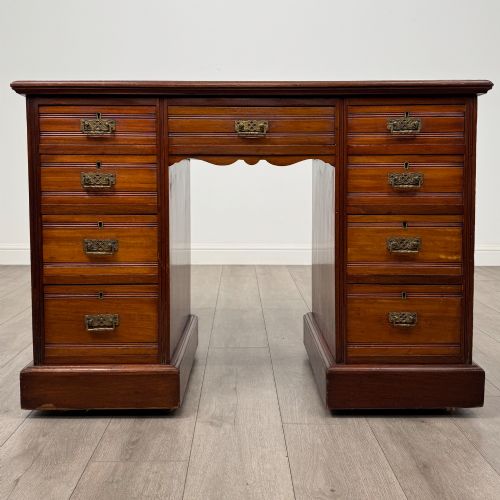
The heavier pedestal versions offer multi-drawer capacity alongside the central twin arrangement, providing ample room for working archives. Lighter writing tables rely strictly on the twin drawer layout beneath the writing top to maintain a sleeker silhouette.
How they were made
Cabinet makers utilised dense hardwoods like mahogany, oak, burr walnut and rosewood, pairing structural strength with decorative grain figures. Surfaces often received inset leather writing panels framed by delicate boxwood stringing or brass inlay.
Drawer construction relied on hand-cut dovetails, while structural joints utilised traditional pegged or glued joinery designed to withstand daily use. Brass hardware, including swan neck handles and castors, completed the assembly of these functional pieces.
Forms range from compact writing tables and sofa tables to heavy nine drawer pedestal desks.
What varies in quality
The standard of a twin drawer desk rests on the selection of timber veneers and the crispness of the secondary wood framing. Finely figured mahogany or burr walnut indicates a higher grade of manufacture intended for prominent rooms.
Attention to detail in the drawer linings, the retention of original brass hardware, and the subtlety of any crossbanding or inlay separate standard utility items from superior cabinet work.
Maple & Co·Edwards & Roberts
The Twin Drawer Desk Glossary
- Pedestal desk
- A heavy writing table comprising two separate drawer units supporting a central top. This form provides substantial storage space on both sides of the kneehole opening.
- Sofa table
- A rectangular table traditionally placed before a sofa, featuring drop leaves and twin drawers beneath the top. These pieces often stand on trestle supports or dual pedestals.
- Crossbanding
- A strip of veneer applied perpendicularly to the grain of the main surface to form a decorative border. This technique highlights the edges of drawer fronts and tabletops.
- Partners desk
- A large format writing table designed for two people to work opposite one another, featuring drawers and cupboards accessible from both sides.
- Kneehole
- The central recessed space beneath a desk top that accommodates the sitter's legs. The opening is frequently flanked by banks of drawers.
Twin Drawer Desk: Frequently Asked Questions
What is a twin drawer desk?
A twin drawer desk is a piece of writing furniture featuring two distinct drawers set beneath the work surface. These items range from compact writing tables to larger pedestal forms.
The layout provides accessible storage for papers and writing implements without the bulk of a full pedestal arrangement. Most examples date from the nineteenth and early twentieth centuries.
How do I tell a Victorian desk from an Edwardian one?
Victorian desks generally feature heavier timbers like dark mahogany or oak, often accompanied by deep mouldings and robust turned legs. The overall construction prioritises weight and utility.
Edwardian pieces tend to show lighter mahogany or satinwood highlights, incorporating simpler lines and sometimes inlaid stringing. The proportions are typically more slender and understated.
Where should I place a twin drawer desk?
Many smaller twin drawer desks function well placed flat against a study or bedroom wall as a writing station. Freestanding pedestal versions look particularly effective positioned in the centre of a room.
Because several pieces feature finished backs, they can sit away from walls without exposing unfinished construction. Ensure adequate clearance for the chair and drawer operation in your chosen spot.
Are these desks suitable for daily computer work?
Antique desks accommodate modern laptops and paperwork easily, provided the height and kneehole space match your seating requirements. The original leather or wood surfaces offer stable platforms for daily tasks.
Care should be taken to protect antique leather tops from direct heat and moisture. Using a suitable blotter or desk mat preserves the historic finish during routine use.