





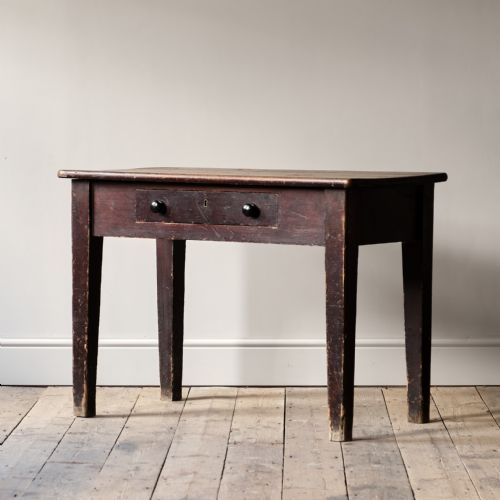


Rustic Wood Writing Desk
These rustic wood writing desks and associated tables offer enduring utility, bringing tactile historic character and practical writing surfaces into modern rooms.
Rustic Wood Writing Desk
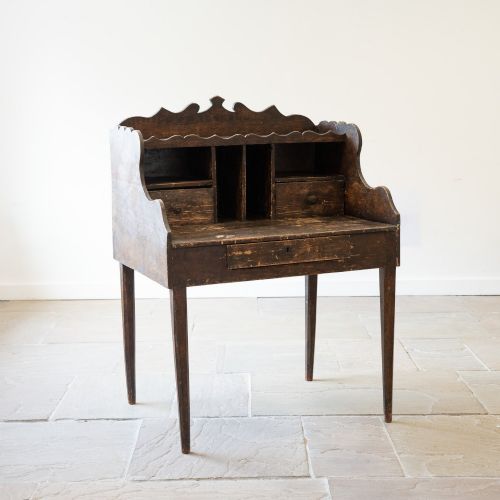
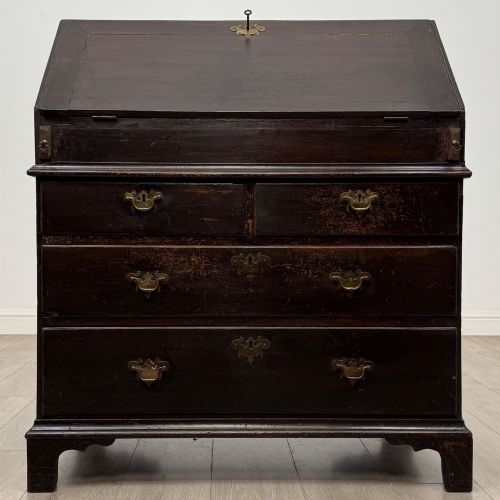
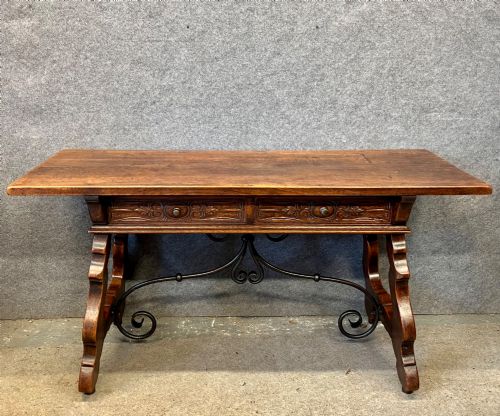
A rustic wood writing desk encompasses utilitarian tables, writing slopes, and office desks dating from the seventeenth century through to the early twentieth century. Buyers seeking this category encounter forms ranging from Swedish painted table top writing desks to Victorian pitch pine side writing desks and Spanish walnut tables.
The selection frequently includes pieces spanning the eighteenth and nineteenth centuries, alongside regional interpretations such as English country, Spanish colonial, and French provincial styles. Many examples utilise sturdy timbers shaped for functional daily work rather than formal display.
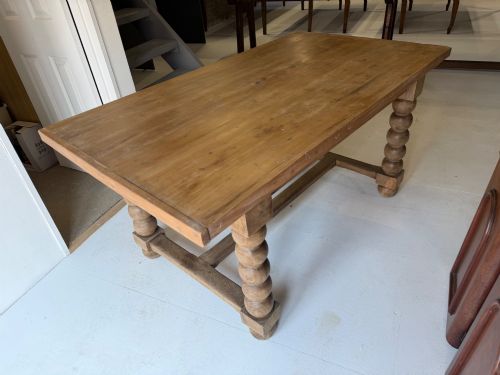
While designated as desks, the inventory also covers side tables, trestle tables, and sorting tables that served commercial, domestic, or ecclesiastical purposes. These varied origins ensure that buyers find pieces with distinct regional character and honest patination.
What varies in quality
Quality in these desks rests upon the integrity of the timber selection and the retention of original surface treatments. Pieces showcasing untouched patination, original painted finishes, or regional vernacular details stand apart from heavily altered examples.
The proportion and balance of the piece, from small-proportioned cherry wood tables to larger office desks, dictate its visual weight and placement suitability. Superior examples demonstrate thoughtful joinery that has survived centuries of active use without losing structural stability.
Rustic Wood Writing Desk Retail Price Guide 2026
Typical asking prices for rustic wood writing desk among the pieces listed under this phrase on Sellingantiques today, from the lower quarter to the upper quarter. They describe what is for sale here now, not the wider market.
Several tables retain traces of past administrative duties, from post office sorting compartments to ecclesiastical side table use.
The Rustic Wood Writing Desk Glossary
- Pine
- A softwood commonly used in regional and provincial European furniture, valued for its accessible grain and adaptability to painted or waxed finishes.
- Trestle table
- A table construction featuring two or more trestles supporting a horizontal top, historically utilised for dining, working, or sorting.
- Patina
- The surface sheen and colour acquired by wood through age, handling, and exposure to light over many decades.
- Writing slope
- A portable or table-mounted desk featuring an angled writing surface, often incorporating internal compartments for ink and paper.
- Provincial
- A term denoting items made in regional areas outside metropolitan centres, often reflecting local woodworking traditions and available native timbers.
Rustic Wood Writing Desk: Frequently Asked Questions
What defines a rustic wood writing desk?
These pieces comprise utilitarian tables, writing slopes, and office desks constructed from woods like pine, oak, walnut, and elm. They originate from periods spanning the seventeenth to the early twentieth century.
They reflect regional vernacular traditions across England, France, Spain, and Sweden. Their primary characteristic is an emphasis on functional utility and honest timber construction.
How do I care for historic wood surfaces?
Historic wood surfaces benefit from minimal intervention, typically requiring only gentle dusting with a dry or slightly damp cloth. Avoiding direct sunlight and maintaining stable room humidity preserves the natural timber and historic wax or paint layers.
Applying occasional appropriate wax helps nourish older woods like oak and pine without altering their accumulated patination. Harsh chemical cleaners should be avoided entirely to protect the historic finish.
Where were these tables originally used?
Many of these pieces served practical functions in domestic, commercial, or institutional environments. Examples include post office sorting tables, church side tables, and provincial farmhouse desks.
Their sturdy construction made them suitable for daily administrative or domestic tasks rather than formal drawing room display. This utilitarian origin accounts for their robust frames and practical proportions.
How can I tell different regional styles apart?
Regional styles reveal themselves through the choice of native timbers and specific decorative vocabulary. For instance, Spanish examples frequently utilise walnut with baroque influences, while Swedish pieces often feature scraped pine or painted surfaces.
English country and provincial French pieces display local joinery methods and proportions characteristic of their specific geographic workshops. Examining the wood species and construction details clarifies these geographical origins.