


English Oak Trunk
An English oak trunk brings centuries of utility into a modern room, offering sturdy storage with panels and joints built to endure.
English Oak Trunk
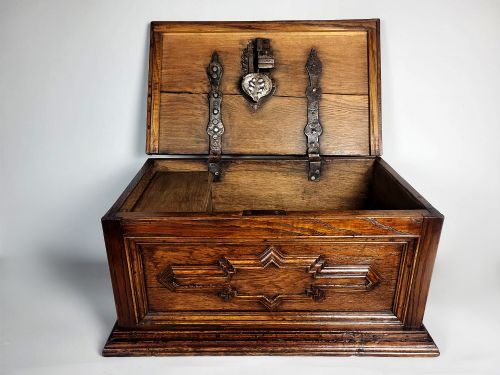
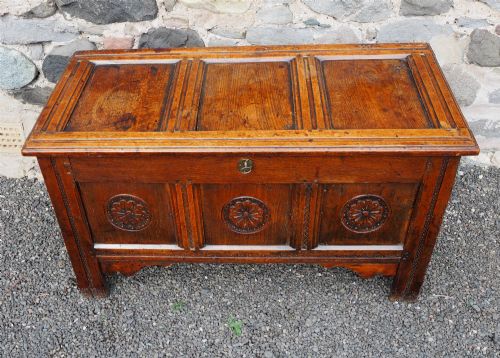
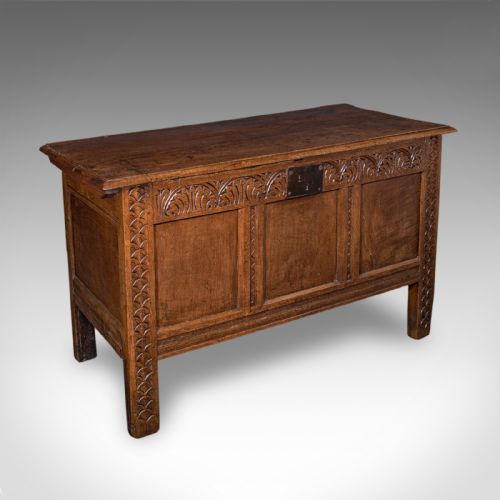
An English oak trunk encompasses robust domestic storage pieces ranging from sixteenth-century boarded coffers to eighteenth-century mule chests and Victorian iron-bound silver trunks. These heavy pieces were designed to hold textiles, valuables, and documents securely within the home or during transport.
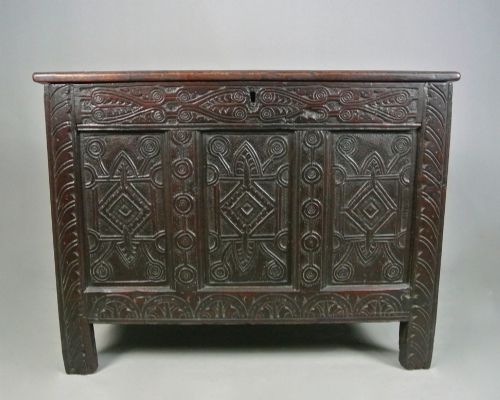
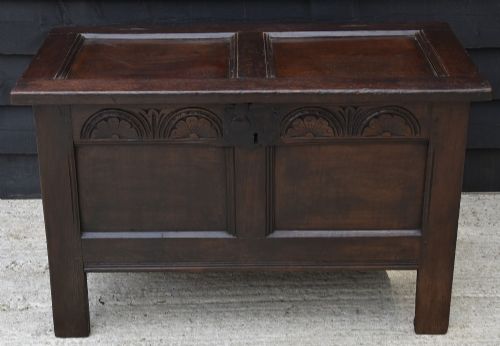
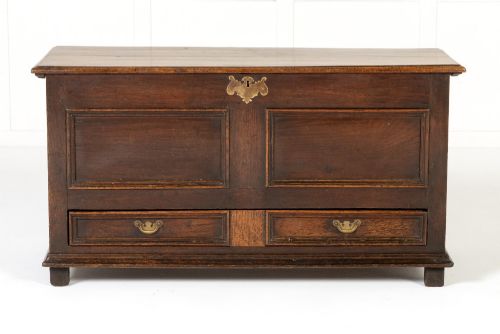
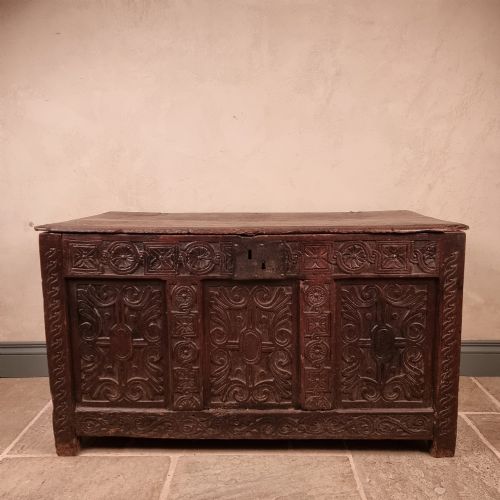
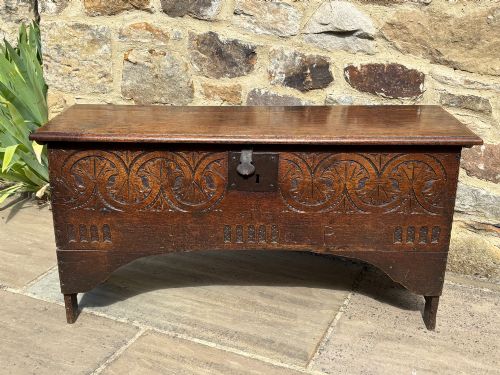
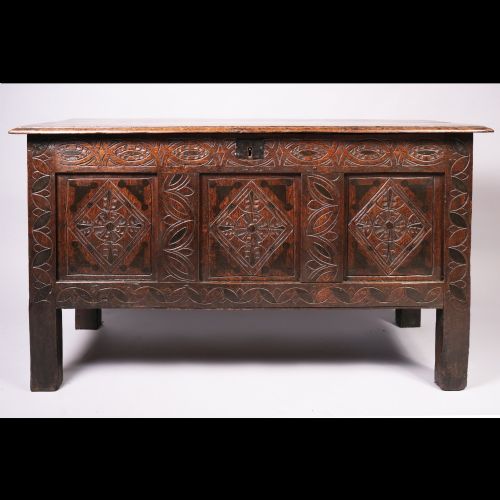
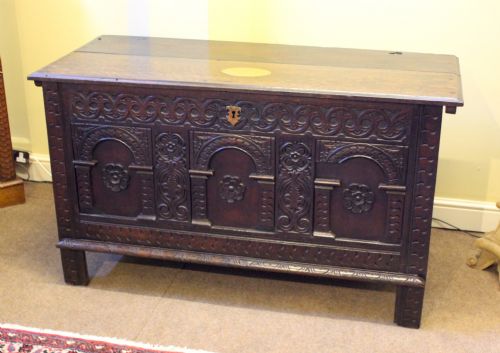
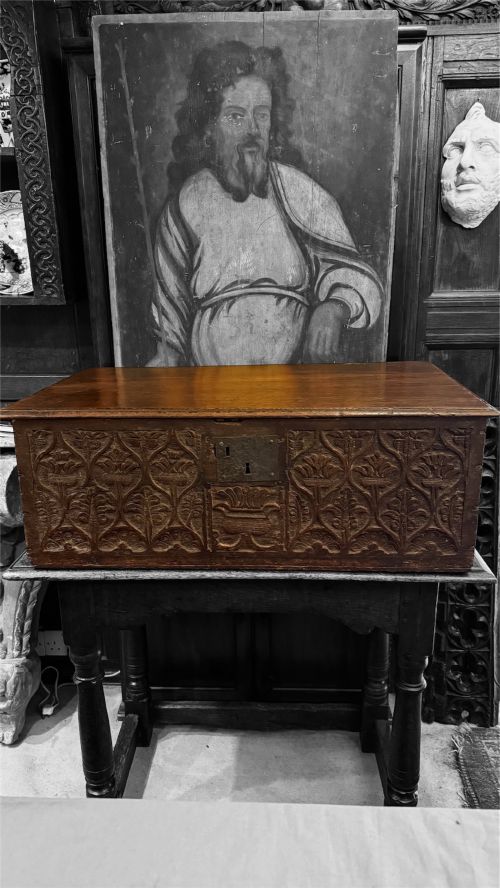
The sixteenth and seventeenth-century examples frequently present as carved or arcaded panel coffers, alongside smaller bible boxes and six-plank sword chests. Moving into the Georgian and William III periods, mule chests emerge with lower drawers, combining blanket storage with accessible compartment space.
The selection also includes later nineteenth-century silver and shipping trunks reinforced with steel and iron bands for heavy transit. Across these periods, oak remains the constant structural medium, often paired with elm or accented by walnut and ebonised details.
How They Were Made
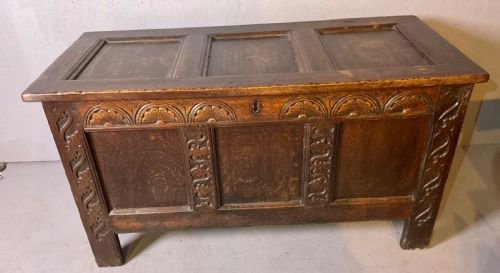
Joinery defines these pieces, utilising pegged mortise and tenon frames to hold solid oak panels that could expand and contract with humidity without splitting. Early boarded versions relied on simple six-plank construction joined with iron nails and dovetails.
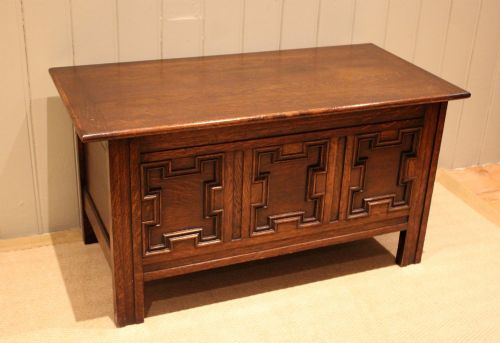
Carving, geometric mouldings, and arcaded details were applied by hand to the front panels using gouges and chisels during the Jacobean and seventeenth-century eras. Hardware such as complex steel locks, brass escutcheons, and heavy iron banding were forged separately and fitted by hand.
Listings feature solid oak construction spanning the sixteenth century through the Victorian era, alongside iron, brass, and walnut accents.
What Varies in Quality
The integrity of the original timber frame and the proportion of replaced panels or boards determine the baseline merit of each piece. Intact original floorboards, hinges, and complex working steel locks elevate a coffer well above examples with extensive timber restoration.
Depth and crispness of hand-carved ornamentation separate standard utility boxes from superior seventeenth-century panel work. Surface patination, developed through centuries of wax polishing, distinguishes pieces retaining their honest early finish from stripped or overly treated examples.
Richard Corless of Stockport·Elkington and Co·Wadham and Sons
The English Oak Trunk Glossary
- Coffer
- A heavy wooden chest used historically for storing valuables, linen, or documents. These storage items often feature hinged lids and sturdy panel construction.
- Mule Chest
- A traditional storage chest featuring one or more drawers built into the base beneath the primary upper compartment. This form bridges the gap between a standard blanket box and a chest of drawers.
- Bible Box
- A small tabletop or desk box designed to hold sacred texts and writing implements. They frequently double as portable storage trunks from the seventeenth century.
- Arcaded
- A decorative style featuring a series of arches carved into wooden panels in low relief. This architectural motif appears frequently on Jacobean and Charles II oak furniture.
- Boarded Construction
- A primitive method of building chests by joining plain timber planks directly at the edges using nails or dowels rather than framed panels.
English Oak Trunk: Frequently Asked Questions
What is the difference between a coffer and a mule chest?
A coffer is a simple enclosed chest with a hinged lid opening from the top, primarily designed for bulk storage of blankets and garments.
A mule chest incorporates one or more functional drawers beneath the main upper well, allowing access to stored items without lifting the heavy lid.
How do I date an early oak trunk?
Dating relies on observing construction methods, such as joined panel framing versus primitive six-plank board assembly, alongside stylistic clues like carved arcading.
Hardware details, including hand-forged iron strap hinges and complex steel locks, also provide reliable chronological markers for sixteenth and seventeenth-century pieces.
Were these trunks used for travel?
Heavy seventeenth-century coffers and mule chests served strictly as stationary household furniture for storing textiles and valuables safely indoors.
Victorian silver trunks and iron-bound shipping chests were specifically engineered with robust metal banding to withstand frequent travel and transit.
How should I care for antique oak?
Maintain the timber by applying traditional beeswax sparingly to nourish the dry wood and preserve the historic surface patination accumulated over centuries.
Keep these pieces away from direct heat sources and sudden humidity shifts to prevent the solid oak panels from warping or splitting.