



Lockable Oak Box
A lockable oak box is a secure receptacle designed to safeguard valuables, spirits, or correspondence, bringing both practical organisation and period charm to a room.
Lockable Oak Box
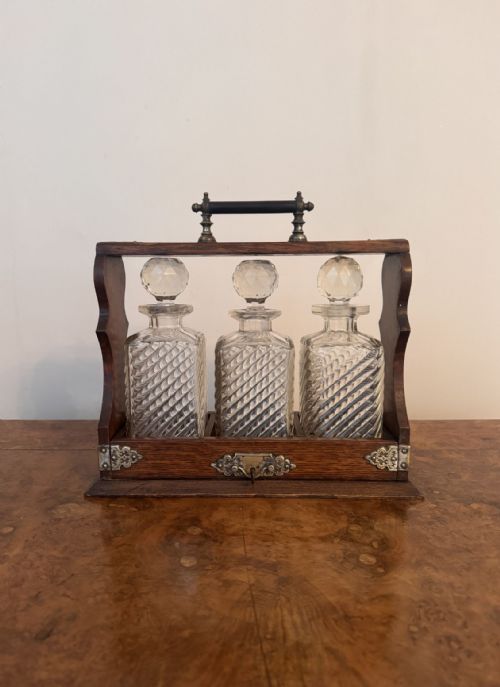
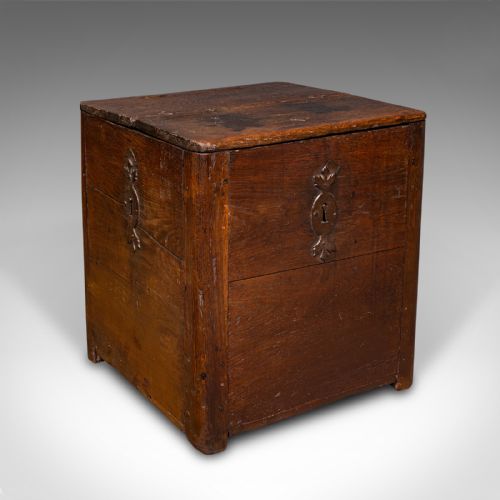
When you search for a lockable oak box, you encounter pieces spanning from the Georgian period through to the Edwardian era, taking forms such as tantalus sets, games compendiums, presentation boxes, humidors, security chests, and stationery cabinets. Oak serves as the primary timber across these examples, often complemented by brass mounts and occasionally marquetry stringing. The selection ranges from portable desktop chests to large floor-standing or sideboard dry bar units designed for entertaining.
The version you are most likely to meet on this page is the Victorian or Edwardian tantalus, frequently housing three cut glass or crystal decanters alongside games compartments. These pieces combine secure storage with display, utilising hinged lids and drop-front mechanisms secured by functional metal locks. Alongside these drinking cabinets, the evidence includes strong boxes from the early Georgian period and stationery cabinets dated around 1890.
How they were made
The construction of a lockable oak box relies on solid timber carcassing, sometimes selected for blonde or golden figuring, and occasionally embellished with delicate marquetry stringing. Cabinet makers joined the oak using traditional box-making techniques to ensure durability under the strain of locks and heavy contents. The wood is paired with robust hardware, incorporating brass handles, corner brackets, hinges, and secure locking mechanisms.
Fitted interiors require precise joinery to house cut glass decanters, playing cards, or writing materials safely without shifting during transport. Metal elements such as silver plate are integrated into the bottle frames of tantalus units and decorative escutcheons around the keyholes. Mirror glass also appears internally in specific cabinet designs to enhance the display of glass decanters.
The listings on this page span several decades, featuring oak alongside brass, cut glass, silver plate, mirror glass, and mahogany across various functional box forms.
What varies in quality
The grade of an oak box is determined by the selection of the timber, the crispness of the brass mountings, and the complexity of its internal fittings. Superior examples feature well-figured oak grain, precise marquetry stringing, and substantial cast brass hardware rather than stamped sheet metal.
Execution of the interior mechanism marks the division between standard production items and finer pieces, particularly in tantalus sets and games compendiums where drop-fronts and spring-loaded locking bars must operate smoothly. The inclusion of heavy cut crystal decanters or bespoke regiment presentation plaques further distinguishes the upper tier of these pieces.
The Lockable Oak Box Glossary
- Tantalus
- A locking drink cabinet that holds decanters securely within a metal framework, preventing the removal of the bottles until the top bar is unlocked with a key. The name derives from the mythological figure Tantalus, as the visible spirits cannot be reached.
- Marquetry stringing
- Inlaid thin lines of contrasting wood used to create geometric patterns or borders on the surface of furniture. It adds decorative refinement to the oak panels.
- Humidor
- A specialised moisture-controlled box designed for the storage of cigars. These are lined with timber that maintains humidity levels to preserve tobacco.
- Escutcheon
- A flat plate of brass or other metal placed around a keyhole to protect the surrounding wood from wear and tear. On these boxes, they often form part of the security and decorative scheme.
- Games compendium
- A multi-compartment box housing equipment for various tabletop pastimes such as cards, dominoes, and board games. They integrate secure locking mechanisms to keep pieces organised.
Lockable Oak Box: Frequently Asked Questions
What is a tantalus?
A tantalus is a locking beverage cabinet that secures decanters within a wooden and metal frame. The locking mechanism prevents guests or staff from pouring drinks without the key.
These pieces became popular in the Victorian period for entertaining in the dining room or drawing room. They display the decanters while keeping the contents safely contained.
How do I date an oak box?
Dating relies on the style of the hardware, the construction methods, and the overall design characteristics. Georgian pieces tend to be heavier security chests, whilst Victorian and Edwardian examples lean towards tantalus sets and fitted stationery cabinets.
Materials like silver plate and cut crystal point towards late nineteenth and early twentieth-century manufacturing. Examining the lock type and interior lining also helps narrow down the period.
What was a games compendium used for?
A games compendium served as an all-in-one entertainment chest for the household, holding cards, boards, and counters. They were kept in reception rooms for evening gatherings.
Many examples combine the games compendium with a tantalus or dry bar, uniting drinking accessories and pastime equipment in a single lockable oak box.
How do I care for antique oak?
Antique oak benefits from consistent indoor humidity and protection from direct sunlight to prevent the timber from warping or drying out. Regular dusting with a soft cloth maintains the finish.
Applying a traditional beeswax occasionally nourishes the wood grain and preserves the lustre of the oak surface. Metal mounts and brass hardware should be cleaned gently without abrasive agents.