

English Oak Dining Chairs
These English oak dining chairs bring centuries of robust vernacular craftsmanship and enduring timber grain to the modern dining table.
English Oak Dining Chairs
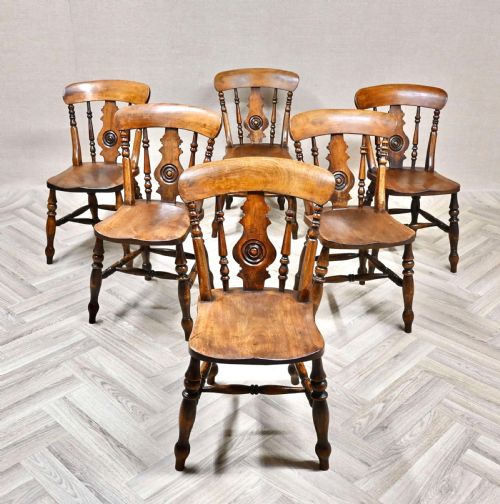
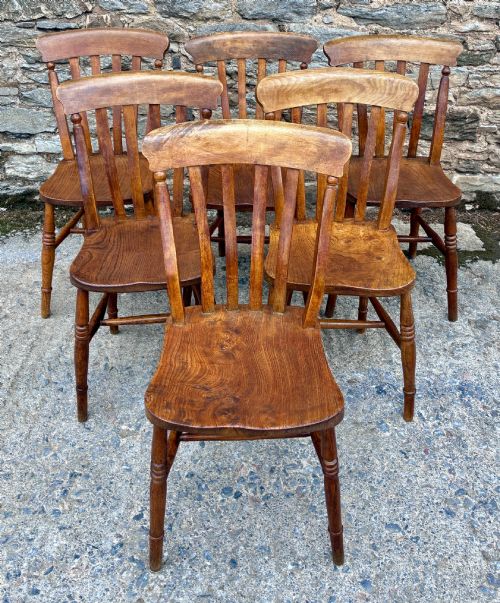
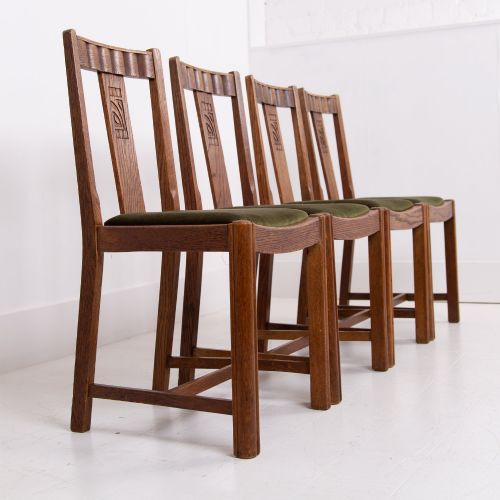
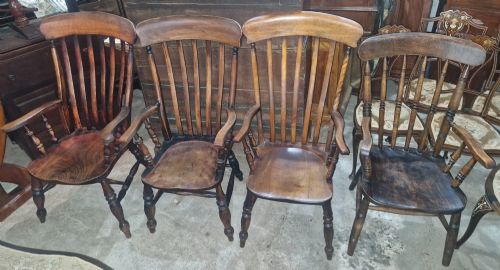
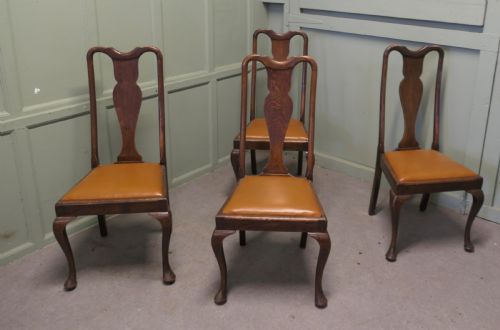
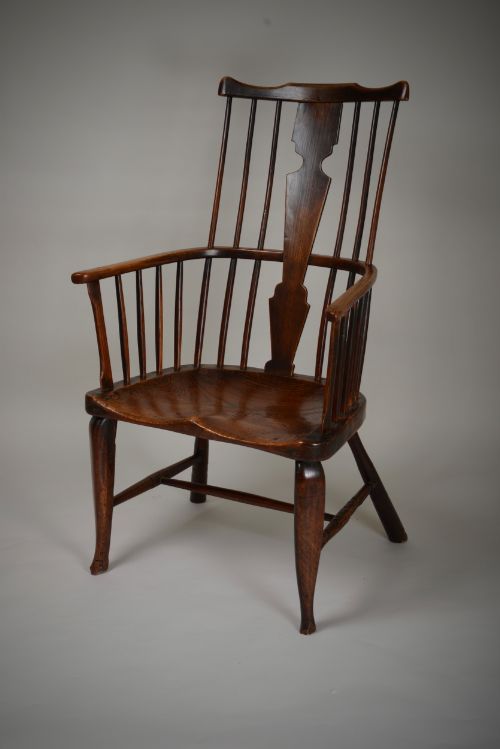
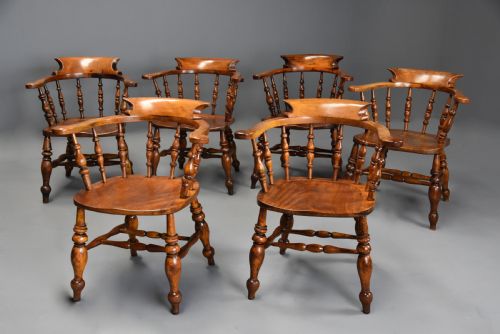
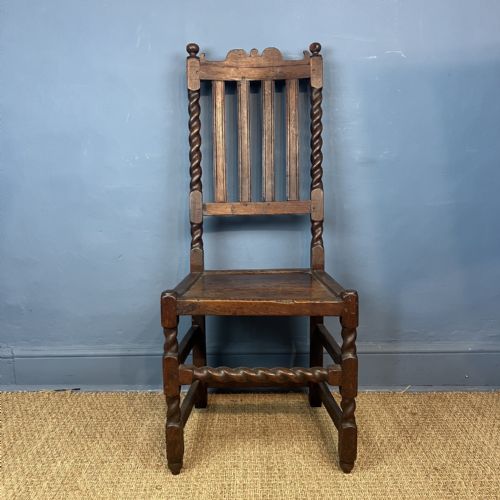
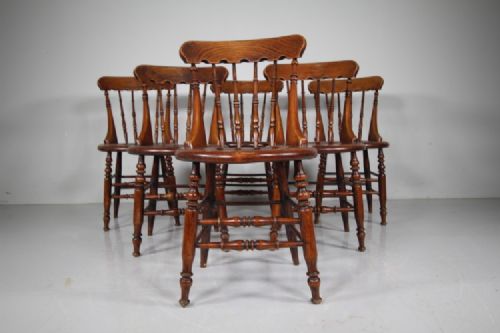
When searching for english oak dining chairs, buyers encounter a diverse selection spanning from seventeenth-century joined backstools to twentieth-century ladderbacks and Windsor forms.
The regional country farmhouse and vernacular traditions dominate the available pieces, alongside formal revival styles from the Victorian and Edwardian eras.
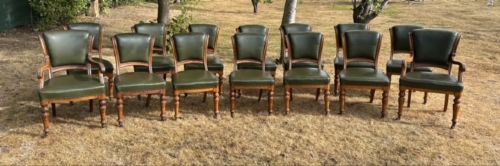
Sets ranging from pairs to grand dozens appear frequently, utilising native hardwoods like oak and elm alongside rush, leather, and fabric seating.
How They Were Made
Joinery techniques define the earlier periods, utilising pegged mortise and tenon joints to build rigid frames from solid timber without metal fasteners.
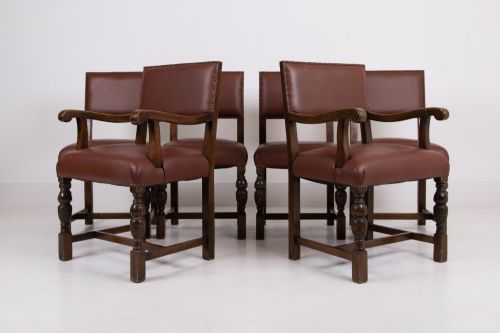
Turned components such as bobbin and spindle work rely on the lathe, shaping structural legs and stretchers from dense oak, ash, or beech.
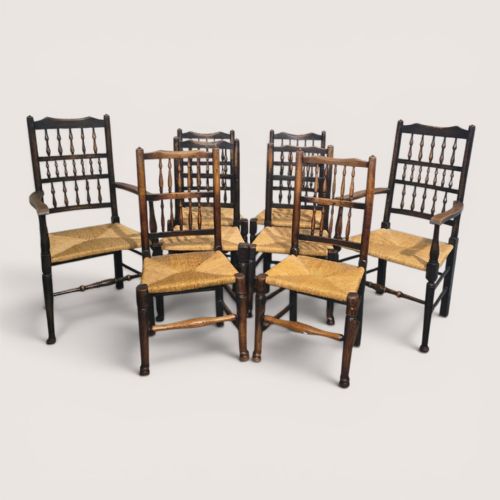
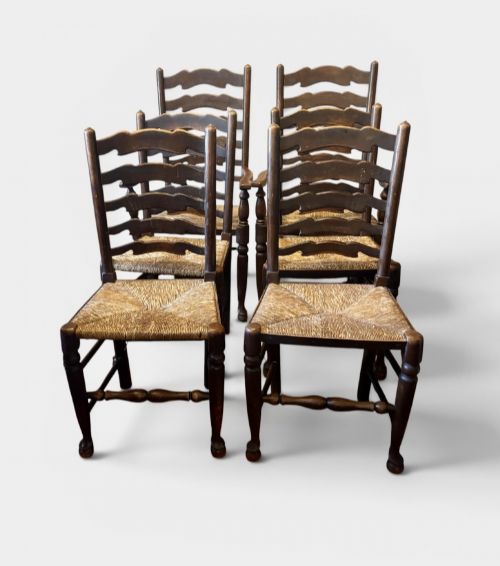
Seats integrate woven natural rush, stretched leather hides, or solid carved timber planks secured directly to the underframe.
Listings feature oak alongside ash, elm, beech, rush, and leather across periods from the seventeenth century through the 1930s.
What Varies in Quality
Original surface finishes and minimal structural intervention preserve the historical value far better than over-restored or heavily sanded replacements.
Cohesion within a set matters immensely, as matched groupings assembled over decades display subtle variations in turning, height, and wear.
Lethaby·Worksop Allsop·Liberty
The English Oak Dining Chairs Glossary
- Backstool
- An early form of seating without arms, effectively a chair with a taller upholstered or panelled back. They preceded standard dining chairs in many seventeenth-century households.
- Windsor
- A traditional chair constructed with a solid wooden seat into which separate legs and back spindles are wedged. Regional variations include wheelbacks, comb backs, and lathe backs.
- Bobbin turned
- A style of furniture leg or stretcher shaped on a lathe to resemble a series of rounded bobbins or spools threaded together. This decorative turning is common on seventeenth-century pieces.
- Ladderback
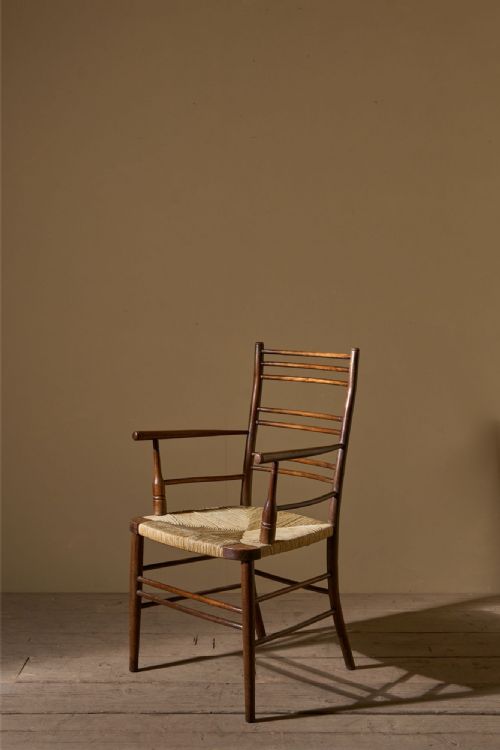
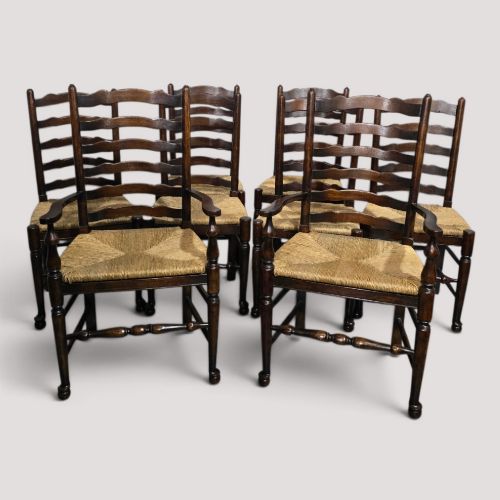
- A chair back featuring horizontal arched slats resembling the rungs of a ladder. These vernacular seats often incorporated rush or split cane squab pads.
- Splats
- The central vertical strip of wood set into the middle of a chair back. Finer periods often carved or shaped these elements for visual distinction.
English Oak Dining Chairs: Frequently Asked Questions
How do I clean old oak chairs?
Dust surfaces regularly with a dry, soft cloth to prevent particulate buildup in the grain. Apply microcrystalline wax occasionally to nourish the timber without creating a heavy buildup.
Avoid liquid polishes, silicone sprays, and placing antique timber near direct heat sources or strong sunlight. Proper humidity control prevents the oak from drying out and splitting over time.
Are these chairs comfortable for daily use?
Historic seating proportions often feature shallower seats and more upright backs than modern equivalents. Adding custom loose squab cushions can improve daily comfort without altering the antique frames.
Solid timber and woven rush seats adapt well to regular modern dining when handled with care. Ensure joints remain firm before subjecting older chairs to heavy daily sitting.
How can I date an oak chair?
Examine the tool marks, construction methods, and joinery style visible underneath and behind the piece. Hand-cut peg holes, adze marks, and uneven grain patterns typically point to earlier centuries.
Compare the turning profiles and decorative motifs, such as bobbin turnings or ladder slats, against known stylistic periods. Regional country pieces often retain archaic building methods long after urban workshops moved on.
Can I mix different oak chair styles?
Harlequin sets of dining chairs have a long tradition in English country houses where seating accumulated over generations. Unifying elements like wood tone or general era help disparate chairs sit together harmoniously.
Keeping similar back heights or matching carvers at the table ends creates visual balance within a mixed arrangement. The shared material of oak naturally ties varied regional and revival styles into a cohesive group.