


Gothic Back Wooden Chairs
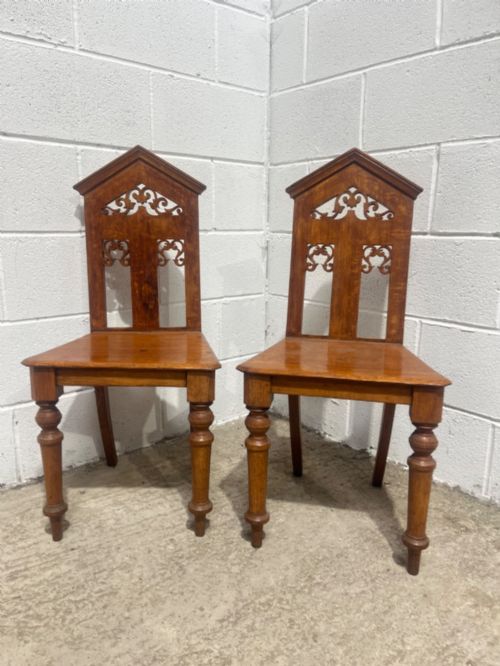
Gothic back wooden chairs bring architectural presence to a room through pointed arches and sturdy timbers.
Gothic Back Wooden Chairs
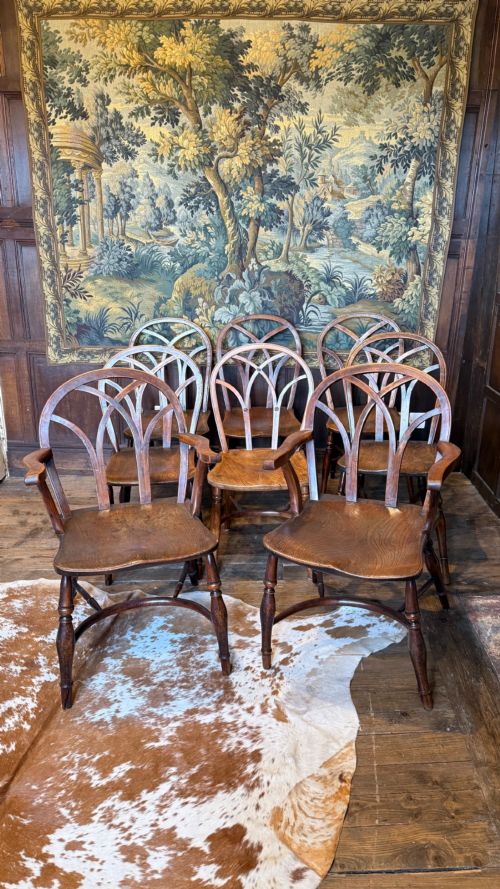
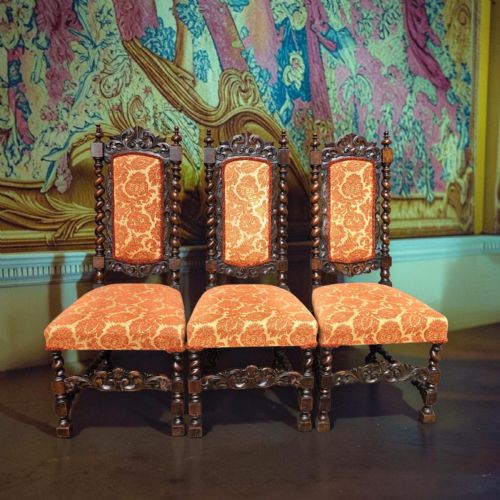
When you search for gothic back wooden chairs, you encounter a selection spanning the eighteenth, nineteenth, and early twentieth centuries, with a strong representation of Victorian examples.
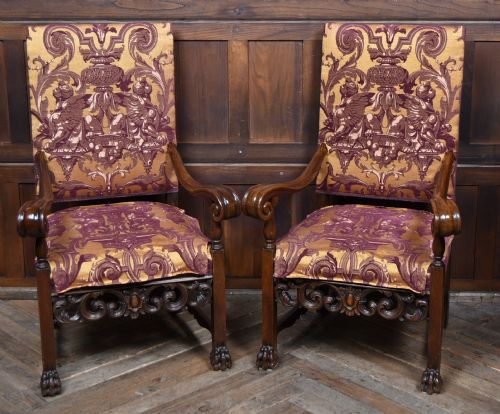
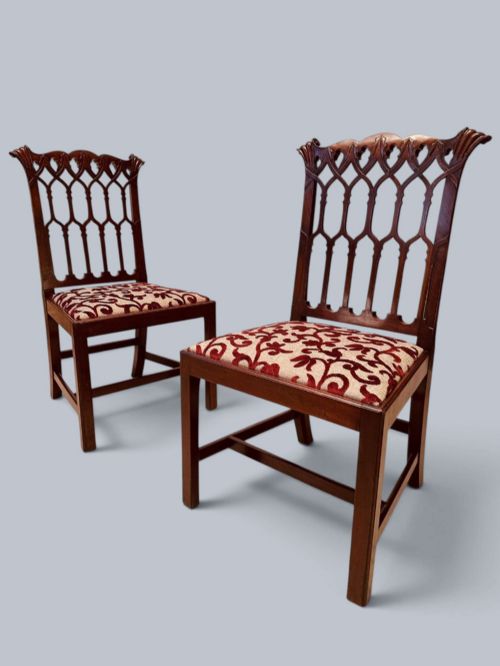
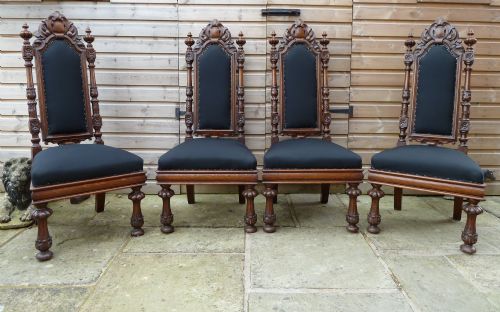
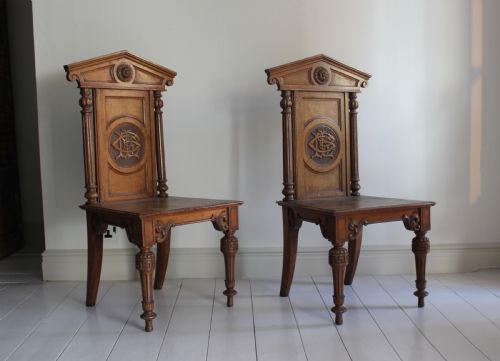
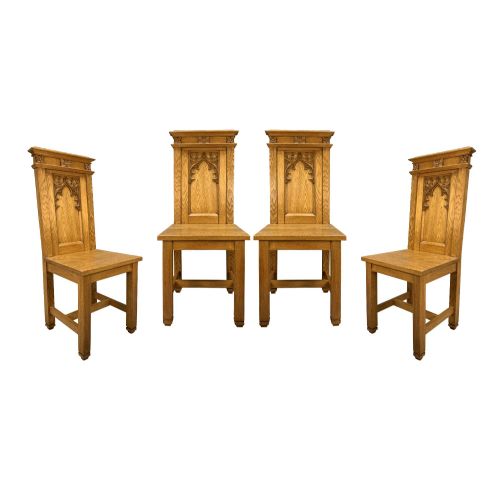
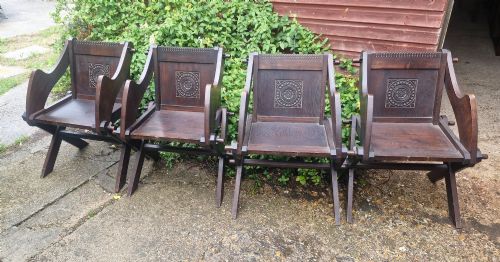
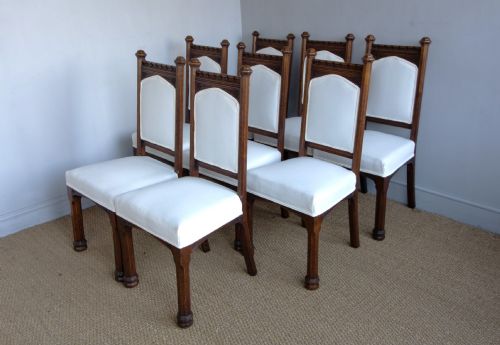
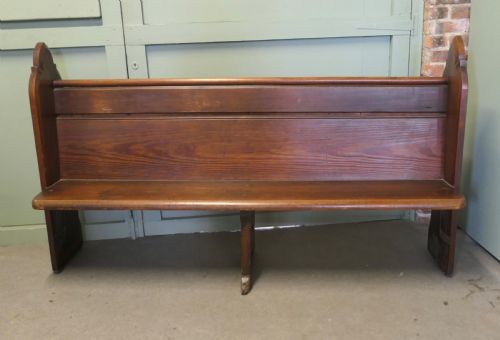
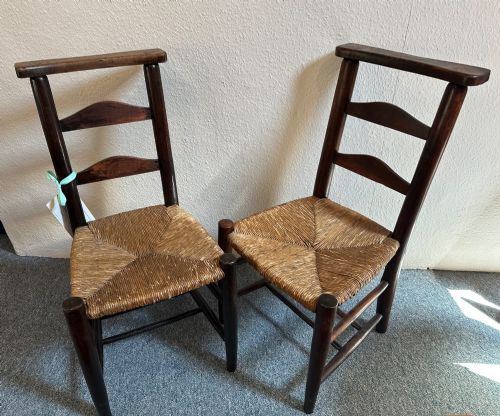
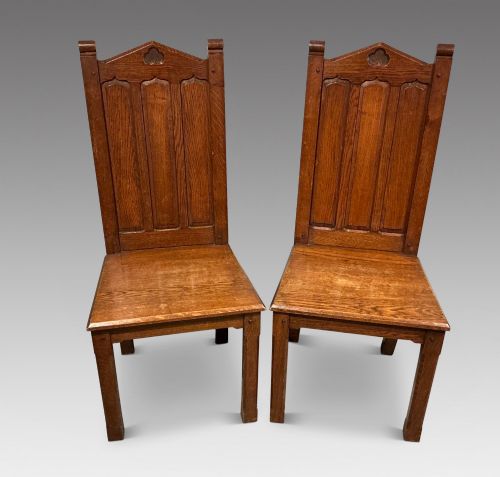
The assortment on this page includes hall chairs, armchairs, dining sets, and ecclesiastical seating such as pews and throne chairs.
Makers drew on Gothic Revival, Jacobean Revival, and Arts and Crafts styles, producing seating intended for grand halls, churches, and domestic parlours alike.
Materials and Construction
The primary woods utilised are oak, walnut, and mahogany, supplemented by pitch pine, satinwood, and yew in specific pieces.
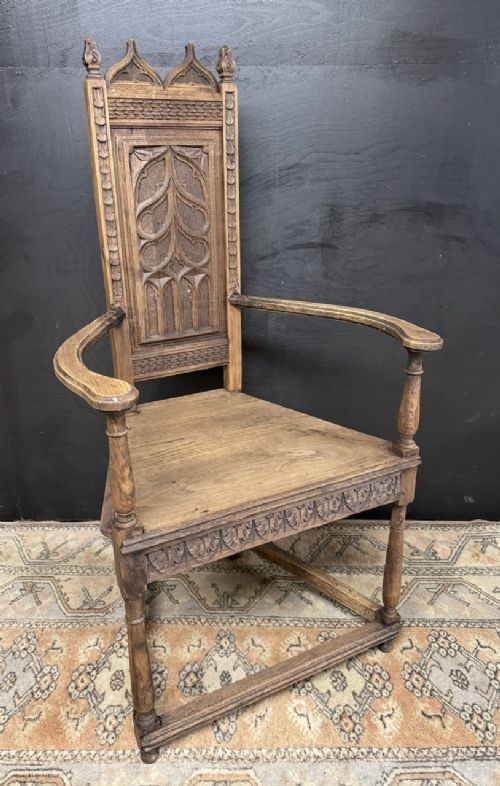
Joinery relies on solid timber construction, panel detailing, and hand carving to render pointed archways, tracery, and green man motifs.
Selected chairs incorporate secondary elements such as leather panels, fabric upholstery, brass fittings, and barley twist turnings.
Gothic Back Wooden Chairs Retail Price Guide 2026
Typical asking prices for gothic back wooden chairs among the pieces listed under this phrase on Sellingantiques today, from the lower quarter to the upper quarter. They describe what is for sale here now, not the wider market.
Keep a sharp eye out for hidden green men peering through the oak foliage on nineteenth-century throne chairs.
Judging Quality
Depth and crispness of the hand carving separate standard production pieces from finer commissions, particularly where intricate tracery and figurative elements appear.
The choice and selection of timber grain dictate the visual weight of the frame, with quartersawn oak and figured walnut holding presence over plain stock.
Structural integrity depends on the retention of original joints and timber density, especially in heavy throne chairs and church seating subject to sustained use.
Liberty and Co·Norwich Maker
The Gothic Back Wooden Chairs Glossary
- Gothic Revival
- An architectural and decorative style drawing inspiration from medieval ecclesiastical design, marked by pointed arches, trefoils, and vertical emphasis.
- Wainscot Chair
- A heavy wooden armchair with a panelled back, typically constructed from oak and dating in style to the seventeenth century or later revivals.
- Hall Chair
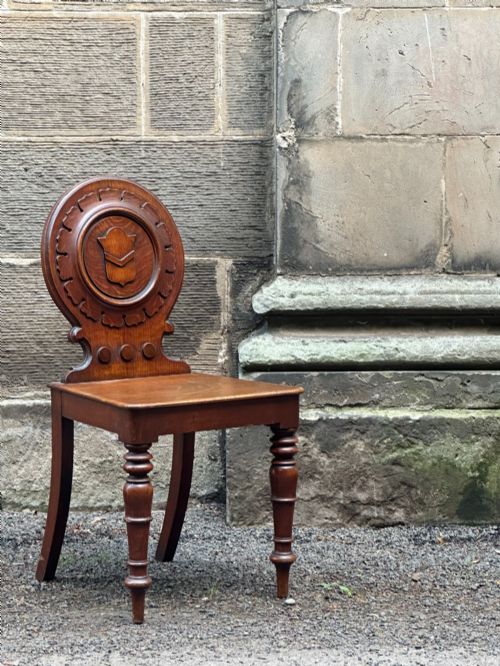
- A rigid wooden seat intended for an entrance hall, often featuring a solid carved back displaying heraldry or architectural motifs.
- Barley Twist
- A turned wooden furniture leg or stretcher carved in a helical spiral resembling twisted barley sugar.
- Green Man
- A sculptural architectural ornament depicting a human face surrounded by or entwined with leaves and vines, popular in ecclesiastical and revival woodwork.
Gothic Back Wooden Chairs: Frequently Asked Questions
Where were these chairs placed originally?
These chairs served in diverse settings ranging from grand entrance halls and domestic dining rooms to ecclesiastical spaces like churches and cathedrals. Institutional pieces often bear marks or provenance related to their specific buildings of origin.
Domestic variants furnished parlours and libraries, where their architectural lines complemented period interiors and heavy revival furnishings.
How do I identify the period?
Dating relies on timber selection, construction methods, and stylistic overlaps between Victorian Gothic Revival, Jacobean Revival, and Arts and Crafts movements. Nineteenth-century examples frequently combine heavy oak with deep machine or hand carving.
Earlier eighteenth-century pieces display simpler joinery and different patination on the timber surfaces compared to later revival items.
Are these chairs comfortable for daily use?
Most hall chairs and early wainscot chairs were built with upright wooden seats intended for formal posture rather than lounging. Their rigid backs and shallow seats reflect the social conventions of the periods in which they were made.
Dining chairs and upholstered armchairs from the Victorian era offer softer seating through padded leather or fabric panels.
What is the difference between a hall chair and a throne chair?
Hall chairs are typically lightweight, narrow side chairs designed to stand against a wall in an entrance passage, featuring decorative wooden backs without armrests. Throne chairs are wide, heavy armchairs with high backs and elaborate carvings.
Throne chairs often incorporate ecclesiastical motifs, deep panel detailing, and occasionally leather upholstery suited to a master seat.