

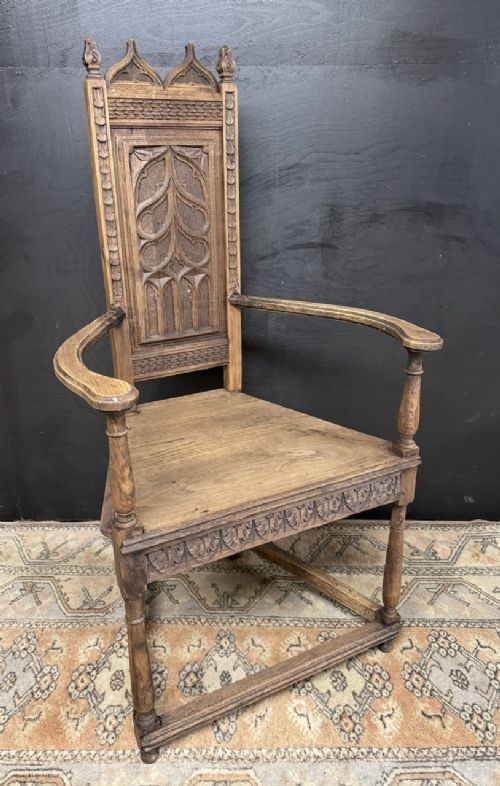
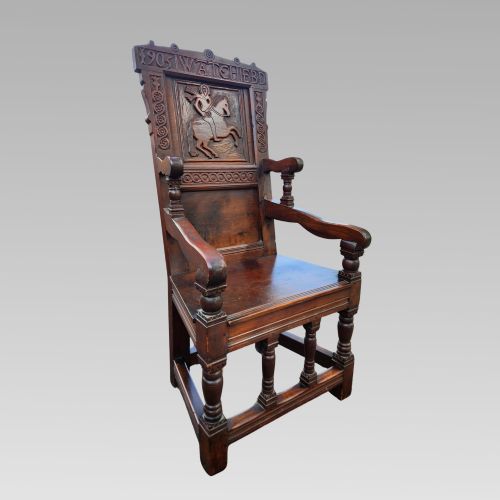
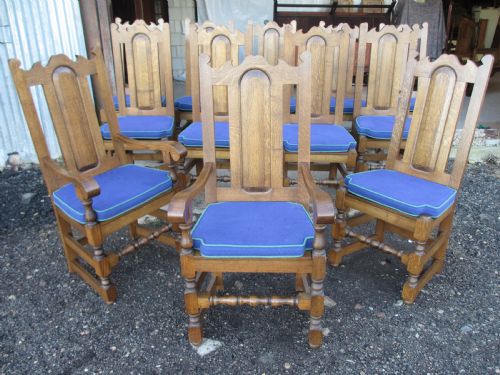
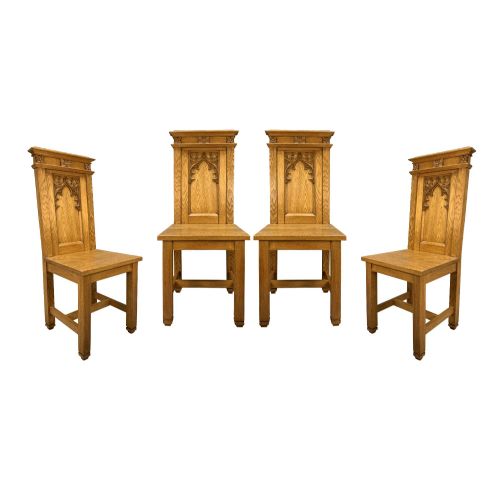
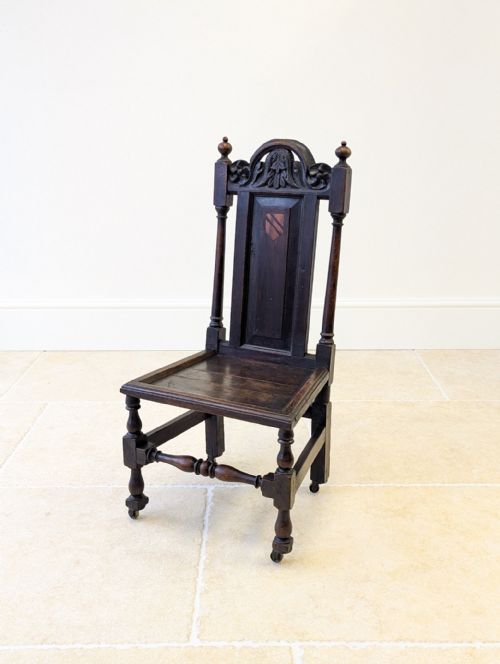
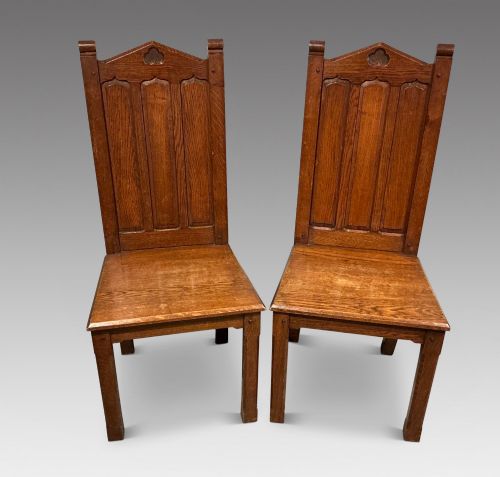

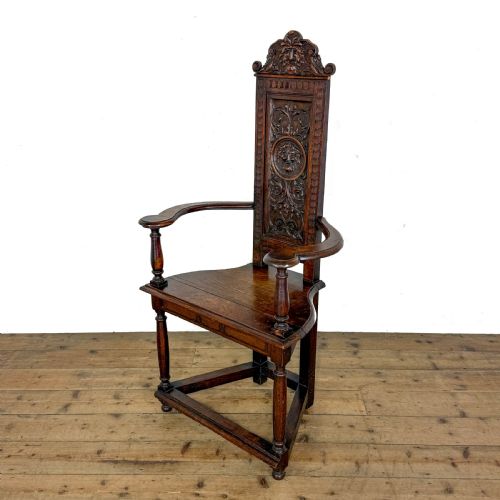


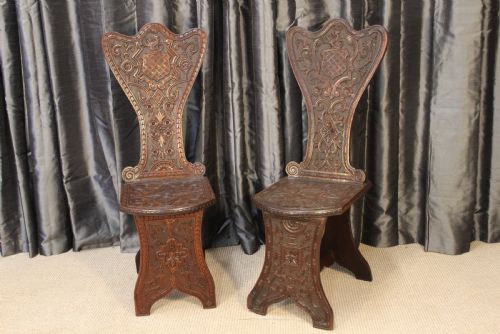
Gothic Carved Panel Chairs
These gothic carved panel chairs offer solid timber construction and revival character, drawing on centuries of historical design for domestic seating.
Gothic Carved Panel Chairs
Gothic carved panel chairs encompass armchairs, hall chairs, side chairs, and benches derived from historical revival movements. The selection leans heavily toward Victorian examples and later reinterpretations of earlier forms.
Makers drew inspiration from diverse stylistic streams including Jacobean Revival, Gothic Revival, and the Aesthetic Movement. These diverse influences created seating ranging from formal hall chairs to sturdy armchairs.
Most entries originate from the nineteenth and early twentieth centuries, constructed predominantly in oak. Buyers encounter pieces that echo ecclesiastical or domestic traditions of earlier eras.
How they were made
Cabinetmakers utilised English oak and timber alongside secondary materials like brass, leather, and pigment. Traditional joinery secured panel details within heavy frames to withstand daily use.
Carving formed the primary decorative technique, ornamenting backs and panels with architectural motifs. Tooling on leather panels and brass detailing added texture to select armchairs and throne chairs.
Gothic Carved Panel Chairs Retail Price Guide 2026
Typical asking prices for gothic carved panel chairs among the pieces listed under this phrase on Sellingantiques today, from the lower quarter to the upper quarter. They describe what is for sale here now, not the wider market.
Listings feature oak predominantly, alongside mahogany and fruitwood.
What varies in quality
The depth and crispness of the carving distinguish finer examples from simpler production. Sharp relief work and thoughtful proportioning elevate individual pieces above standard utilitarian seating.
The choice of primary timber impacts the overall presence, with select English oak showing superior grain and density. Original hardware, intact leather tooling, and well-preserved structural joins mark the better survivals.
Bruce J. Talbert
The Gothic Carved Panel Chairs Glossary
- Wainscot chair
- A solid wooden armchair with a paneled back, common in domestic interiors from the seventeenth century onward. These chairs rely on heavy frame construction rather than upholstery.
- Caquetoire
- A lightweight conversational armchair featuring a high, narrow back and a trapezoidal seat designed for easy movement. Originating in the sixteenth century, the form reappeared in later revival periods.
- Jacobean Revival
- A nineteenth-century design movement resurrecting the heavy turned supports and flat panel carving of the early seventeenth century. Furniture in this style typically employs dark oak.
- Aesthetic Movement
- A late nineteenth-century design tendency emphasising visual beauty over narrative meaning. Pieces from this movement often incorporate geometric lines alongside traditional joinery.
- Ecclesiastical
- A descriptive term for furniture bearing stylistic traits borrowed from church architecture, such as tracery, pointed arches, and linenfold panels.
Gothic Carved Panel Chairs: Frequently Asked Questions
What is a wainscot chair?
A wainscot chair is a heavy wooden armchair featuring a solid paneled back and wooden seat. These pieces draw on seventeenth-century domestic design.
They provide sturdy seating and distinct architectural carving. Their proportions make them suitable for halls or studies.
How do I identify revival styles?
Revival styles copy design elements from earlier historical periods. Look for specific motifs like linenfold panels or heavy turned legs.
Victorian makers frequently blended Gothic and Jacobean details. Examining the timber and construction methods helps clarify the actual period of manufacture.
Where should I place these chairs?
These chairs suit hallways, living rooms, and studies as statement seating. Their heavy timber presence anchors an interior space effectively.
Pairing them with neutral surroundings lets the carved panel details stand out. They function well as individual accent pieces rather than matching dining sets.
What materials are typical?
Oak is the predominant material across these listings, including English oak and general timber. Some examples incorporate leather panels, brass hardware, and pigment.
These durable materials explain why many pieces survive in robust condition. The timber often darkens naturally over time.