


English Oak Coffin Stool
An English oak coffin stool is a sturdy piece of vernacular seating that brings centuries of rustic character to any room.
English Oak Coffin Stool
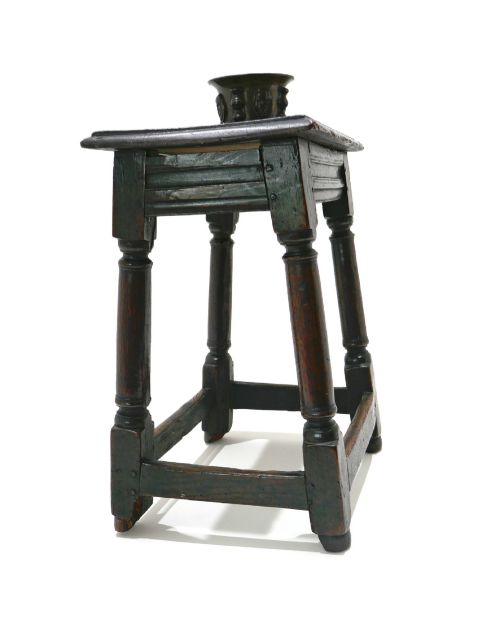
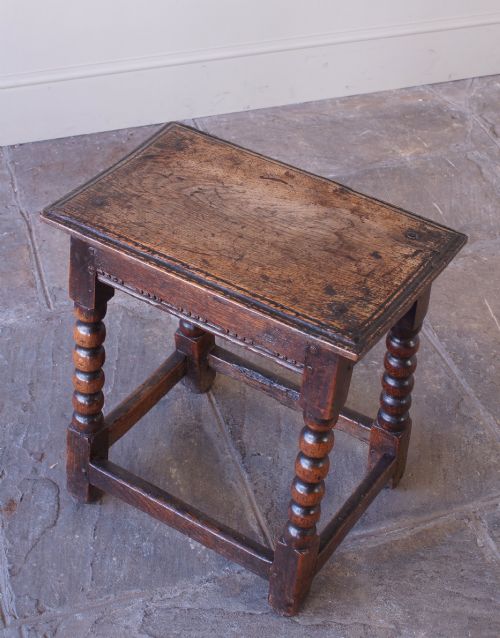
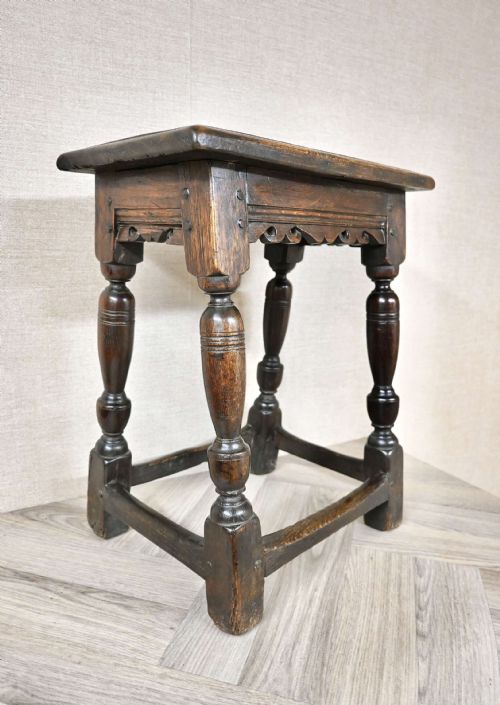
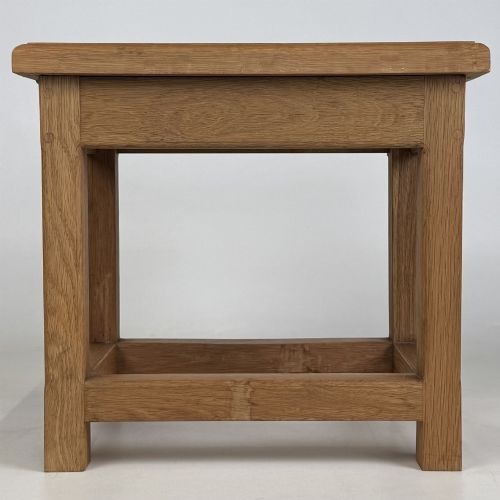
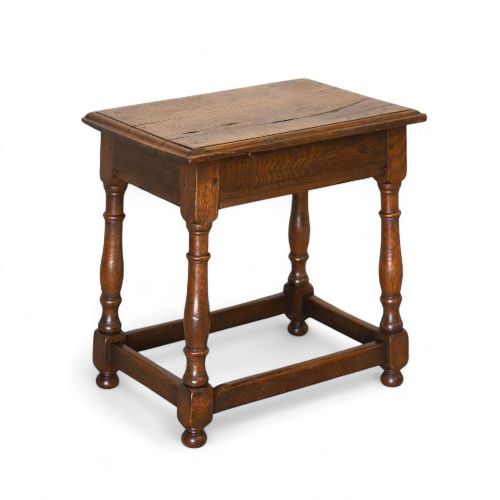
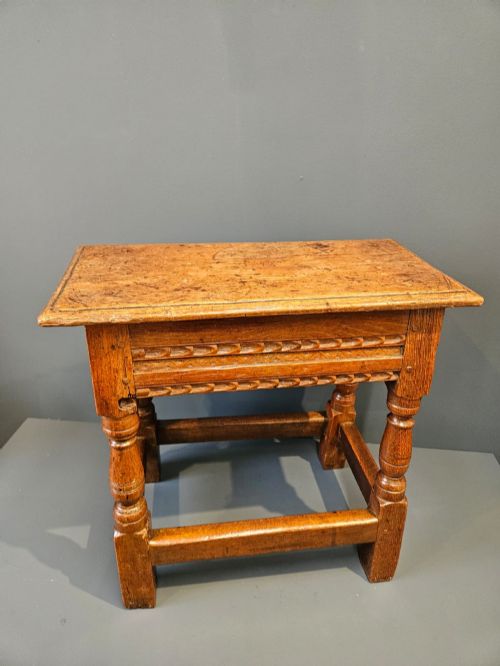
An English oak coffin stool typically appears as a robust joint stool or box stool designed with sturdy pegged construction. These pieces span periods from the seventeenth century through to later revivals in the Victorian and Edwardian eras.
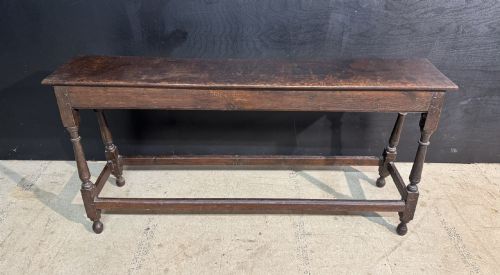
Most examples you encounter on this page date from the seventeenth century or belong to later revival styles like Jacobean and Elizabethan. Forms range from standard square and long joint stools to occasional box stools and smaller doll variants.
Materials and Construction
These stools rely primarily on solid oak and occasionally yew wood, assembled using traditional wooden pegs. Iron elements and sturdy mortise and tenon joints provide the underlying structural integrity.
Craftsmen built these items to withstand heavy daily use through simple yet enduring carpentry techniques. The timber often develops a deep, rich colour and patination over centuries of handling.
Judging Quality and Character
Quality rests in the originality of the timber, the tightness of the pegged joints, and the depth of the surface patina. Earlier seventeenth-century pieces display hand-tooled marks and genuine wear that distinguish them from later nineteenth-century revivals.
Proportion and structural balance also separate standard examples from finer specimens. A well-preserved surface with rich colour elevates a piece far above a heavily restored or dry timber alternative.
The English Oak Coffin Stool Glossary
- Joint stool
- A sturdy wooden stool constructed with tight joints secured by wooden pegs rather than glue. This method defines the backbone of early vernacular furniture.
- Box stool
- A variant form featuring a compartment beneath the seat for storage. These pieces combine seating with practical utility.
- Jacobean
- A design style spanning the early to mid-seventeenth century, characterised by solid proportions and linear ornamentation. Revival versions emerged strongly during the Victorian period.
- Wooden pegs
- Small dowels used to pin mortise and tenon joints together securely. They serve as a primary indicator of traditional period construction.
English Oak Coffin Stool: Frequently Asked Questions
What is an English oak coffin stool?
An English oak coffin stool is a heavy timber seat originally used domestically or in connection with parish customs. They are primarily known as joint stools built with pegged frames.
These pieces function well today as small side tables, bedside stands, or sturdy seats. Their compact footprints make them adaptable to modern interiors.
How do I tell a seventeenth-century stool from a Victorian revival?
Seventeenth-century originals show authentic tool marks, natural timber shrinkage, and deep surface patination accumulated over generations. The joinery and wear patterns align with early hand-working methods.
Victorian and Edwardian revivals often present a more uniform finish and machine-assisted cuts beneath the surface. Examining the underside and peg construction helps clarify the true age.
Can I use a joint stool as a daily seat?
These stools were engineered for robust daily utility in early households and remain inherently strong. Their solid oak frames support regular seating without issue.
Placement on uneven floors requires care to avoid straining the historic joints. Using felt pads protects both the original feet and delicate flooring.
Why are some examples called box stools?
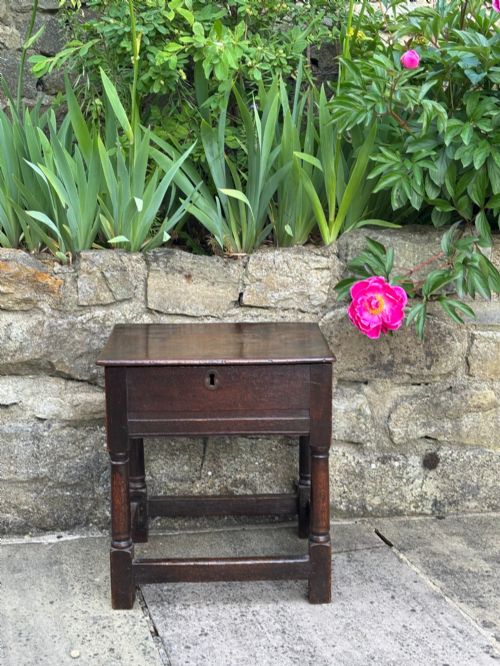
Box stools incorporate a lidded compartment beneath the seat surface for holding small household items. This design offered practical hidden storage in modest historic homes.
They share the same heavy pegged oak construction as standard joint stools. The added well makes them distinct collector variations.