
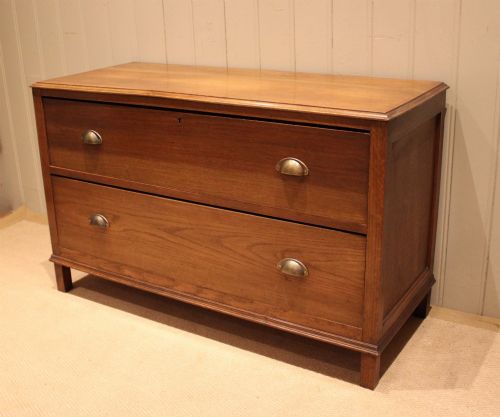
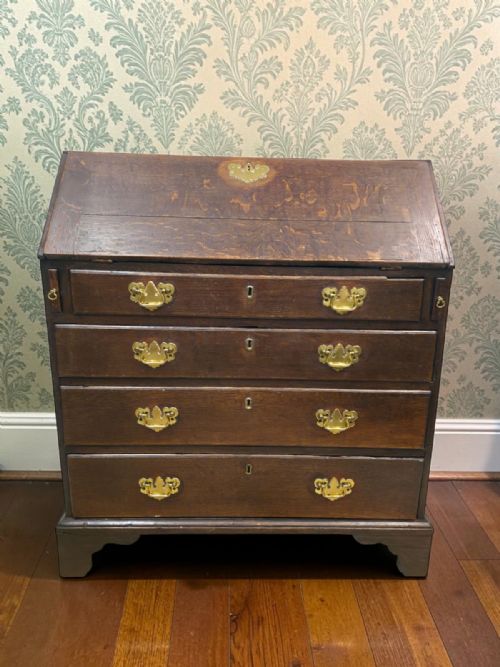
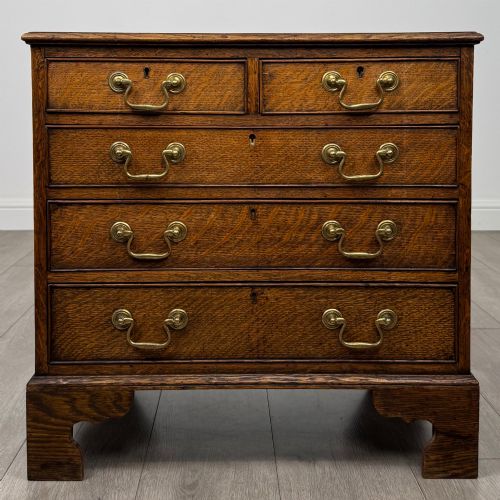
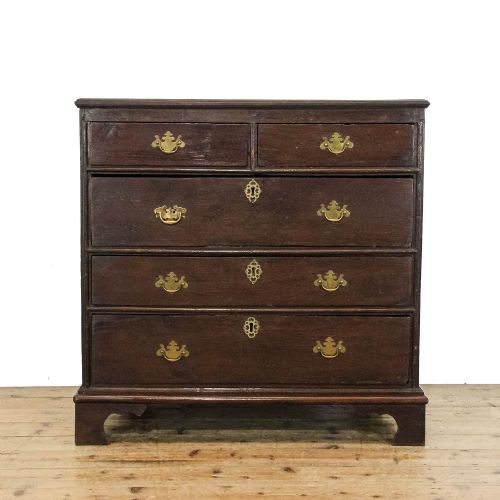

English Oak Chest Drawers
When you search for an english oak chest drawers, you seek a piece of storage furniture that anchors a room with timber grain and history.
English Oak Chest Drawers
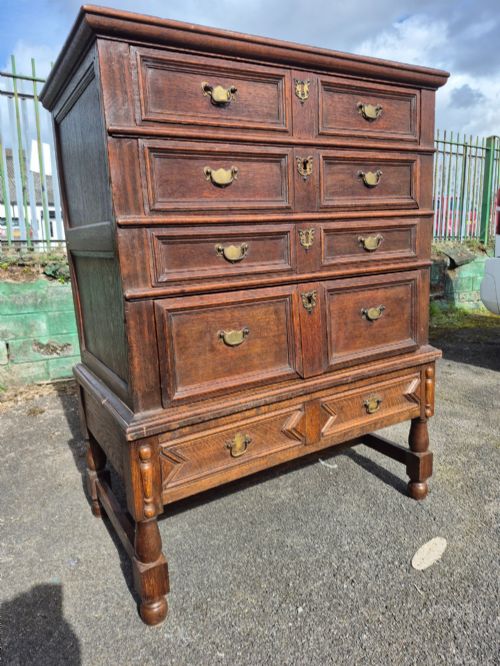
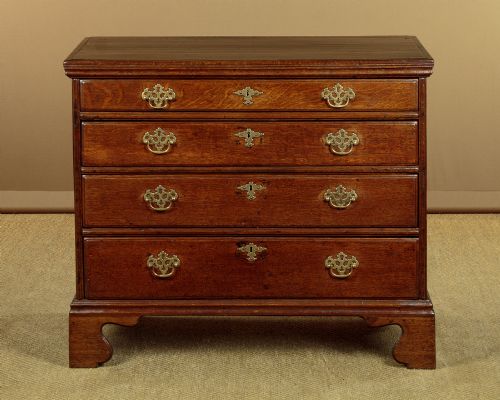
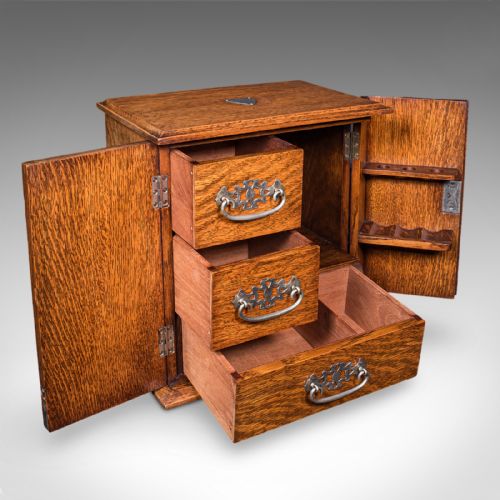
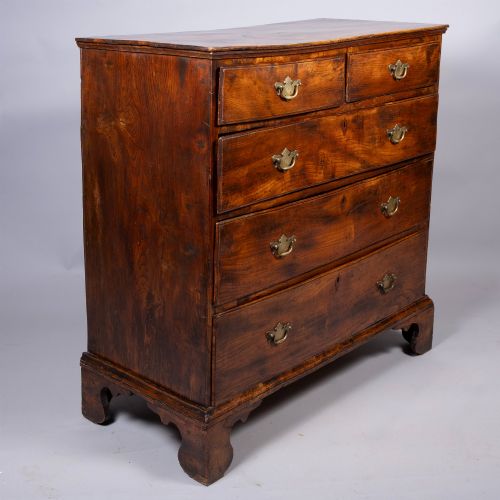
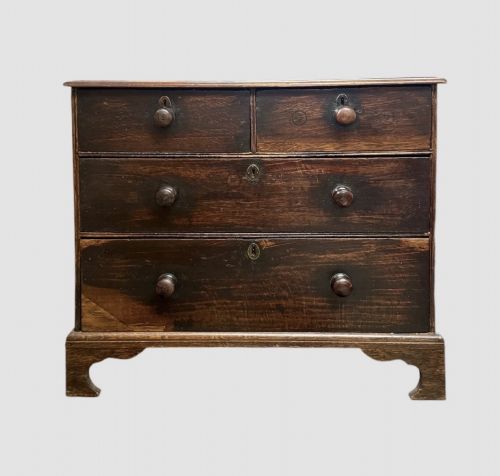
An english oak chest drawers brings centuries of domestic storage into a room, ranging from early joined planks to later vernacular forms. Buyers searching this category encounter pieces spanning the seventeenth century through to the Edwardian era, with Georgian examples appearing frequently.
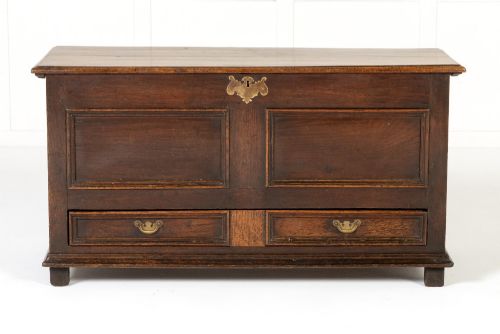
The selection encompasses low chests, tallboys, mule chests, and chests on stands alongside bureau variants. Regional country workshops and urban cabinet makers alike produced these robust storage pieces for bedrooms, halls, and parlours.
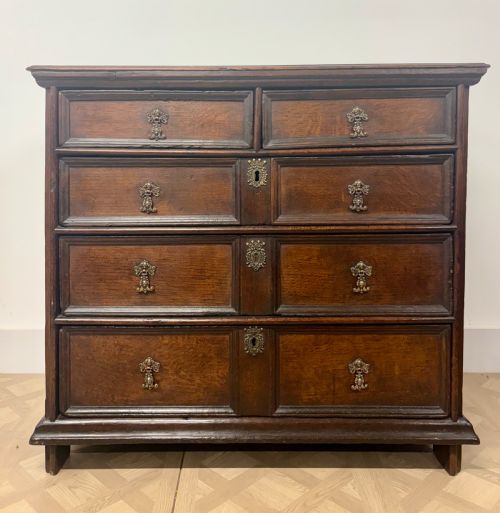
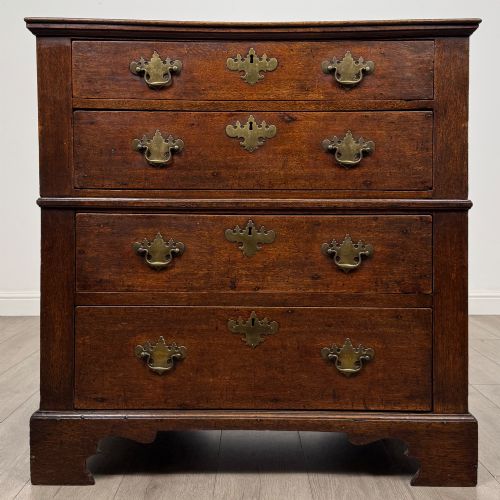
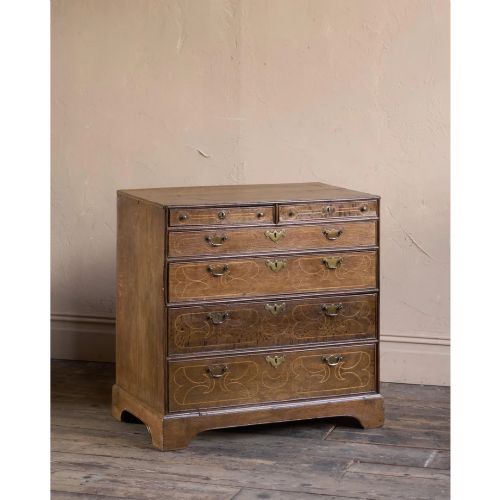
Early periods favour geometric drawer front mouldings and two-part constructions, whilst eighteenth and nineteenth-century iterations settle into cleaner proportions with bracket feet. Walnut, mahogany, and fruitwood frequently supplement the primary timber through cross-banding or inlay.
How They Were Made
Joiners and cabinet makers relied primarily on solid oak, selected for durability and pronounced medullary rays, often joined with pegged mortise and tenon joints in earlier examples. Secondary timbers like pine and fruitwood appear inside drawer linings and carcass backs.
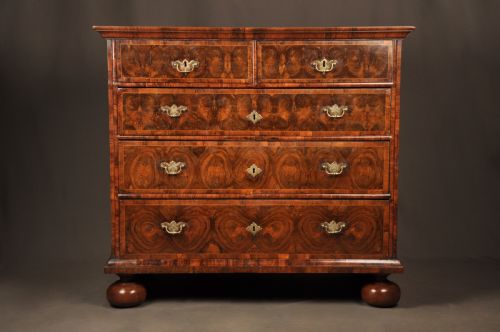
Surface decoration developed from applied geometric mouldings and oyster veneers of olive or walnut in the seventeenth century to cross-banding, brass handles, and key escutcheons in the Georgian period. Polishing was traditionally achieved through wax or oil applications that built up a deep patina over generations.
Listings feature oak alongside walnut, mahogany, and fruitwood inlay across periods from the 17th century through the Edwardian era.
What Varies in Quality
Quality rests upon timber selection and the integrity of the original construction rather than decorative excess alone. Examples utilising figured grain, symmetrical drawer layouts, and substantial oak timber throughout command greater respect.
The survival of original brass hardware, working locks, and uncompromised internal drawer construction dictates the standing of a piece. Alterations to stands, feet, or reduced heights separate high-surviving vernacular items from heavily restored specimens.
The English Oak Chest Drawers Glossary
- Mule chest
- A storage trunk featuring one or more functional drawers built beneath the main lidded compartment. They bridge the transition between the traditional blanket box and the modern drawer chest.
- Chest on chest
- A tall storage unit formed of two separate carcass sections stacked vertically, often housing smaller drawers above wider ones. Also known as a tallboy, this form maximises vertical storage capacity.
- Geometric moulding
- Applied timber mouldings arranged in geometric patterns across drawer fronts, typical of seventeenth-century joinery. This technique created visual depth on flat surfaces before extensive veneer use became common.
- Cross-banding
- A decorative border technique where thin strips of veneer are laid with the grain running perpendicular to the surrounding surface. It frames drawer fronts and top panels, particularly on eighteenth-century pieces.
- Bracket foot
- A small architectural foot supporting the corners of a case piece, shaped like a bracket and common on Georgian furniture. They lift the carcass slightly off the floor while maintaining a stable stance.
English Oak Chest Drawers: Frequently Asked Questions
How do I date an early oak chest?
Dating relies on construction methods, timber selection, and hardware styles. Seventeenth-century examples typically feature hand-cleaved oak boards, pegged joinery, and heavy panel construction.
Later eighteenth and nineteenth-century pieces transition to machine-sawn timber, dovetail joints, and standardised drawer runners that reflect evolving workshop practices.
What is the difference between a mule chest and a standard chest?
A mule chest combines a blanket box accessed via a hinged lid on top with one or more operational drawers housed in the base. This hybrid form allowed easier access to stored textiles without disturbing items piled on top.
A standard chest of drawers relies entirely on horizontally stacked drawers operating within a single closed carcass.
How should I care for antique oak furniture?
Maintain a stable indoor environment away from direct heat sources and dramatic humidity fluctuations to prevent timber splitting or warping. Apply a microcrystalline wax periodically and buff gently with a soft cloth to nourish the finish.
Avoid silicone-based sprays or modern polishes that can penetrate open-grain oak and damage the historic surface patina.
Why do some chests come in two sections?
Two-part construction was utilised primarily for tall forms like chests on chest and large seventeenth-century pieces to facilitate transport up staircases and through narrow doorways. The upper carcass simply lifts off the lower base section during relocation.
This modular approach was a practical necessity for heavy timber furniture before modern modular assembly methods existed.