


English Oak Bureau
An english oak bureau brings centuries of working history directly into a room, offering a private writing surface that closes away the clutter of daily life.
English Oak Bureau
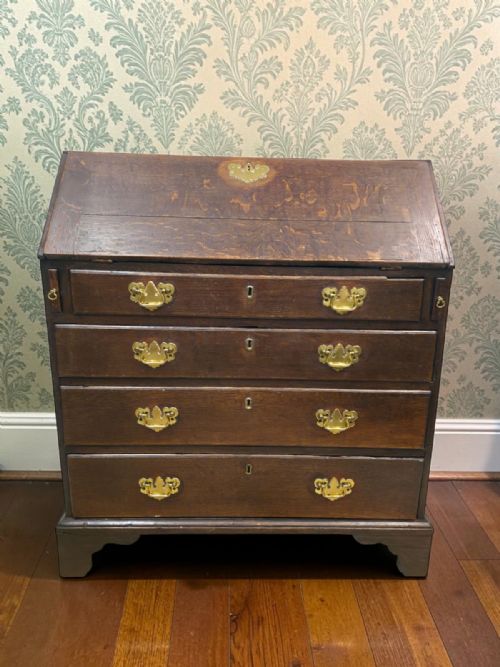
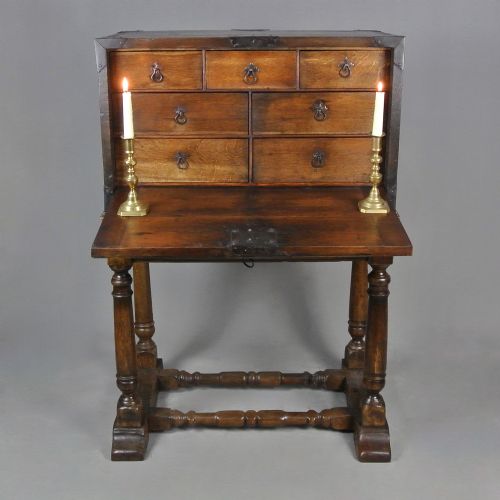
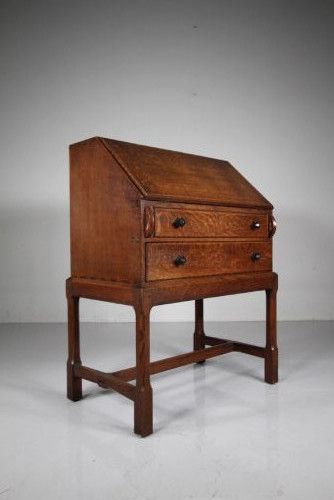
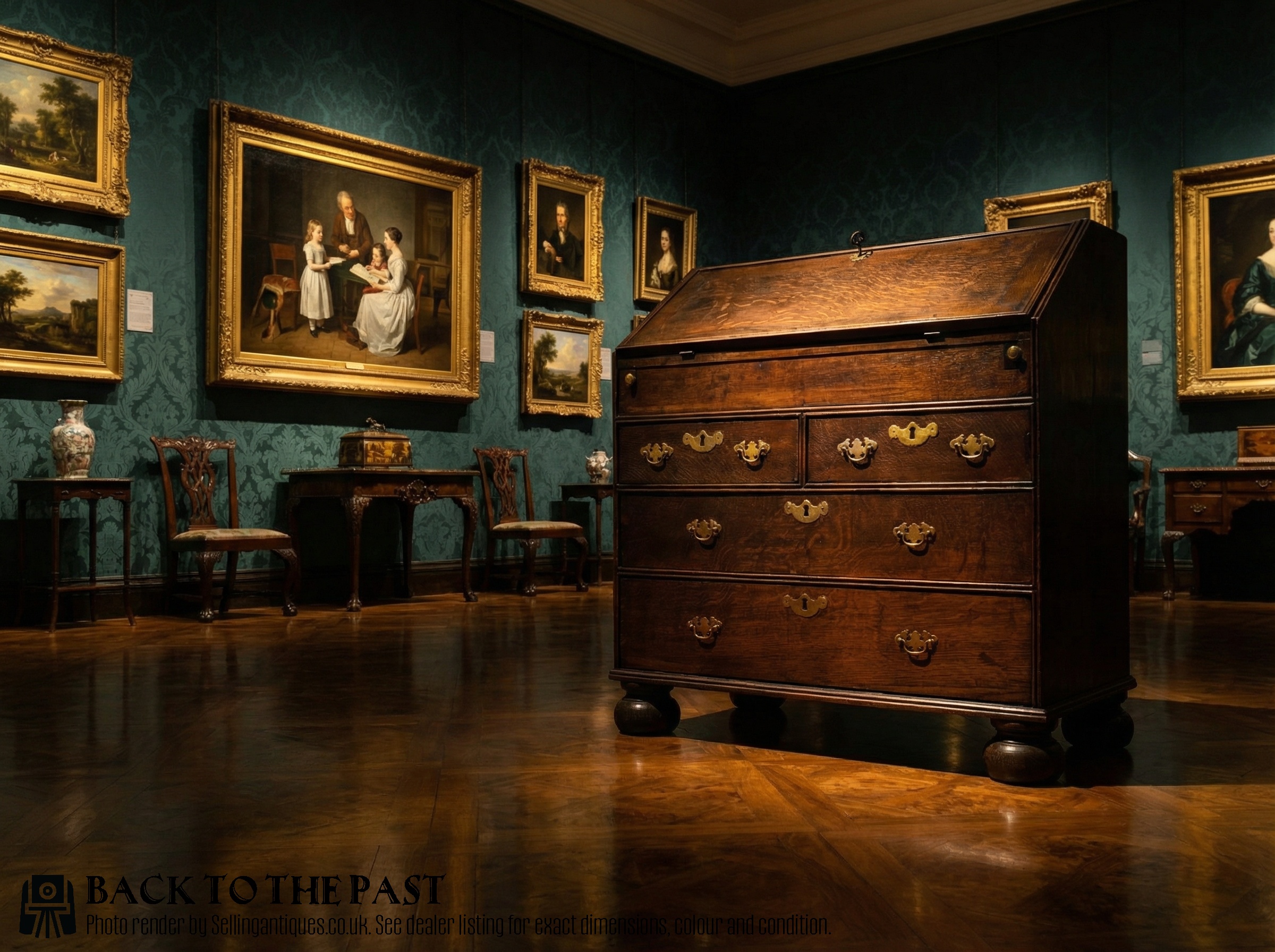
An english oak bureau combines a fall-front writing flap with internal pigeonholes and drawers, resting atop a chest of drawers or a dedicated stand. Pieces span from the late seventeenth century through the Georgian era and into twentieth-century revivals.
The Georgian examples emerge most frequently on this page, often displaying fitted desk interiors and robust proportions shaped by regional cabinetmakers.
Materials and Construction
Timbers rely primarily on solid oak, occasionally enhanced with pollard oak veneers or decorative mahogany crossbanding, joined with traditional pegged framing and dovetails.
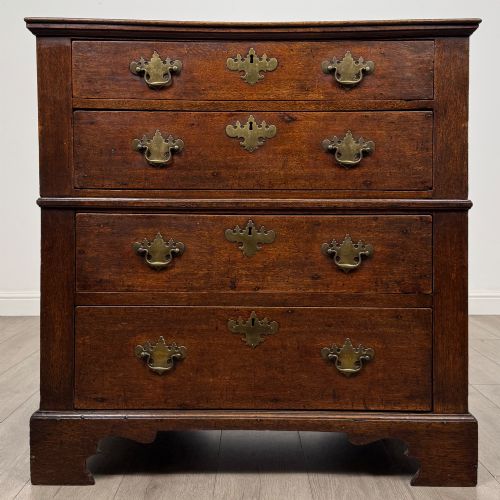
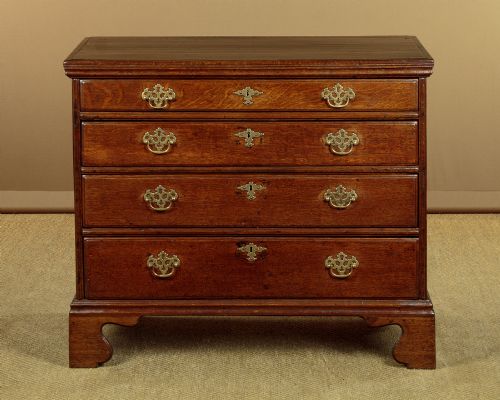
Hardware incorporates brass drop handles, escutcheons, and iron hinges, while internal compartments frequently utilise secondary softwoods like pine alongside green baize lining.
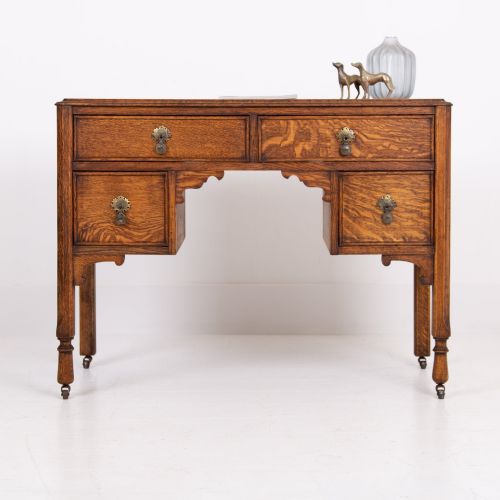
Mice appear carved into the woodwork on specific twentieth-century pieces, marking the personal signature of a renowned Yorkshire workshop.
The Measure of Quality
Differences in quality hinge on the complexity of the internal arrangement behind the fall front, where secret compartments and stepped pigeonholes elevate a piece.
Surface patination, timber selection, and the crispness of carved mouldings distinguish standard regional workshop production from exceptional cabinet work.
Stanley Webb Davies·Robert Mouseman Thompson
The English Oak Bureau Glossary
- Fall-front
- A hinged writing flap that drops forward to create a horizontal desk surface. When closed, it conceals the inner drawers and pigeonholes.
- Bureau bookcase
- A tall two-part furniture form combining a writing bureau base with an enclosed upper shelving or cabinet section.
- Escutcheon
- A protective metal plate surrounding a keyhole. It defends the surrounding timber from wear caused by the key.
- Pigeonhole
- A small open compartment within the desk interior used for sorting letters and papers. These often flank a central small cupboard door.
English Oak Bureau: Frequently Asked Questions
What is inside a bureau?
Opening the fall-front reveals an arrangement of small drawers, vertical dividers, and pigeonholes designed for correspondence and stationery. Many examples incorporate hidden compartments or a central locking cupboard.
Beneath this writing space, additional full-width drawers provide deeper storage for household papers and larger items.
How do I date an oak bureau?
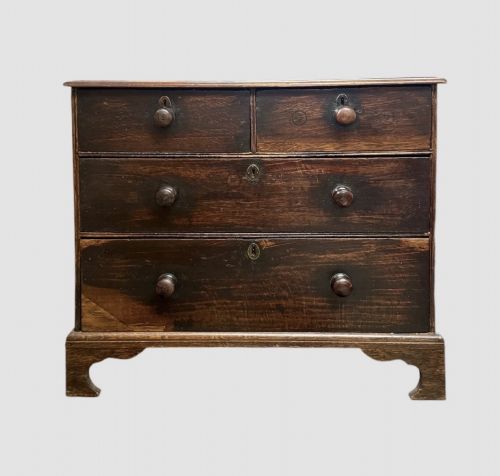
Dating relies on construction methods, timber grain, and hardware style rather than a single feature. Seventeenth-century versions display pegged frames and geometric mouldings, while Georgian pieces show fine dovetailing and bracket feet.
Later twentieth-century revivals utilise machine cutting and different joint tolerances underneath traditional forms.
Where should I place a bureau?
These pieces suit living rooms, studies, or hallways where the closed fall-front presents a clean timber panel. Positioning requires consideration of clearance space for the drop-front flap and a chair.
Direct sunlight should be avoided to protect the oak surface finish and prevent timber shrinkage over time.
How do I care for antique oak?
Maintenance requires regular dusting with a dry, soft cloth and occasional application of traditional beeswax to nourish the timber grain. Avoid modern silicone polishes that build up sticky residues.
Keeping the room at a stable humidity prevents the solid oak panels from splitting or warping.