



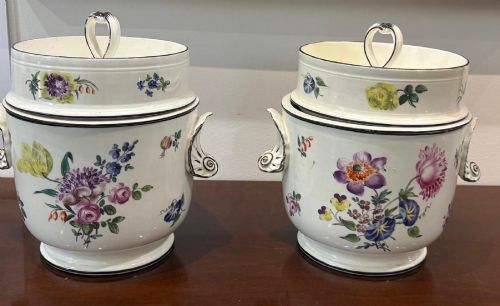
English Hand Painted Ceramics
English hand painted ceramics bring together centuries of careful brushwork across porcelain, creamware, and earthenware.
English Hand Painted Ceramics
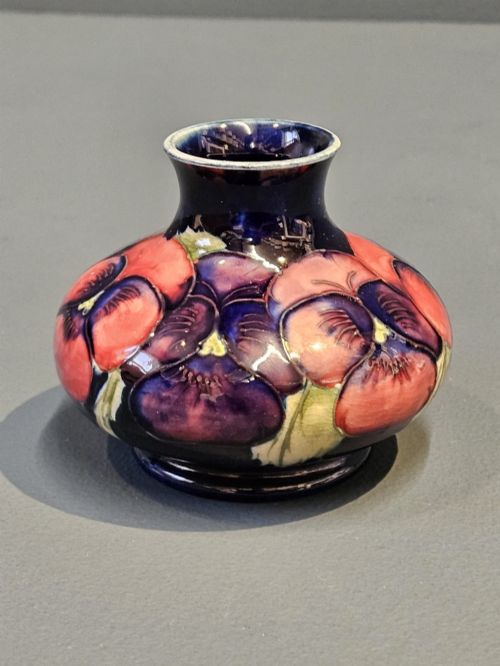
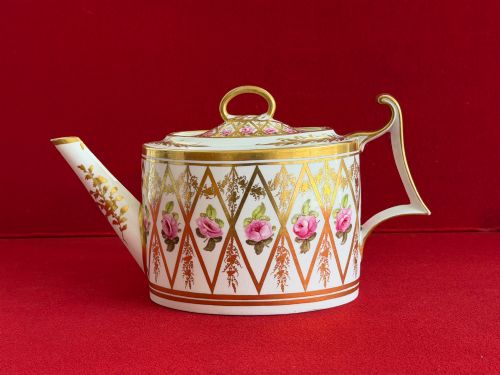
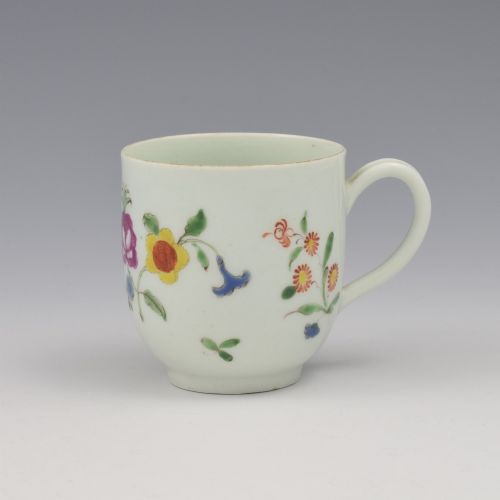
When you search for english hand painted ceramics, you enter a field populated by tablewares, cabinet pieces, and decorative vessels from the eighteenth century through to the twentieth century. The selection ranges from early soft-paste porcelain tea services and tin-glazed chargers to robust ironstone jugs and fine bone china cabinet plates.
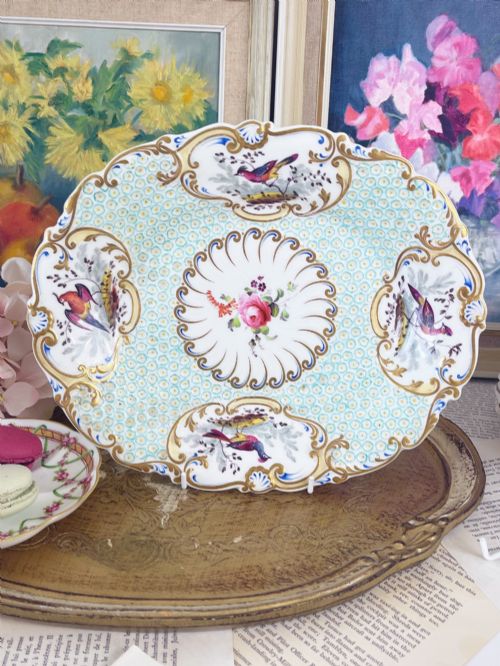
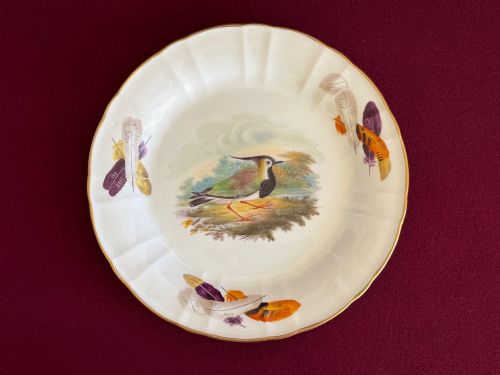
You are most likely to encounter nineteenth-century Regency and Victorian examples on this page, alongside earlier Georgian productions from factories such as Worcester, Derby, and Spode. These pieces reflect shifting domestic tastes, moving from botanical studies and Chinoiserie motifs to elaborate armorials and avian scenes.
Materials and methods
The potteries relied on diverse bodies, including creamware, soft-paste porcelain, bone china, and earthenware, shaped by hand or moulded before receiving their tin-glaze or enamel finishes.
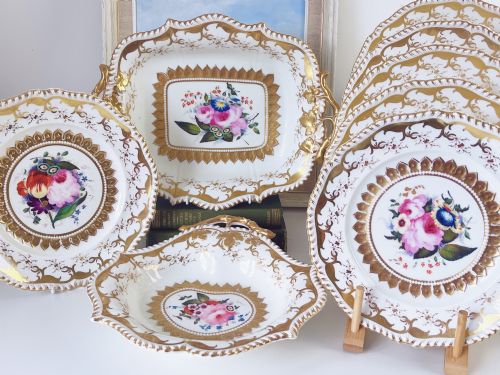
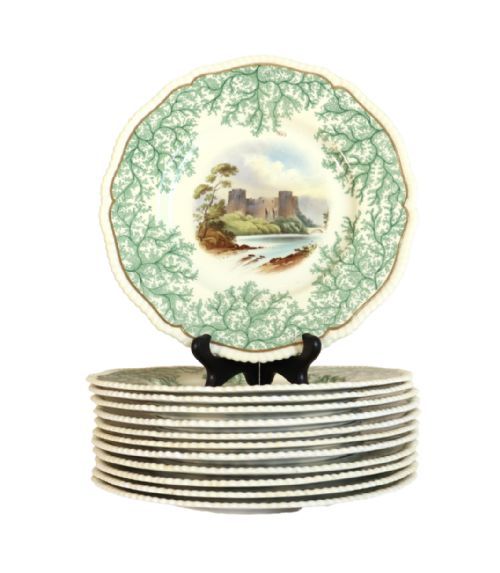
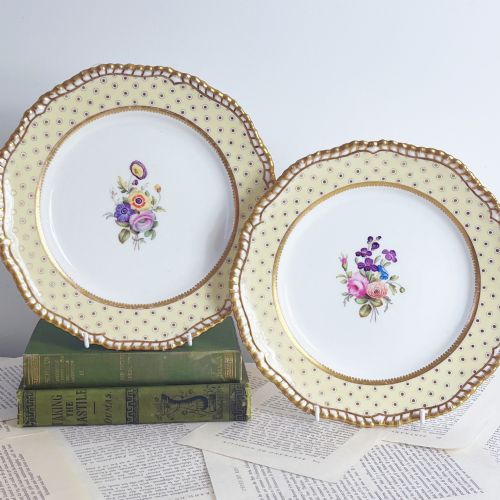
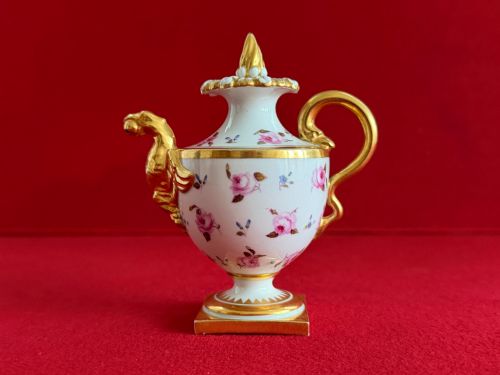
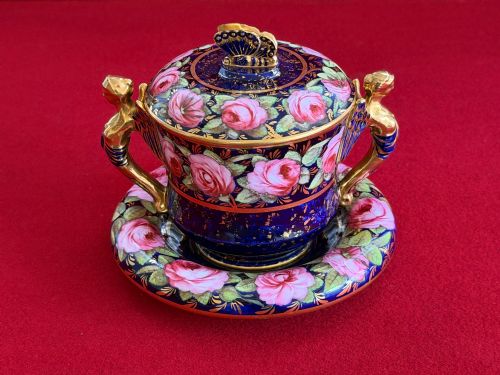
Painters applied polychrome pigments and gold leaf by hand, often fixing the decoration through multiple kiln firings to achieve the characteristic depth seen on cabinet plates and teapots.
Listings span the eighteenth, nineteenth, and twentieth centuries, incorporating materials like bone china, soft-paste porcelain, and creamware.
Distinctions in execution
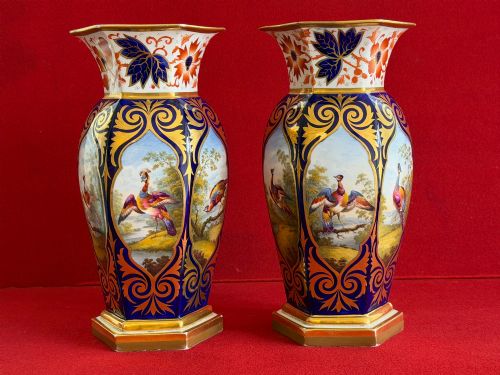
The standard of the hand painting itself defines the upper tier, where delicate brushwork on fancy birds or botanical specimens shows immense precision and confidence from the decorator.
The crispness of the porcelain body, the retention of gilding, and the harmony of the palette separate standard domestic wares from exhibition-quality cabinet pieces.
Grainger Lee & Co·Spode·Flight Barr & Barr·H & R Daniel·Royal Doulton·Derby Porcelain·Wedgwood·Richard Chaffers·Bow·Coalport·Chelsea·Staffordshire·Newhall·Grainger Worcester·Chamberlains Worcester·Royal Crown Derby·Royal Worcester·Moorcroft
The English Hand Painted Ceramics Glossary
- Soft-paste porcelain
- An early ceramic composition fired at lower temperatures than hard-paste porcelain, resulting in a warm, slightly translucent body.
- Creamware
- A refined earthenware developed in eighteenth-century Staffordshire, prized for its pale straw-coloured glaze.
- Enamel
- Opaque vitreous colours applied over the glaze and fired at a lower temperature to fix the painted details.
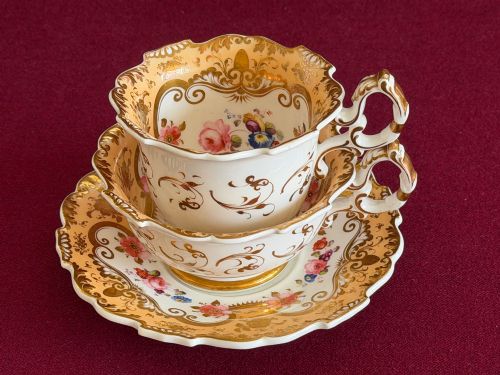
- Trio
- A matching set consisting of a teacup, a coffee cup, and a saucer.
- Chinoiserie
- European decorative motifs inspired by Chinese art and design, popular on eighteenth-century ceramics.
English Hand Painted Ceramics: Frequently Asked Questions
How do I date an English ceramic piece?
Dating relies on factory marks, paste composition, and stylistic clues such as Regency shapes or Georgian enamel palettes. Comparing the potting style with documented factory periods yields a reliable date.
Changes in glaze formulations and transfer-printed or hand-painted signatures also help narrow down the decade of production.
Were these ceramic items used daily?
Many teapots, cups, and dinner plates served practical functions in period dining rooms and parlours. Everyday wear on utilitarian items is common.
Cabinet plates and delicate porcelain trios, however, were frequently reserved for display rather than active service.
How should I care for antique porcelain?
Hand washing in lukewarm water with mild soap is essential for preserving fragile enamel decoration and nineteenth-century gilding. Dishwashers and harsh detergents cause irreversible damage.
Display cabinets should shield pieces from direct sunlight to prevent fading on polychrome floral and bird subjects.
What is the difference between porcelain and creamware?
Porcelain is a vitrified, translucent ceramic body fired at high temperatures, whereas creamware is a refined, porous earthenware with a warm yellow-toned glaze.
Porcelain suits delicate cabinet cups and saucers, while creamware provides a durable surface for large dinner plates and serving dishes.