



English Glass Rummers
English glass rummers are heavy drinking vessels from the Georgian and Victorian eras, prized for substantial bowls and engraved decoration.
English Glass Rummers
English glass rummers appear primarily in Georgian and Victorian forms, spanning the eighteenth to nineteenth centuries. These drinking glasses serve generous portions, often featuring substantial bowls intended for ale, wine, or punch.
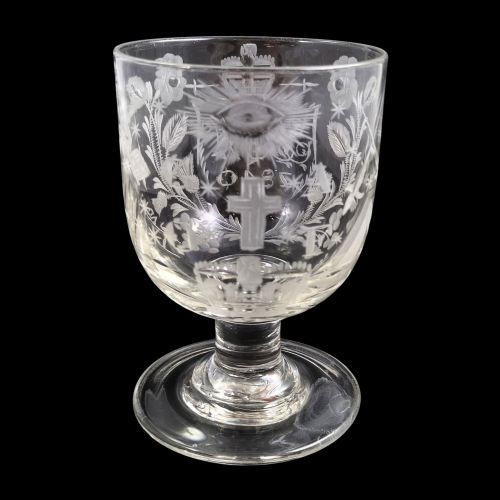
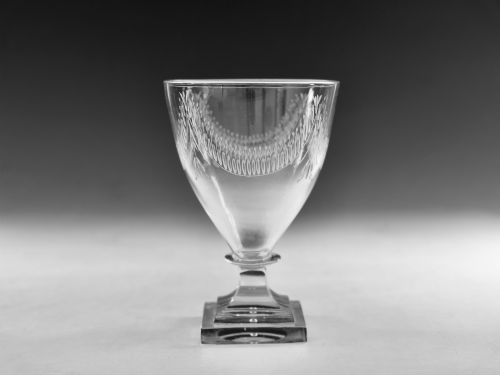
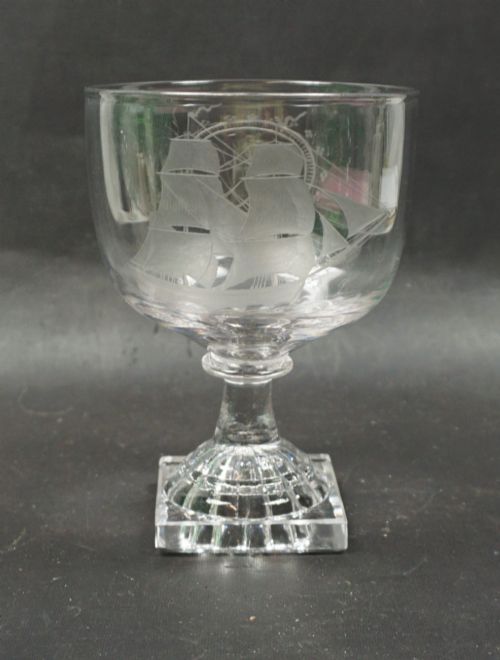
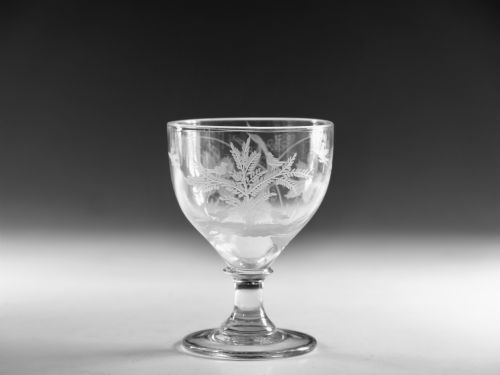
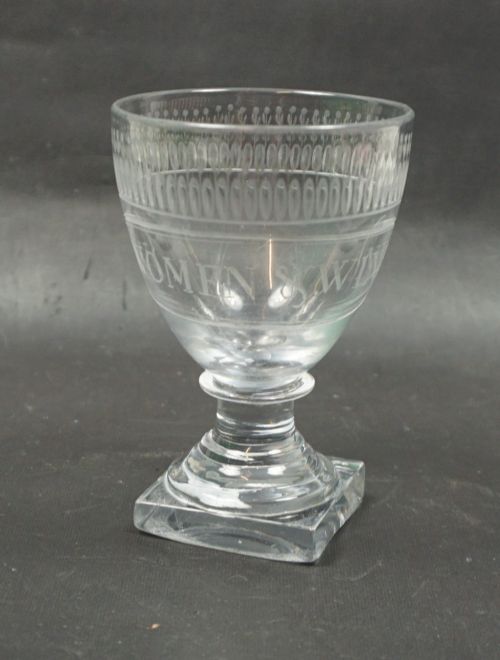
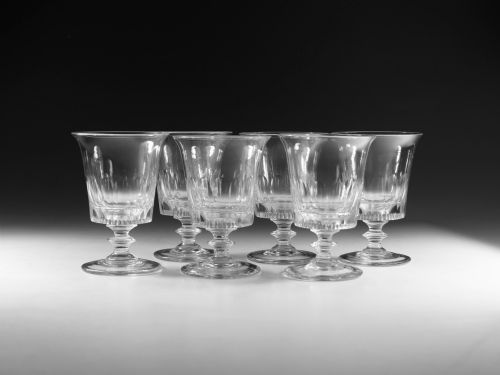
The versions met most frequently on this page include clear lead glass vessels with engraved hops and barley, sailing ships, or commemorative bridges. Examples range from simple square lemon squeezer bases to heavy crystal items with baluster stems.
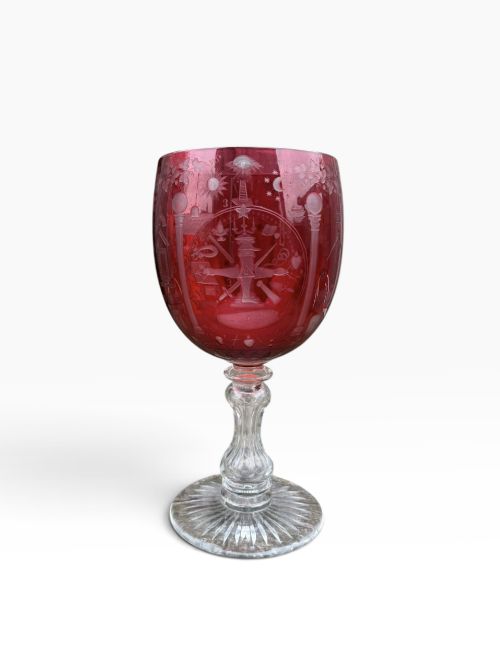
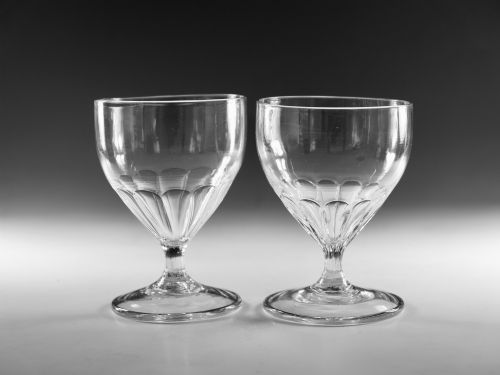
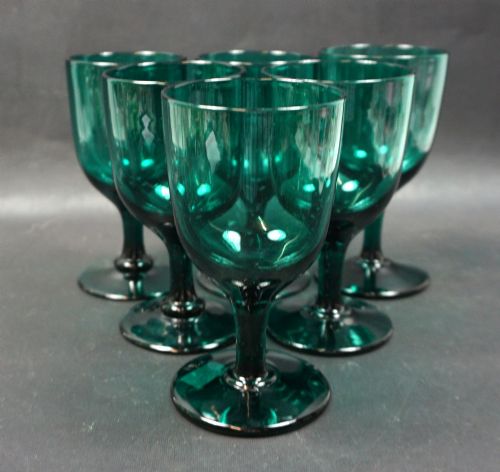
Collectors encounter individual pieces alongside pairs and complete sets of six. Occasional variants introduce coloured glass, such as cranberry, turquoise green, or Bristol green hues.
Materials and Techniques
Maker operations rely heavily on lead glass, lead crystal, and flint glass to achieve clarity and weight. Coloured variants incorporate cranberry glass and green glass recipes during the initial molten stage.
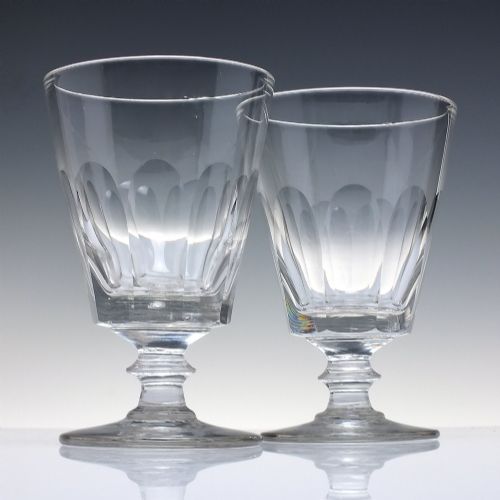
Decoration involves hand engraving and etching techniques applied directly to the surface. Craftsmen utilise panel moulding to shape the body and form structural elements like hollow stems and square lemon squeezer bases.
Listings feature lead glass, clear crystal, and coloured variants including cranberry and green glass across Georgian and Victorian periods.
Distinctions in Quality
Quality rests upon the crispness of the engraving and the brilliance of the lead crystal. Pieces bearing detailed depictions of sailing ships or architectural subjects demonstrate superior hand skill compared to naive etchings.
Substantial weight and balanced proportions separate utilitarian items from finer examples. Uniformity across matched sets of six or pairs preserves historical integrity and visual appeal.
The English Glass Rummers Glossary
- Rummer
- A large drinking glass used in eighteenth and nineteenth-century Britain for ale, wine, or punch. These vessels typically sit on short stems with heavy, capacious bowls.
- Lead Crystal
- A heavy type of glass containing lead oxide, which increases brilliance and workability. This material allows deeper cutting and clearer engraving.
- Lemon Squeezer Base
- A square, pressed glass foot resembling a kitchen juicer. Makers produced this distinct form during the Georgian period.
- Baluster Stem
- A supporting column shaped like an architectural baluster. Such stems provide a sturdy grip on heavier drinking vessels.
- Panel Moulding
- A decorative technique creating flat vertical facets around the lower bowl. This process adds texture and reflects light across the surface.
English Glass Rummers: Frequently Asked Questions
What were rummers used for?
These vessels served everyday drinking needs for ale, wine, and punch in homes and taverns. Their generous capacity made them practical for social gatherings.
Over time, some examples gained commemorative engravings celebrating local bridges, agricultural societies, or maritime themes.
How do I date an old rummer?
Dating relies on stylistic shifts in foot shapes, stem formations, and bowl profiles across the Georgian and Victorian periods. Square lemon squeezer bases and specific engraving motifs often point to the late eighteenth or early nineteenth century.
Later Victorian specimens tend to show heavier proportions and different cutting styles compared to their eighteenth-century predecessors.
Are coloured glass rummers authentic?
Coloured examples in cranberry, turquoise, and Bristol green appear within nineteenth-century production. These variations demonstrate the range of glasshouse output alongside standard clear lead crystal.
Such pieces require careful examination of the hue and material density to match period output standards.
How should I display them?
Rummers benefit from stable placement on sturdy shelving or within enclosed cabinets where their weight is supported safely. Adequate spacing lets light pass through the lead glass to highlight engraved details.
Keeping them away from direct edges prevents accidental knocks against heavy bases.