
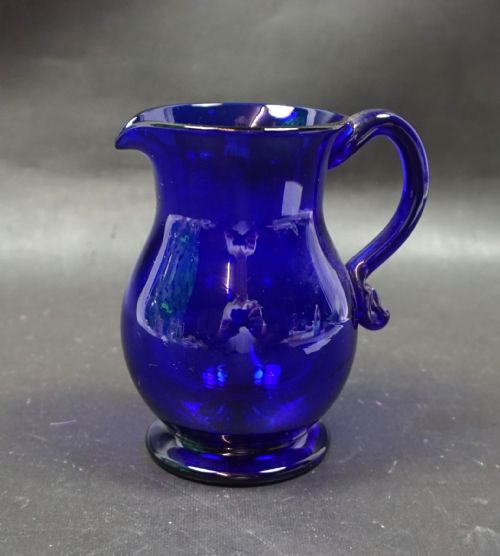


English Glass Pitcher
These English glass pitcher selections bring together centuries of serving vessels, from Georgian tableware to Edwardian silver-plated claret jugs.
English Glass Pitcher
When searching for an english glass pitcher, buyers encounter an array of serving vessels spanning the eighteenth, nineteenth, and twentieth centuries. These objects range from small cream jugs and cordial ewers to large wine jugs and champagne vessels.
The selection on this page demonstrates various forms including claret jugs, decanters, and lemonade jugs. Victorian and Edwardian examples frequently incorporate silver plate mounts alongside clear or coloured glass bodies.
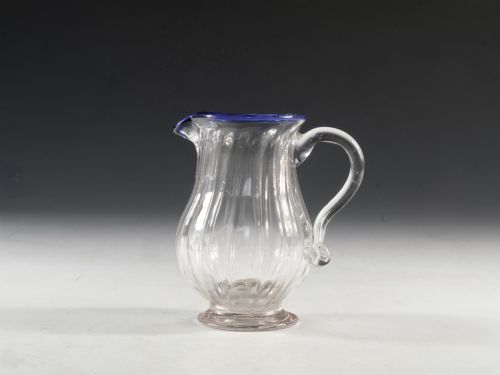
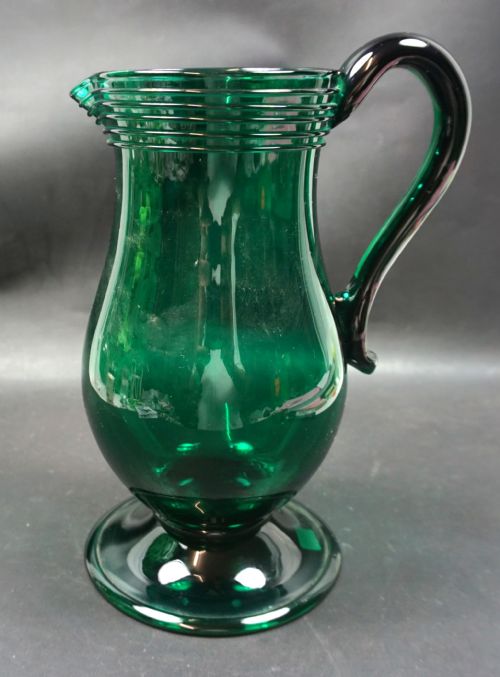
Makers utilised distinct regional techniques, producing items associated with hubs such as Stourbridge and Birmingham. Forms vary from simple blown green glass with trail rims to heavily cut crystal mounted in silver.
How they were made
Glass production relied on traditional blowing and moulding techniques, utilising lead glass and crystal to achieve clarity and weight. Artisans shaped vessels by hand, often adding folded feet and applied trail rims while the material remained hot.
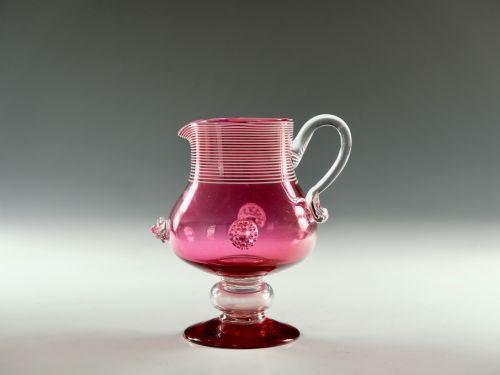
Decoration required specialist skills such as wheel engraving, cutting, etching, and latticinio work. Metalwork mounts in silver and silver plate were then applied to complete the serving vessels.
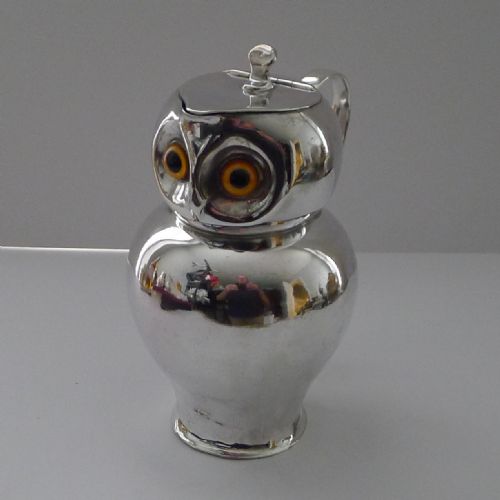
One exceptional novelty jug takes the form of an owl complete with blinking glass eyes.
What varies in quality
Quality depends upon the clarity of the glass and the crispness of the wheel engraving or cut facets. Heavy lead crystal provides a superior ring and weight compared to standard blown glass.
The integration of metal mounts also dictates standard, with solid silver or well-executed silver plate adding considerable finish to pieces like claret jugs and ewers.
Richardsons Birmingham·Powell Glass·Liberty Co England·Archibald Knox
The English Glass Pitcher Glossary
- Claret jug
- A vessel specifically designed for serving red wine, often featuring a glass body with a silver-plated handle, mount, and hinged lid.
- Lead crystal
- A high-clarity glass containing lead oxide, which increases the weight, brilliance, and workability for deep cutting and engraving.
- Latticinio
- A decorative glass technique involving opaque white or coloured threads twisted within clear glass during the blowing process.
- Silver plate
- A thin layer of silver bonded to a base metal, commonly used for the rims, handles, and lids of Victorian and Edwardian jugs.
- Trail rim
- A decorative glass thread applied around the rim or body of a jug while the vessel is still hot.
English Glass Pitcher: Frequently Asked Questions
How do I clean an antique glass pitcher?
Wash these vessels by hand in warm soapy water using a soft cloth, avoiding harsh abrasives that might scratch the surface or damage engraved details.
Dry them immediately with a lint-free cloth to prevent water spots, particularly on pieces with silver plate mounts.
Are these pitchers suitable for daily use?
Many sturdy Victorian and Edwardian serving jugs remain robust enough for regular table service, holding water, wine, or lemonade without issue.
Delicate Georgian pieces or heavily engraved items deserve more careful handling and are often reserved for special occasions or display.
How can I tell a Victorian jug from a Georgian one?
Georgian examples often display simpler, lighter forms with restrained decoration, whereas Victorian pieces frequently exhibit heavier cut crystal and elaborate metal mounts.
Examining the pontil mark on the base and the style of engraving helps establish the manufacturing period.
What is a claret jug used for?
These vessels were created specifically to serve red wine at the dining table, allowing the drink to breathe before pouring.
The hinged lid kept the contents covered, which was particularly useful in formal dining settings during the nineteenth century.