
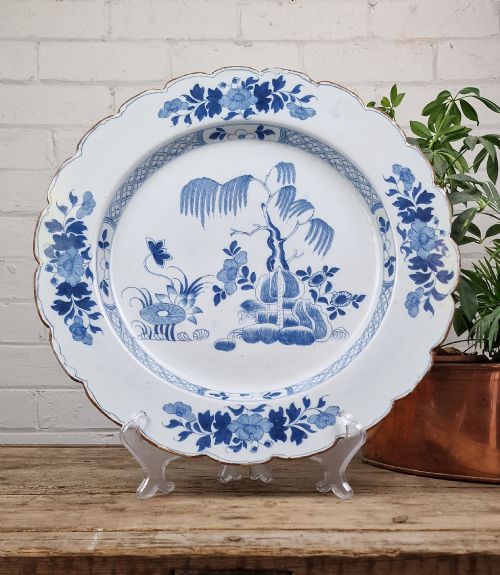


English Delft Earthenware Dish
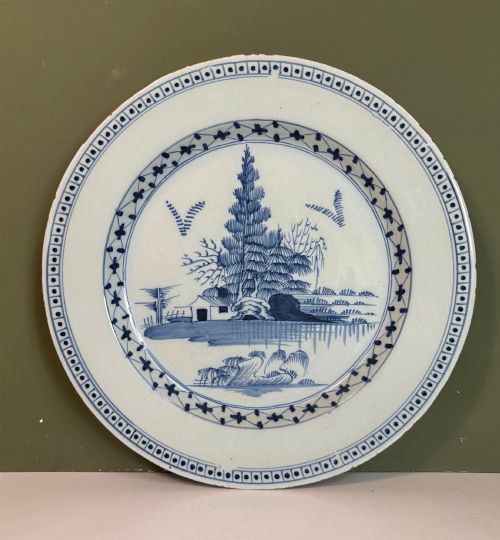
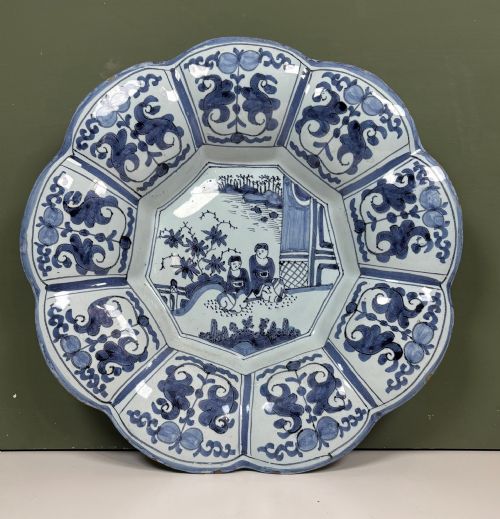
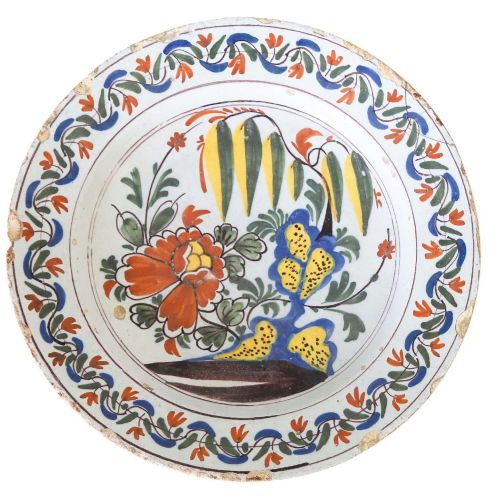
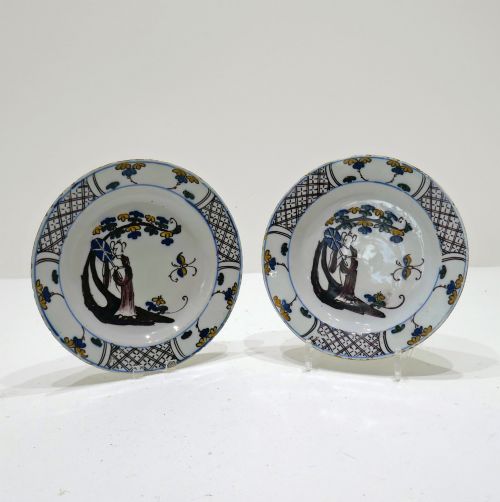
An english delft earthenware dish brings eighteenth-century tin-glazed ceramics into a room through hand-painted blue and white or polychrome designs.
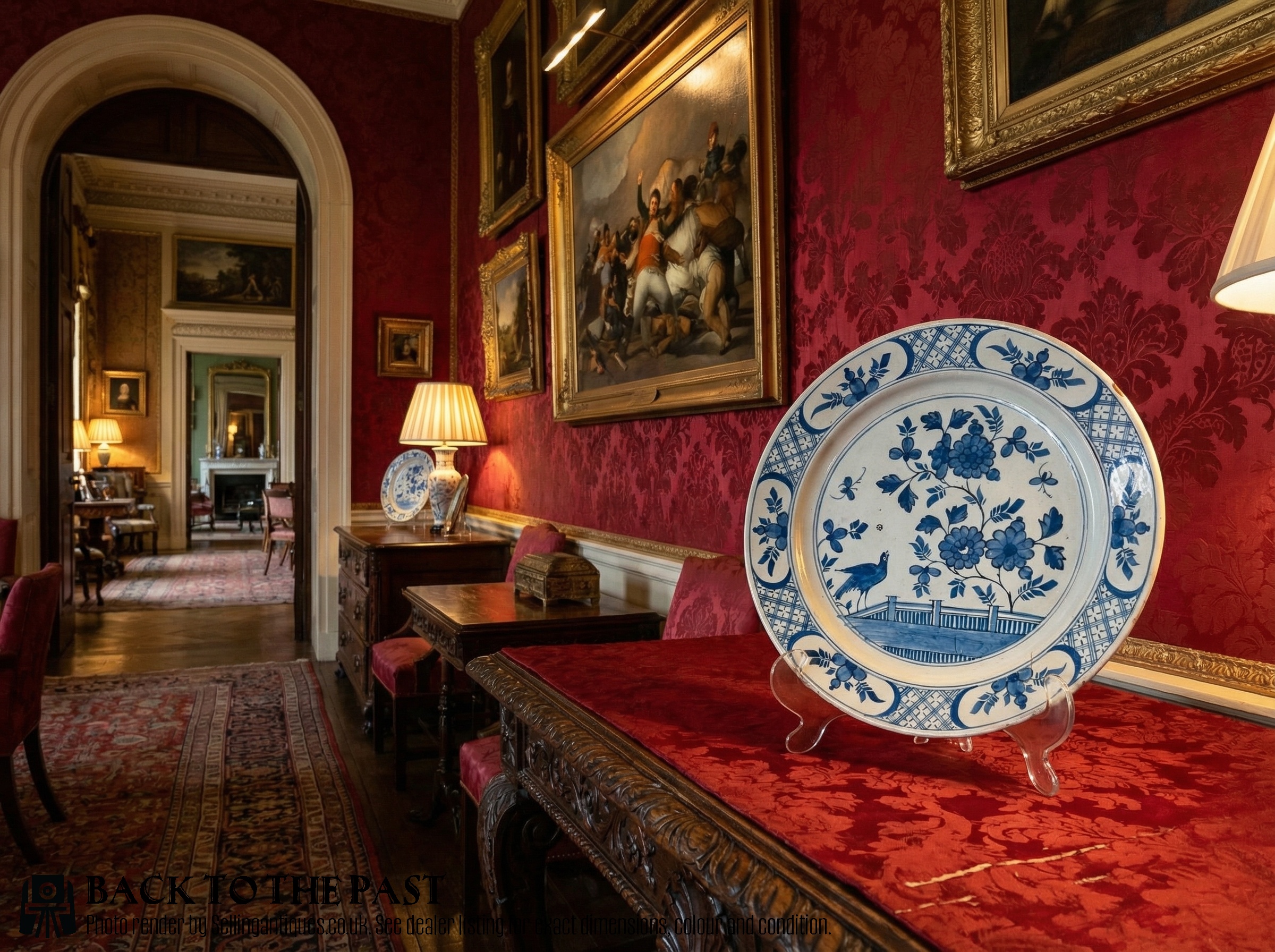
English Delft Earthenware Dish
An english delft earthenware dish sits among eighteenth-century domestic ceramics, appearing as plates, shallow bowls, and large chargers designed for display or service. These pieces date across the eighteenth century, with specific examples noted from around seventeen-fifty, seventeen-sixty, and seventeen-seventy.
The form is most frequently met as a charger or a plate, spanning sizes from small cabinet plates up to large chargers. Collectors encounter both blue and white patterns and polychrome decorations, often featuring floral or chinoiserie motifs rooted in the georgian period.
How they were made
Potters formed these items from clay into earthenware bodies, which were then coated in a tin glaze to create an opaque white surface. This tin-glazed earthenware provided a smooth ground for subsequent painting.
Makers applied cobalt pigment and other colours by hand, utilising cobalt oxide for blue and additional mineral pigments for polychrome pieces. The painted decoration was absorbed directly into the raw glaze before final firing.
What varies in quality
The fineness of the hand-painted decoration determines the visual impact of an english delft earthenware dish, distinguishing hurried brushwork from controlled, detailed floral or chinoiserie compositions. Pigment depth and the smoothness of the tin glaze further separate standard domestic production from superior examples.
The overall balance of the form, whether a deep charger or a shallow bowl, contributes to the presence of the piece. Crispness in the potting and stability in the tin glaze across the earthenware body mark the more accomplished outcomes of eighteenth-century kilns.
The English Delft Earthenware Dish Glossary
- Tin glaze
- An opaque white ceramic glaze containing tin oxide that forms the characteristic smooth surface of delftware. It provides the absorbent background required for hand-painted cobalt and polychrome designs.
- Chinoiserie
- European decorative motifs imitating Chinese artistic styles, frequently found on eighteenth-century ceramic plates and chargers. This style reflects the period fascination with imported oriental porcelain.
- Polychrome
- Decoration employing multiple colours rather than a single pigment, seen on delft plates using various mineral oxides. These palettes typically include greens, yellows, reds, and blues painted over the tin glaze.
- Charger
- A large decorative plate or platter intended primarily for display on walls or sideboards rather than heavy dining use. These substantial dishes showcase the full scope of the potter's painted compositions.
- Earthenware
- Porous ceramic pottery fired at lower temperatures than stoneware or porcelain, forming the fundamental body of delftware. It requires a tin glaze to render the surface impermeable and white.
English Delft Earthenware Dish: Frequently Asked Questions
How do I hang a delft charger?
Chargers require specialised flat-backed wire hangers that distribute the weight evenly across the rim without putting pressure on the earthenware body.
Displaying them securely on a wall protects the tin glaze from table friction while keeping the painted surface visible.
Can I use these plates for food?
Eighteenth-century tin glaze is softer and more porous than modern dinnerware, making daily dining impractical.
Acids and everyday wear can stain the historic glaze and damage the delicate hand-painted cobalt or polychrome pigments.
What is the difference between blue and white and polychrome?
Blue and white pieces rely exclusively on cobalt oxide under the glaze, creating crisp monochrome designs that echo Chinese export porcelain.
Polychrome examples introduce additional mineral colours, giving a warmer, more varied palette across floral and pictorial scenes.
How do I clean an antique delft dish?
Dusting with a dry, soft cloth is sufficient for routine maintenance on pieces kept in stable interior environments.
Moisture can penetrate historic earthenware through tiny glaze cracks, so washing is generally avoided unless handled by a professional.