




English Cut Glass Bottle
An English cut glass bottle brings together heavy faceted crystal and gleaming silver mounts to anchor a traditional drinks tray or dressing table.
English Cut Glass Bottle
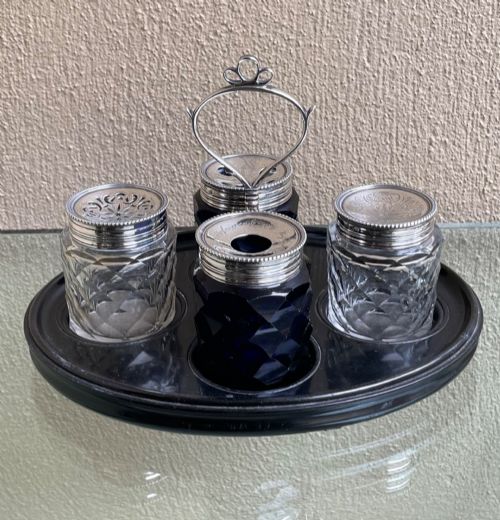
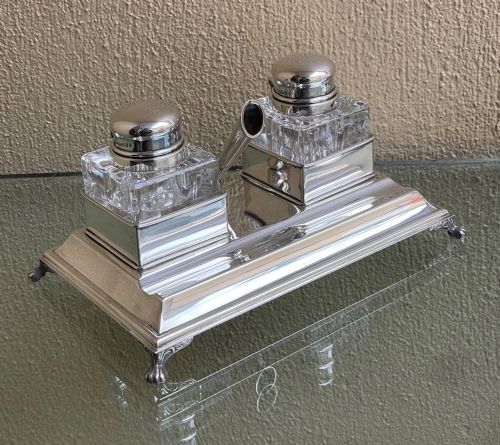
When you search for an english cut glass bottle, you encounter a variety of functional forms spanning decanters, scent bottles, inkstands, and flasks designed for everyday use or travel. The selection on this page ranges from Georgian lead glass vessels to Edwardian spirit bottles and Art Deco crystal pieces.
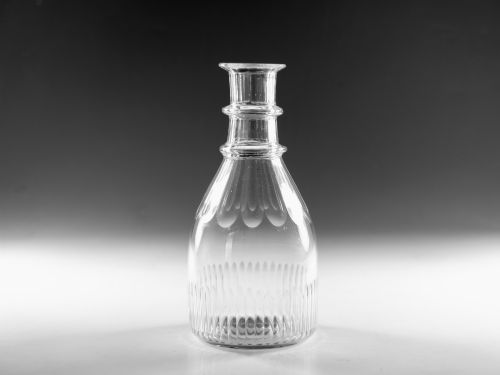
Decanters and carafes form the largest group, often featuring cut rings around the neck and substantial stoppers. Smaller perfume bottles and scent bottles frequently incorporate sterling silver collars, hinged lids, or vibrant overlay glass in cranberry, green, purple, and ruby.
The materials recorded in these pieces include cut glass, lead crystal, and sterling silver, alongside silver plate and enamel. Origins lean heavily towards English workshops from the eighteenth, nineteenth, and twentieth centuries.
Materials and manufacture
The primary bodies are fashioned from heavy lead glass or cut crystal, shaped by blowing into moulds or free-blowing before being deeply faceted on a wheel. Coloured effects are achieved through overlay techniques, casing a layer of ruby, green, purple, or cranberry glass over clear crystal.
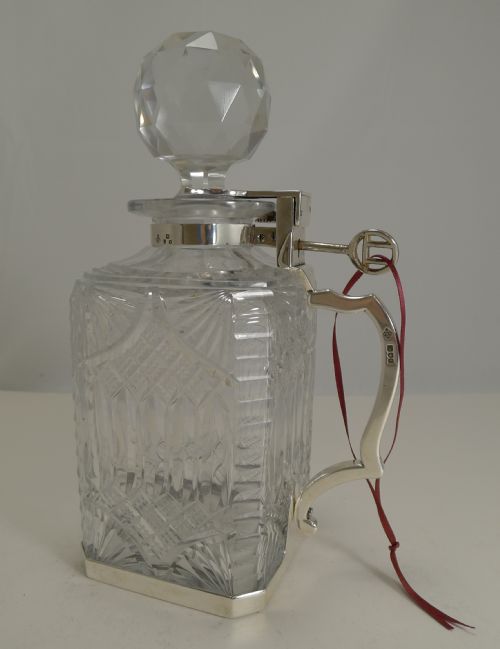
Metal mounts, collars, and lids in sterling silver or silver plate are secured to the glass necks, frequently bearing hallmarks from London, Birmingham, and other assay offices. Additional elements incorporate leather cases for explorer flasks and guilloché enamel details on dressing table items.
An explorer's saddle flask comes equipped with its own leather case, built for taking a quiet sip on horseback.
Evaluating quality and execution
Quality rests upon the crispness of the wheel-cut facets and the weight of the crystal body. Sharp, well-defined cutting catches the light directly, whereas softer edges indicate hurried or later production.
The integration between the glass and any silver collar, stopper, or hinged mount dictates the overall standard of the piece. Matching original stoppers and clear, unclouded crystal elevate the integrity of the antique.
Henry Perkins·Barnsley & Co·Jonathan Douglas·Mappin & Webb·Hukin and Heath
The English Cut Glass Bottle Glossary
- Cut glass
- Glass decorated by grinding facets or patterns into the surface using a rotating wheel. This technique creates sharp geometric edges that refract light.
- Overlay
- A manufacturing method where a layer of coloured glass is fused over a clear crystal core. Subsequent cutting through the outer layer reveals the contrasting clear glass beneath.
- Sterling silver
- An alloy of silver containing ninety-two point five percent pure silver by mass. It is commonly utilised for the collars, lids, and mounts of scent bottles and decanters.
- Hallmark
- An official stamp applied to precious metals indicating the purity, maker, and year of testing. English pieces frequently display these marks on silver bottle collars.
- Ring decanter
- A form of decanter featuring prominent horizontal glass rings encircling the neck. These rings provide a secure grip when pouring spirits.
English Cut Glass Bottle: Frequently Asked Questions
How do I clean an old decanter?
Fill the vessel with warm water and mild detergent, avoiding harsh abrasives that might scratch the interior crystal.
Allow it to soak before rinsing thoroughly and leaving the stopper out until completely dry.
What is overlay glass?
Overlay glass consists of a clear crystal body cased in a distinct layer of coloured glass such as ruby, green, or cranberry.
When cut on the wheel, the outer colour is removed in patterns to expose the clear crystal underneath.
How do I know if a stopper is original?
An original stopper typically shares the same cut pattern, tint, and degree of wear as the neck of the bottle.
It should fit the ground glass opening snugly without rocking excessively.