
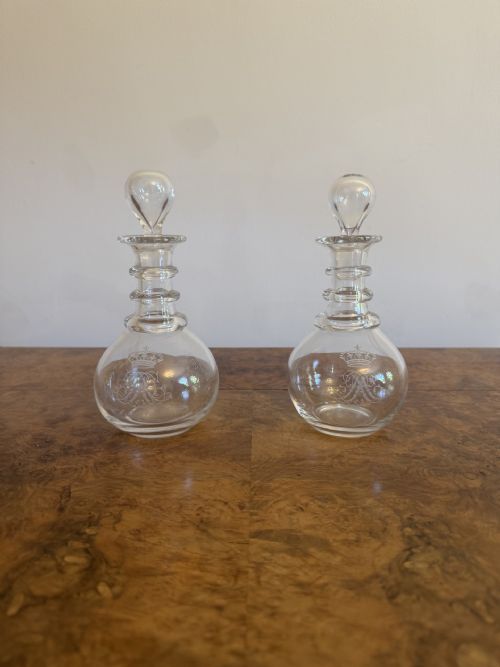


Ring Necked Decanter
A ring necked decanter is a traditional drinking vessel defined by its distinct concentric rings, offering a tangible link to Georgian, Regency, and Victorian dining tables.
Ring Necked Decanter
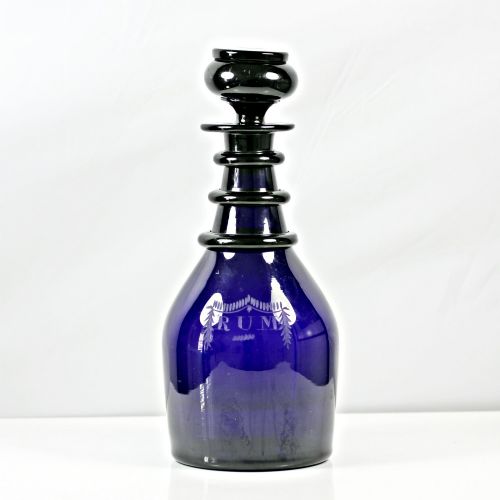
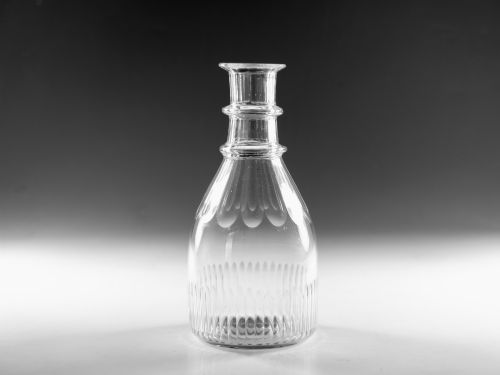
When you search for a ring necked decanter, you encounter functional serving vessels shaped by Georgian, Regency, Victorian, and Edwardian hands. These pieces range from three ring carafes and spirit decanters to ship's decanters and half-bottle forms.
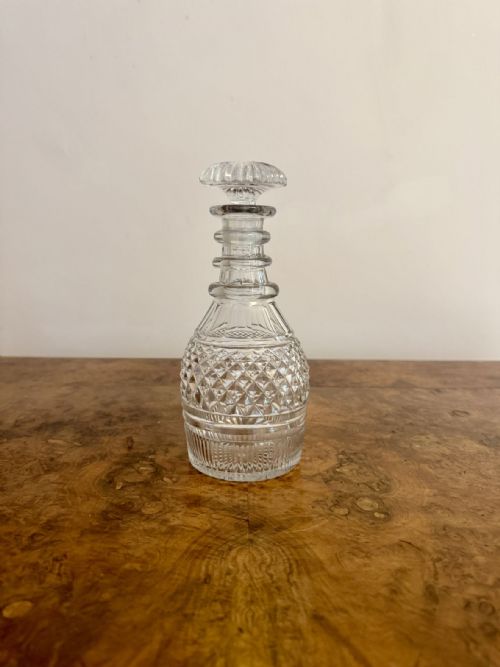
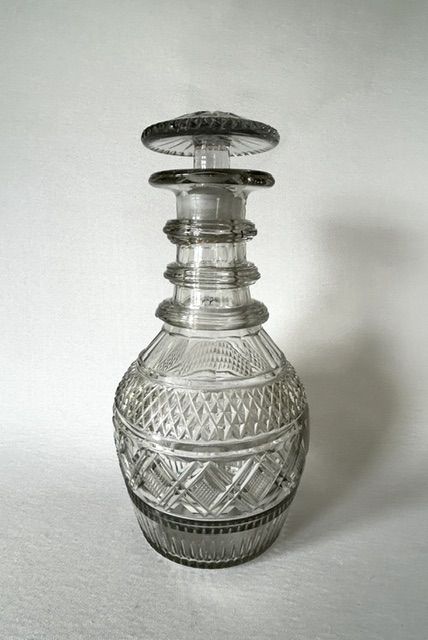
The version you are most likely to meet on this page is an English lead crystal or cut glass example from the early nineteenth century. These vessels often feature characteristic annular rings around the neck to secure a grip when pouring.
How they were made
Maker's hands fashioned these vessels from lead glass and crystal, employing heavy blowing techniques to achieve thick, durable walls. Craftsmen then applied wheel-cut geometric patterns and pillar cuts to catch the light.
The distinctive rings on the neck were formed while hot or wheel-cut from the solid body of the glass. Occasional variants incorporate cobalt glass, Bristol blue hues, or subtle gold leaf accents.
Listings span the eighteenth, nineteenth, and early twentieth centuries, encompassing Georgian, Regency, William IV, Victorian, and Edwardian periods.
What varies in quality
The division between everyday pieces and finer examples rests upon the clarity of the metal and the depth of the wheel-cut decoration. Heavier lead glass carries a resonant ring and greater heft in the hand.
Proportion and symmetry set apart the superior pieces, particularly in the execution of the neck rings and the matching of pairs. Crisp faceting separates standard utility ware from pieces intended for formal dining.
The Ring Necked Decanter Glossary
- Lead Crystal
- Glass containing lead oxide that increases weight, brilliance, and refractive index. This material allows for deeper and sharper cutting.
- Pillar Cut
- A decorative technique featuring vertical flutes or columns cut into the body of the vessel. It provides both visual rhythm and a secure grip.
- Bristol Blue
- A deep cobalt blue glass traditionally associated with West Country production. It offers a striking contrast to clear lead glass.
- Ship's Decanter
- A form with a broad, stable base designed to prevent tipping at sea. The profile tapers outwards toward the bottom.
Ring Necked Decanter: Frequently Asked Questions
What is a ring necked decanter used for?
These vessels were designed to hold and serve wine, spirits, and rum at the dining table. The neck rings provided a secure hold for pouring.
They allowed hosts to transfer beverages from bulk storage into presentable containers for guests.
How do I date a glass decanter?
Dating relies on the shape of the body, the style of the neck rings, and the cutting technique. Georgian and Regency pieces often feature heavy lead glass and specific ring configurations.
Victorian and Edwardian examples introduce broader stylistic variations and alternative proportions.
Are these decanters safe for modern use?
Most antique examples can still hold liquids, though lead crystal requires consideration regarding prolonged storage of acidic beverages. Gentle hand washing preserves the historic material.
Inspect the interior for cloudiness or residue before deciding to use them for serving.
What makes a pair of decanters match?
Matched pairs share identical height, weight, cutting patterns, and neck ring counts. Slight variations indicate hand-blown production rather than industrial uniformity.
Collectors look for consistency in the tint of the glass and the stopper design.