


Regency Glass Bottle
A regency glass bottle brings heavy lead crystal and brilliant cutting to the table, offering a tangible link to early nineteenth-century dining and hospitality.
Regency Glass Bottle
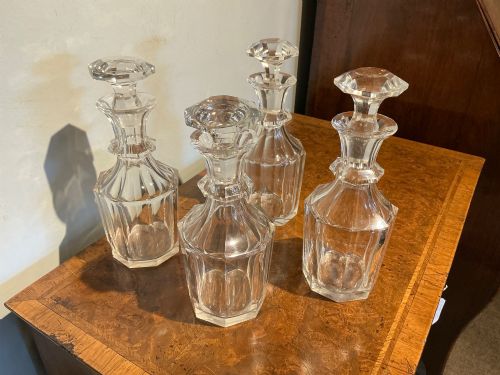
A regency glass bottle typically takes the form of a heavy decanter, carafe, or serving bottle designed for wine, spirits, and cordials. The selection also encompasses smaller vessels such as scent bottles, cologne bottles, ink bottles, and chemist jars.
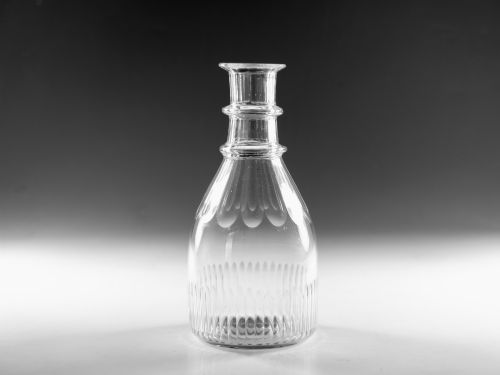
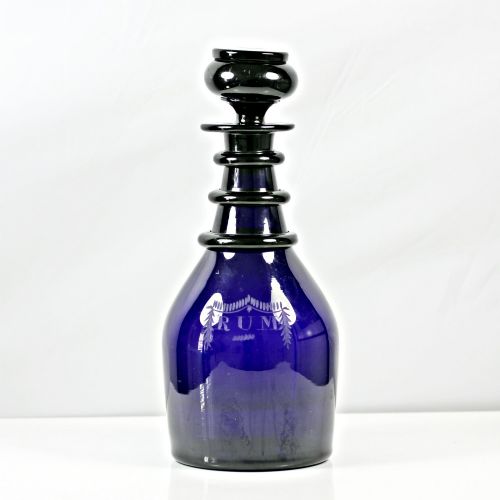
Most examples originate from the Georgian and Regency periods, spanning the early nineteenth century down to later Victorian iterations. Buyers frequently encounter three-ring decanters and matched pairs intended for sideboards and dining tables.
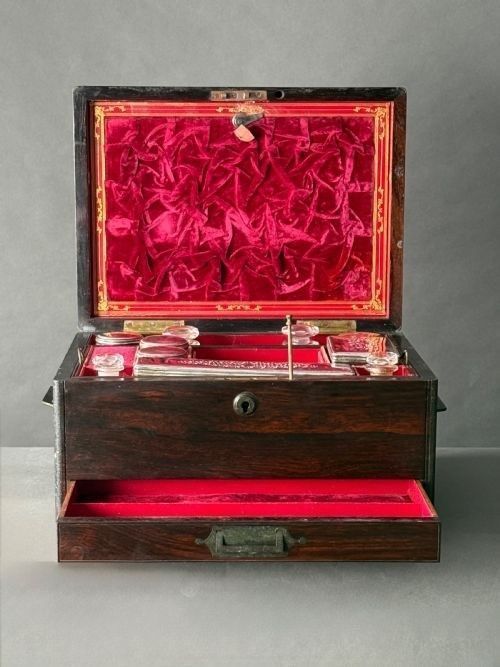
Beyond standalone bottles, the category extends to fitted wooden boxes containing glass bottles, including mahogany apothecary travelling cases and rosewood vanity boxes. These fitted cases combine glass storage with brass mounts, velvet linings, and silver hardware.
How they were made
Makers utilised lead crystal and heavy cut glass, shaping vessels through blowing and mould-pressing before applying wheel-cut facets, flutes, and concentric neck rings. Techniques such as quilt moulding appear in specialist items like Nailsea glass flasks.
Many vessels incorporate secondary materials including brass, sterling silver, gold leaf, and Old Sheffield Plate for mounts, stoppers, and stands. Fitted boxes utilise timber frames in mahogany, rosewood, and kingwood, often lined with velvet.
Listings feature 19th Century, Georgian, and Regency periods alongside later Victorian examples, utilising cut glass, lead crystal, mahogany, rosewood, brass, and sterling silver.
What varies in quality
The clarity and weight of the lead crystal separate standard production from finer work, alongside the crispness and depth of the wheel-cut facets. Well-executed cutting reflects light cleanly and maintains precise geometric patterns across the body and neck rings.
Completeness dictates standing in the market, particularly for fitted cases containing their original matched glass bottles, stoppers, and drawers. The integration of hallmarked silver mounts, brass hardware, and fine cabinet timbers elevates the overall execution.
Charles Thomas Fox
The Regency Glass Bottle Glossary
- Lead crystal
- A heavy glass containing lead oxide that increases brilliance, softness for cutting, and overall weight. This material forms the body of finer decanters and table bottles.
- Ring decanter
- A vessel featuring horizontal raised glass bands or rings around the neck, designed to provide a secure grip for wet hands. These rings range from single examples to three or more distinct ridges.
- Mell decanter
- A decanter with a mallet-shaped body widening towards the base, popular during the Georgian period for safe storage on board ships and dining tables.
- Apothecary box
- A fitted wooden travelling case containing glass bottles and jars for medicines and remedies. They often include secret drawers and scales.
- Nailsea glass
- Glassware produced in Somerset known for distinctive looped, threaded, or quilt-moulded white enamel patterns within clear or coloured metal.
Regency Glass Bottle: Frequently Asked Questions
How were apothecary bottles used?
Apothecary bottles held liquid medicines, pills, and compounds for domestic or professional medical treatment, stored securely within fitted wooden travelling cases.
They allowed physicians and travellers to carry necessary remedies with protection against breakage during transit.
What distinguishes Regency glass from Victorian?
Regency glass typically exhibits heavier lead crystal, deeper hand-cut facets, and simpler geometric forms compared to later Victorian decorative excesses.
Earlier pieces also display distinct pontil marks on the base and characteristic neck ring formations that evolved over the course of the nineteenth century.
Can I use antique decanters for wine?
Many buyers continue to use heavy cut glass decanters for serving wine and spirits during formal dinners, provided the interior is clean.
Careful hand washing without extreme temperature changes preserves the historical lead crystal and any remaining gilt highlights.