




English Crystal Rummer
These English crystal rummer pieces are hefty historic drinking glasses built for robust toasts, offering collectors a tangible slice of social history.
English Crystal Rummer
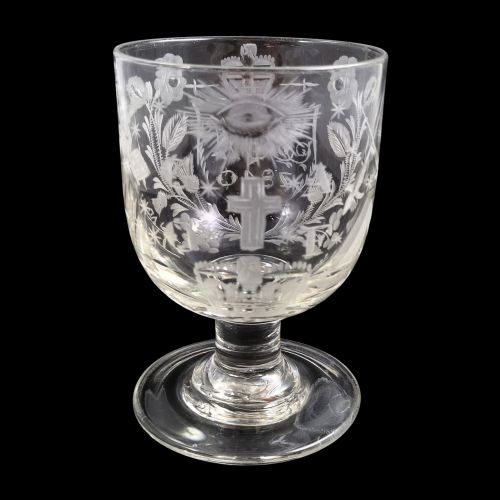
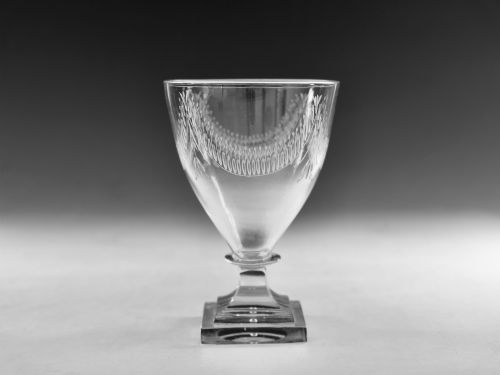
An English crystal rummer is a substantial drinking glass designed for spirits, ale, or wine, appearing in forms across the Georgian, Victorian, and later eras. Pieces on this page span the eighteenth, nineteenth, and early twentieth centuries, reflecting changing domestic drinking habits over generations.
The most common versions met here belong to the Georgian and Victorian periods, often displaying the generous proportions typical of tavern and dining table glassware. Collectors encounter both plain lead glass vessels and highly decorated examples bearing commemorative engravings.
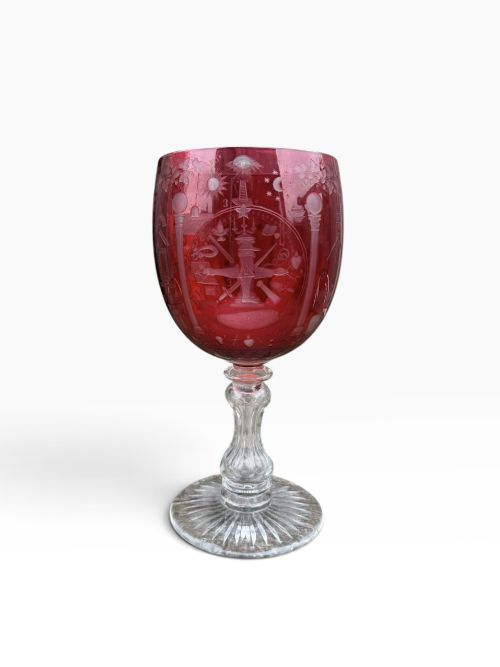
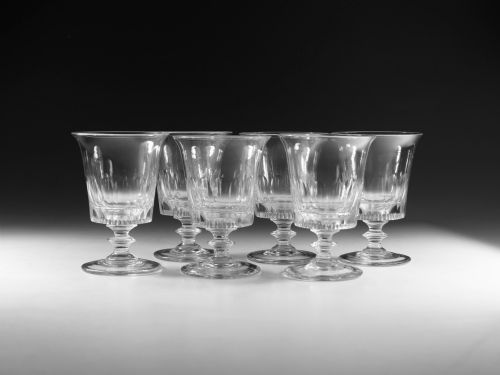
Object types on display range from individual serving rummers to complete sets of six, alongside related ale glasses and cranberry glass pieces. Origins stretch across English glassmaking traditions, including specific regional pieces from the North-East.
Materials and Manufacture
Makers utilised lead crystal, flint glass, and heavy clear glass to achieve the characteristic weight and refractive brilliance demanded by contemporary drinkers. Coloured glass varieties, including striking turquoise green and cranberry glass, demonstrate the versatility of nineteenth-century glasshouses.
Surface decoration frequently involved wheel engraving, creating detailed motifs such as ships, bridges, initials, and hops and barley. Structural forms incorporate sturdy baluster stems and robust footed bases to support the large capacities of these drinking vessels.
English Crystal Rummer Retail Price Guide 2026
Typical asking prices for english crystal rummer among the pieces listed under this phrase on Sellingantiques today, from the lower quarter to the upper quarter. They describe what is for sale here now, not the wider market.
Someone once toasted a bridge and a ship into two separate glasses, ensuring history was permanently captured in crystal.
Markers of Quality
Quality in an English crystal rummer rests upon the clarity of the metal and the crispness of the glassblower's shaping. Heavy, well-balanced lead glass provides a satisfying heft that distinguishes superior examples from lighter, more utilitarian counterparts.
Engraved decoration elevates a piece when the wheelwork is deep, confident, and finely detailed rather than shallow or hesitant. The survival of matching sets and pairs also adds considerable merit for those assembling a cohesive collection.
The English Crystal Rummer Glossary
- Lead glass
- A type of glass containing lead oxide, which increases brilliance, weight, and workability for cutting and engraving.
- Baluster stem
- A thick, swelling stem shape reminiscent of architectural balusters, found supporting the bowls of heavier drinking vessels.
- Flint glass
- An early term for high-quality clear glass that resembled English flint in purity, often synonymous with lead crystal.
- Cranberry glass
- Transparent red glass produced by adding gold chloride to the molten batch, popular during the Victorian period.
- Wheel engraving
- A cold-working technique where a glass vessel is held against rotating small wheels of stone or copper to abrade designs into the surface.
English Crystal Rummer: Frequently Asked Questions
What were rummers used for?
These large vessels were primarily used for drinking rum, punch, ale, or wine during communal toasts and social gatherings in taverns and homes.
Their generous capacity made them versatile for various heavy potations before smaller, specialised stemware took over the dining table.
How do I date an old rummer?
Dating relies on observing the form of the bowl, the thickness of the metal, and the style of any engraved decoration present on the surface.
Georgian examples tend to show different stem formations and pontil mark characteristics compared to later Victorian production.
Are coloured glass rummers authentic?
Coloured examples in cranberry and turquoise green are genuine expressions of nineteenth-century glasshouse experimentation and taste.
While clear lead glass is more common, coloured variations were produced to satisfy shifting interior and dining aesthetics.
How should I display them?
Displaying these glasses behind glass cabinets protects their delicate rims while allowing natural light to catch the lead crystal and engraved details.
Ensure stable shelving is used to support the considerable weight of heavy lead glass pieces.