
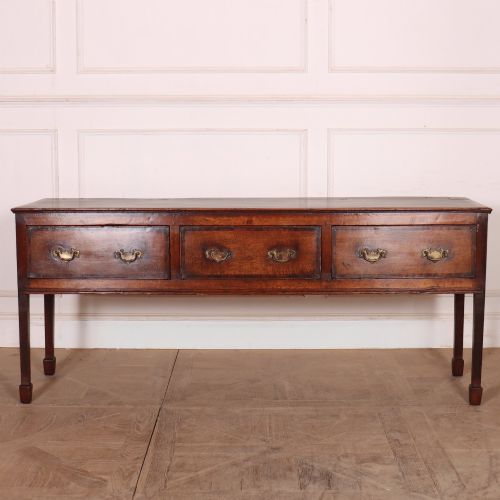

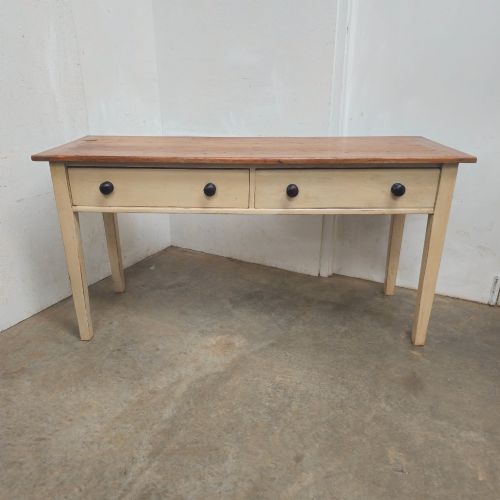
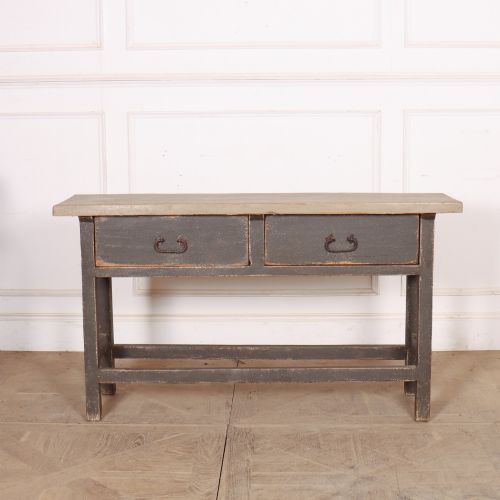
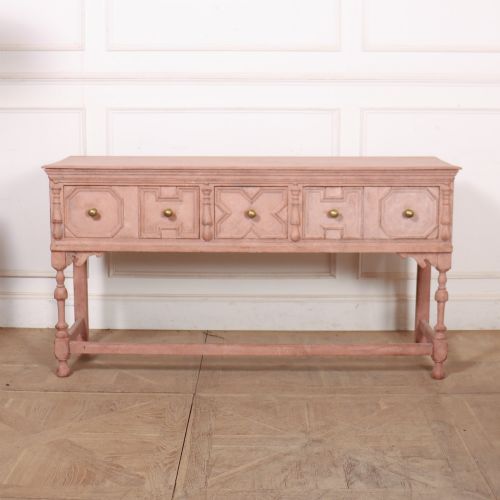



English Country Server Table
An english country server table brings working domestic utility into a room with grounded, unpretentious presence.
English Country Server Table
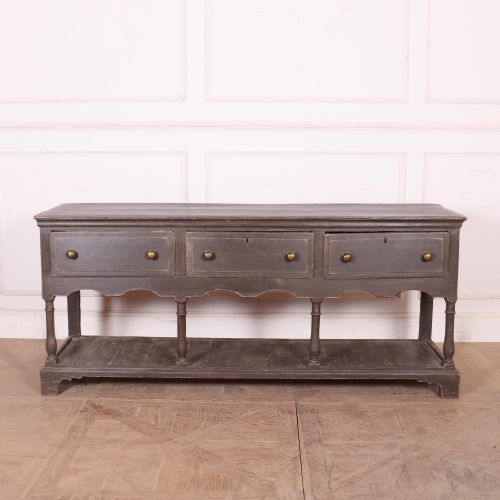
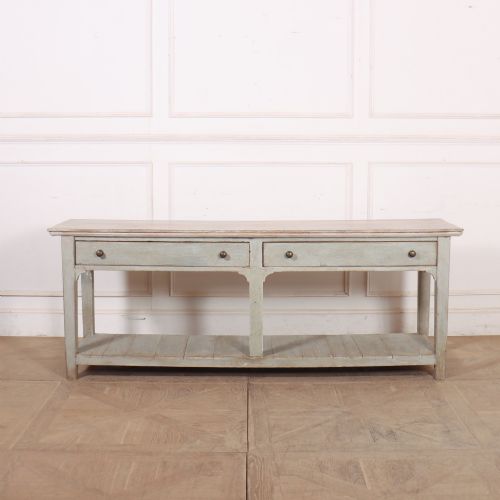
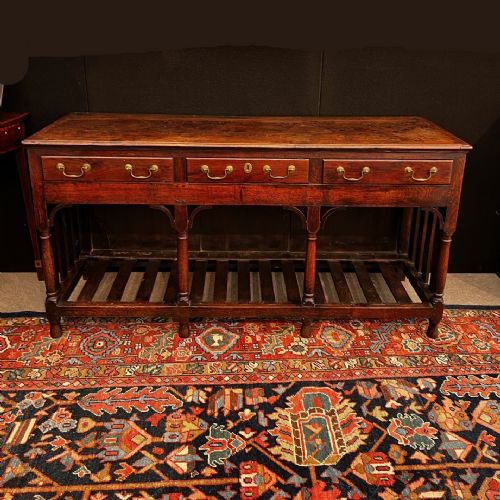
When you search for an english country server table, you encounter robust foundational forms built for functional service in traditional domestic spaces. These low, long pieces include dresser bases, serving tables, and potboard units that functioned historically as heavy-duty workspace surfaces.
The selections available here span from the seventeenth century through the Victorian era, drawing heavily on eighteenth-century Georgian proportions and rustic farmhouse styles. Oak and pine dominate the forms, frequently seen with original paint or bleached surfaces shaped by generations of use.
Materials and Construction
Construction relies on solid timbers such as oak, pine, and elm, assembled with traditional joinery suited to heavy daily domestic tasks. Potboards, drawers, and turned or cabriole legs provide structural stability across dresser bases and serving tables.
Surfaces frequently show layers of original paint or bleached finishes alongside metal hardware in brass and iron. These combined materials reflect centuries of practical carpentry traditions across English workshops.
Materials range from solid oak and elm to pine, supplemented by original paint, bleached timber, and brass hardware.
Judging Quality and Character
Quality in these utility tables rests upon the integrity of the timber, the honesty of the surface patina, and the proportion of the frame. Pieces retaining their original potboards, timber tops, and early paint finishes carry greater historical weight than altered examples.
The distinction between a standard workshop piece and a finer Georgian or country house example lies in the subtlety of leg turning, drawer configuration, and the natural wear accumulated over centuries of service.
The English Country Server Table Glossary
- Potboard
- A lower open shelf built between the legs of a dresser base or serving table, traditionally used for storing heavy pots and pans. This lower tier provides both structural bracing and expansive display space.
- Dresser Base
- A long, low wooden table fitted with drawers across the front, originally designed for kitchen or dining room food preparation and storage. It forms the foundation for many serving tables.
- Lowboy
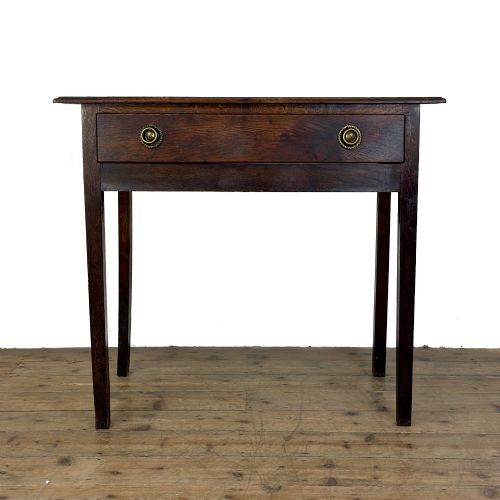
- A small side table featuring one or more rows of drawers beneath a flat top, standing on relatively tall legs. These functional pieces served various rooms as small writing or serving surfaces.
- Bleached Oak
- Timber that has been stripped of dark finishes or natural tannins to reveal a pale, matte surface. This treatment highlights the grain while softening the visual weight of heavy seventeenth and eighteenth-century furniture.
- Cabriole Leg
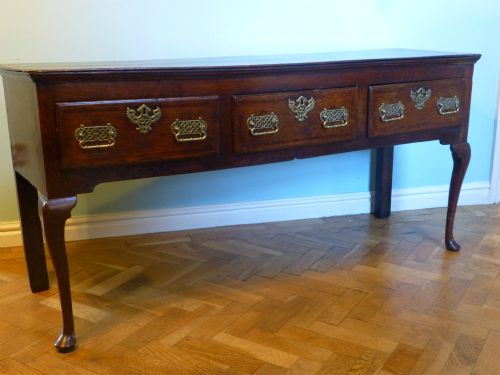
- A furniture leg that curves outward in a convex arc at the knee and tapers inward in a concave arc toward the foot. This classical shape appears on select eighteenth-century dresser bases.
English Country Server Table: Frequently Asked Questions
What is a server table?
A server table is a long, low surface traditionally utilised in dining rooms or kitchens for holding dishes, platters, and food during meals. They provide substantial storage beneath the top surface through drawers and open shelves.
Unlike formal sideboards, these country pieces prioritise sturdy utility over decorative veneers, often featuring heavy timber tops built to withstand constant daily use.
How old are these tables?
The tables span multiple centuries, with examples originating from the seventeenth, eighteenth, and nineteenth centuries. Georgian designs and earlier seventeenth-century oak forms appear alongside later Victorian painted pine pieces.
Each period introduces distinct construction traits, from seventeenth-century joined oak frames to nineteenth-century painted dairy and prep tables.
Are painted finishes original?
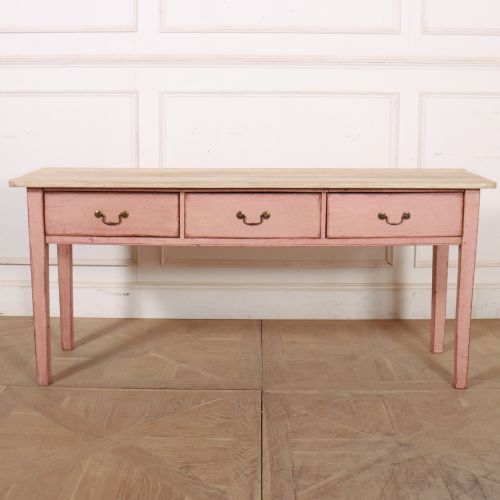
Many listings feature original painted surfaces, including historic pigments on pine and timber bodies applied during the eighteenth and nineteenth centuries. These layers accumulate natural wear that distinguishes them from modern repainting.
Examining the depth and craquelure of the paint helps reveal the age and authenticity of the surface finish.
How do I use one at home?
These tables function effectively in modern dining rooms as serving surfaces, in kitchens as prep stations, or in hallways as console tables. Their generous lengths and lower potboards offer practical display and storage space.
The neutral tones of bleached oak and painted pine allow them to anchor both contemporary and traditional interior schemes.