
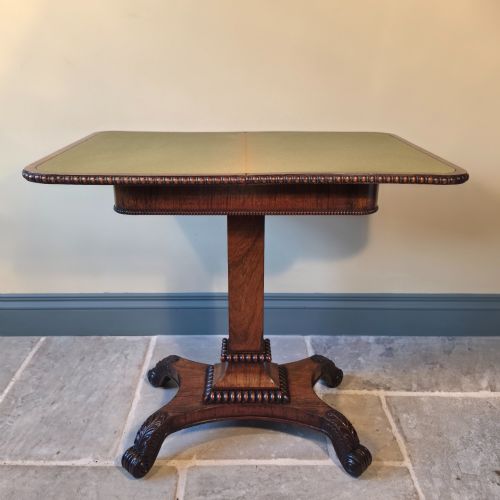


English Card Table
An english card table combines domestic utility with ingenious mechanics, offering a folding surface designed for evening entertainment in historic interiors.
English Card Table
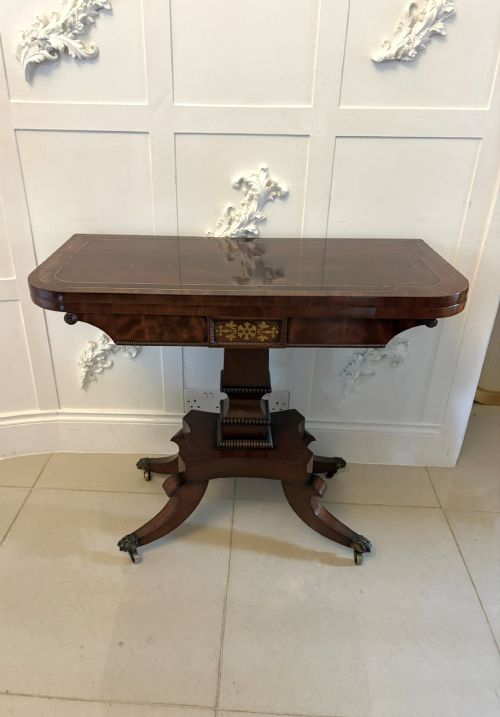
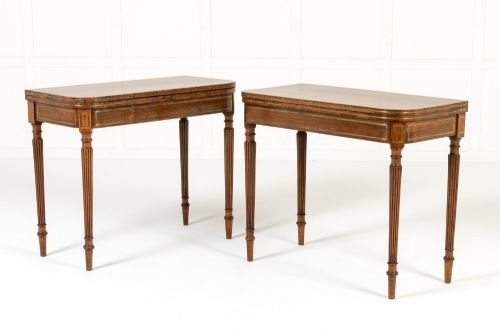
An english card table primarily takes the form of a fold-over console, tea table, or demi-lune games surface designed to sit against a wall when closed. These pieces originate across the Georgian, Regency, and Victorian periods, reflecting shifting domestic pastimes from whist to chess.
The version most commonly met on this page is the mahogany or rosewood fold-over piece resting on pedestal bases or tapering legs. Makers frequently engineered these tables with pivoting tops to reveal hidden storage wells for counters and cards beneath the playing surface.
Materials and Construction
Cabinet makers utilised dense native timbers like mahogany alongside exotic veneers including rosewood, satinwood, and burr walnut. These woods were chosen for their stability and capacity to take a high polish on wide folding surfaces.
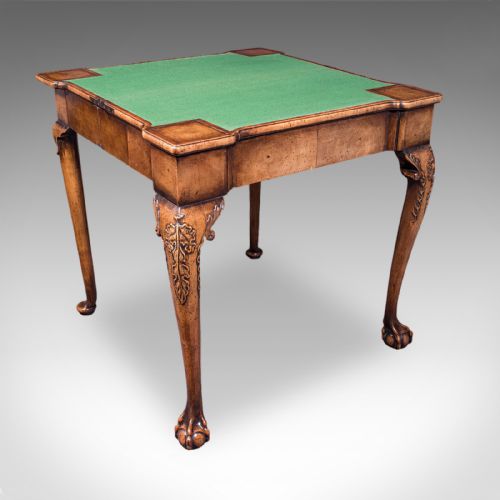
Inlaid details involving brass, boxwood, and palm wood define the decorative vocabulary of Regency and Georgian examples. Interiors typically retain their original baize or wool playing cloths, secured beneath moulded wooden borders.
Listings feature mahogany, rosewood, and walnut tables spanning the Georgian, Regency, and Victorian eras.
Craftsmanship and Proportion
The division between standard output and master craftsmanship rests in the precision of the hinge mechanisms and the alignment of the fold-over top. Superior examples maintain absolute flatness when open, relying on tight joinery rather than heavy bracing.
Timber selection dictates the visual weight of the piece, with matched flame mahogany or figured rosewood veneers commanding greater presence. Carved edge details, brass stringing, and robust pedestal supports separate utilitarian tables from elevated drawing-room pieces.
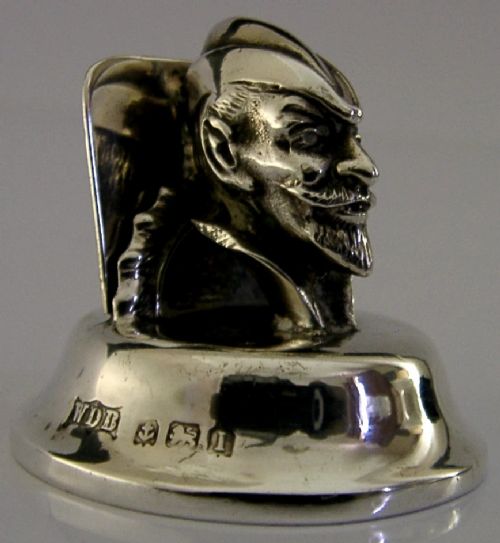
Gillows·Edwards and Roberts·T and G Seddon·James Phillips·Sampson Mordan
The English Card Table Glossary
- Demi-lune
- A half-moon shape popular for console and card tables designed to stand flat against a wall. When opened, the hinged top forms a full circle or square for play.
- Baize
- A coarse woollen material traditionally used to line the playing surfaces of gaming tables. It provides a soft texture that prevents cards from sliding.
- Fold-over
- A table construction where the top doubles in area by unfolding on hinges. This mechanism conceals a shallow compartment used historically for storing gaming accessories.
- Console table
- A side table designed to be fixed against a wall, often supported by brackets or elegant front legs. Many period versions incorporate folding leaves to serve dual functions.
- Stringing
- Thin lines of contrasting wood or metal inlaid into the primary timber surface. Cabinet makers utilised this technique to accentuate the geometric outlines of table tops.
English Card Table: Frequently Asked Questions
How were these tables used historically?
These tables served primarily as multi-functional furniture for the parlour or drawing room. During the day they functioned as side consoles or tea tables against the wall.
In the evening, servants or hosts unfolded the top to accommodate card games, chess, or writing, keeping accessories stored inside the frame.
How do I care for the baize surface?
Original baize requires gentle dry cleaning with a soft brush to remove dust and debris. Avoid moisture or chemical cleaners, which damage the historic wool fibres.
Keep the table away from direct sunlight to prevent the green or red cloth from fading unevenly across the fold.
How do I distinguish Georgian from Victorian examples?
Georgian tables generally display restrained classical proportions, rectilinear or serpentine mahogany framing, and subtle brass stringing. The carving is crisp and architectural.
Victorian pieces frequently lean towards heavier proportions, burr walnut veneers, elaborate pedestals, and darker ebonised finishes influenced by revival styles.
Can these tables safely support daily dining?
While certain metamorphic or larger console designs accommodated four-seat dining, most antique card tables feature delicate pivot mechanisms and hinged leaves. They are structurally suited for light games, display, and occasional use rather than heavy daily meals.