
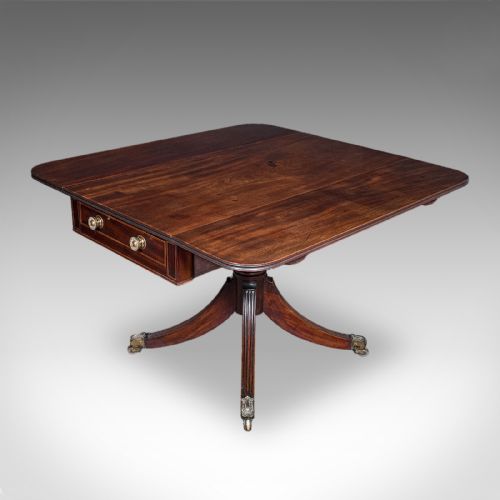


Antique 4 Seat Dining Table
When hunting for an antique 4 seat dining table, you encounter compact Pembroke tables, drop-leaf designs, and small centre pieces crafted to fit modest spaces.
Antique 4 Seat Dining Table
Buyers frequently discover drop-leaf formats, Pembroke tables, and small square or round centre tables that comfortably accommodate four diners. These practical forms provide historical character without demanding the expansive floor space of grand banqueting furniture.
How They Were Made
Cabinet makers utilised dense hardwoods such as mahogany, oak, and walnut, frequently selecting figured veneers for table tops and sturdy timbers for structural legs. Joinery methods relied on traditional mortise and tenon construction alongside stable rule joints for folding leaves.
Tables designed for versatility often incorporated drop leaves supported by swing legs or Pembroke mechanisms operated by pivoting wooden brackets. Finishes were typically hand-applied French polish or wax, which protected the wood while highlighting natural grain patterns.
Some Edwardian dining sets arrive accompanied by delicate sterling silver menu or place card holders to orchestrate formal seating.
What Varies in Quality
Quality depends heavily on the selection of timber and the precision of the underlying carpentry. Superior examples display tightly figured mahogany or quarter-sawn oak with seamless joints that remain stable through decades of environmental changes.
Harry and Lou Epstein
The Antique 4 Seat Dining Table Glossary
- Pembroke table
- A small rectangular table featuring two hinged drop leaves on opposing sides and often a single drawer. This form gained popularity during the Georgian period for breakfast use or compact dining.
- Drop leaf table
- A table with a fixed centre section and hinged flaps that fold down when not in use. Wooden brackets or swing legs support the leaves when raised.
- Centre table
- A freestanding piece designed to sit in the middle of a room rather than against a wall. These versatile items frequently served multiple functions in Victorian parlours.
- Refectory table
- A long, narrow dining table originally utilised in monastic dining halls. Later revival versions adapted the sturdy trestle or four-leg format for domestic kitchens.
- Figured mahogany
- Timber harvested from specific sections of the mahogany tree displaying decorative, swirling grain patterns. Cabinet makers prized this material for high-status table tops.
Antique 4 Seat Dining Table: Frequently Asked Questions
How do I identify a four seat table?
Compact dining tables generally measure around ninety to one hundred and twenty centimetres in length or diameter, providing adequate knee clearance and surface area for four settings without crowding.
Drop-leaf and Pembroke versions offer adjustable footprints, allowing owners to lower the flaps when the surface is not needed for meals.
Are drop leaf tables stable?
Quality drop-leaf tables utilise sturdy swing legs or pivoting wooden arms that lock securely beneath the raised flaps to bear downward pressure safely.
When properly aligned and maintained, these folding mechanisms provide a rigid dining surface that handles daily use reliably.
Which woods are most common?
Mahogany appears frequently in Georgian and Regency examples, offering a rich reddish-brown tone and smooth texture suitable for formal dining rooms.
Oak and walnut dominate Victorian and Edwardian country kitchen or parlour tables, delivering robust durability and pronounced grain character.
How do I care for the surface?
Protect antique wood finishes by using placemats and coasters to prevent heat marks and moisture rings from damaging the polished timber.
Applying a traditional beeswax polish periodically helps nourish the grain and maintains a gentle, protective sheen across the tabletop.