

English Brass Candle Holders
English brass candle holders bring warmth and weight to a room, spanning Georgian elegance through to Victorian invention.
English Brass Candle Holders
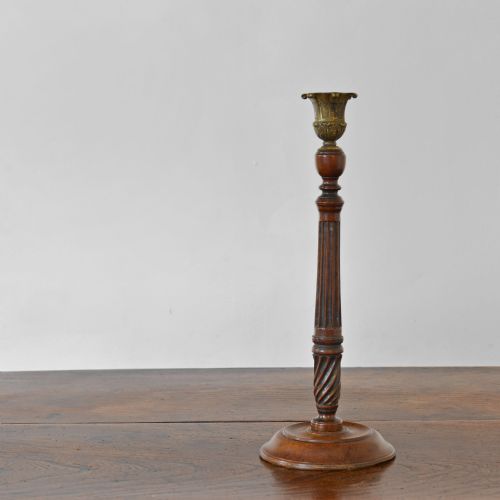
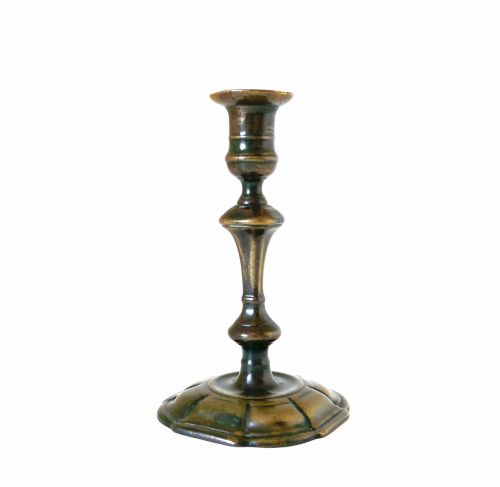
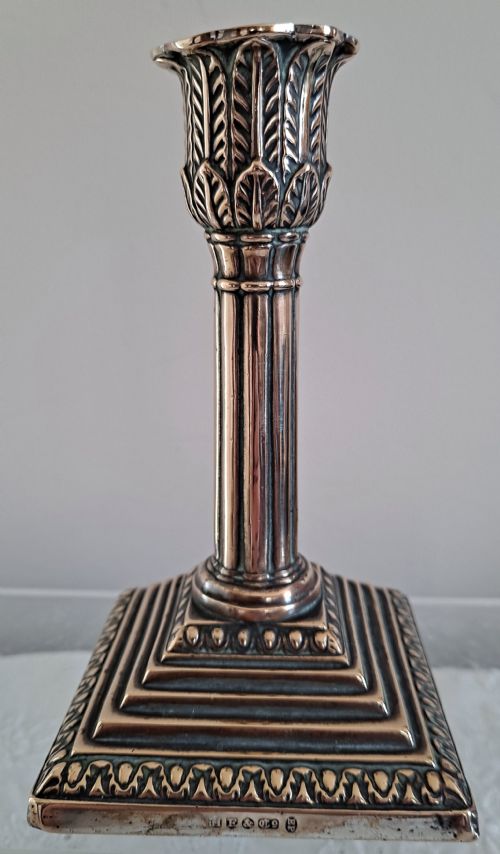
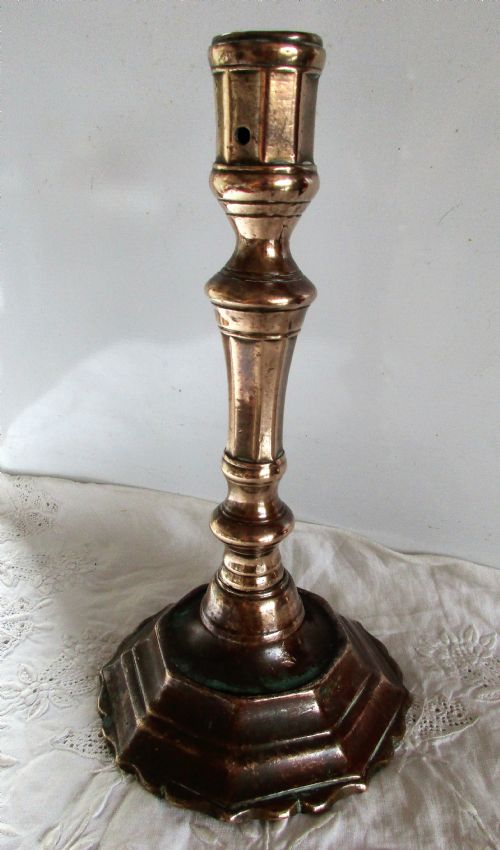
English brass candle holders encompass a diverse range of domestic lighting from the eighteenth and nineteenth centuries. When searching for english brass candle holders, buyers encounter sturdy candlesticks, chambersticks with pan handles, and sophisticated telescopic designs. The examples found here stretch from early seventeenth century and Georgian forms through Victorian Gothic Revival and Edwardian periods.
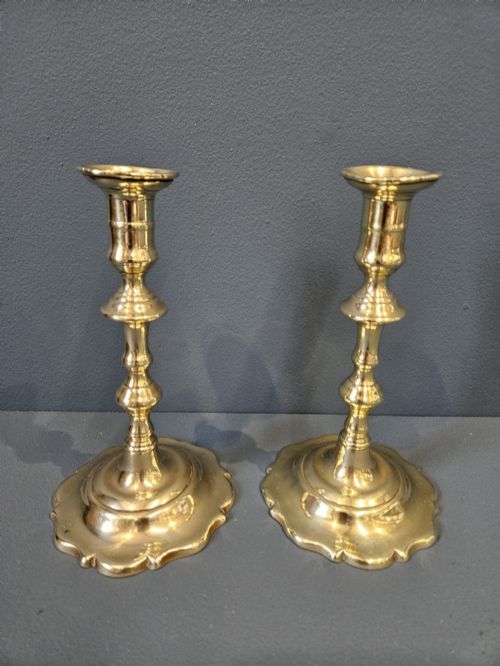
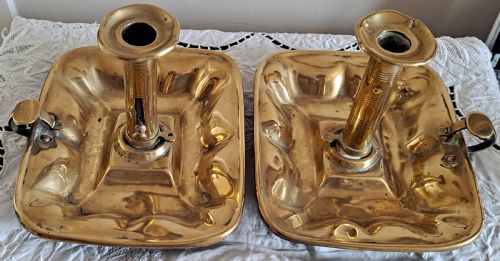
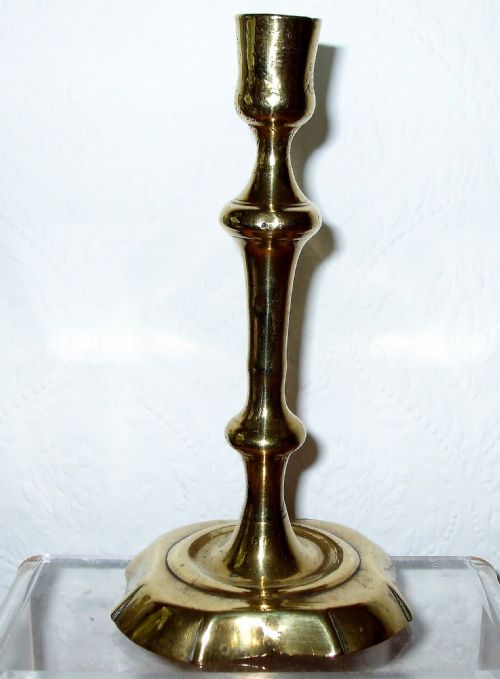
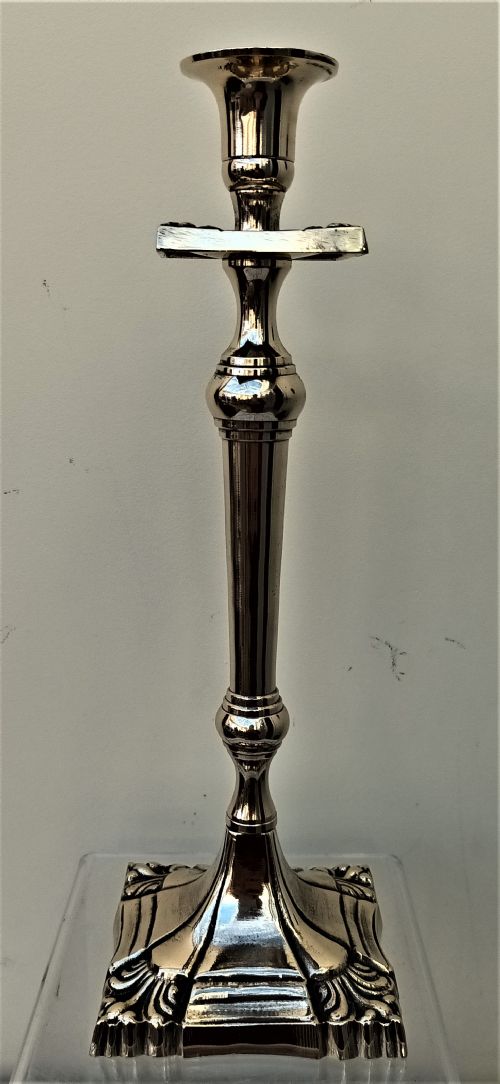
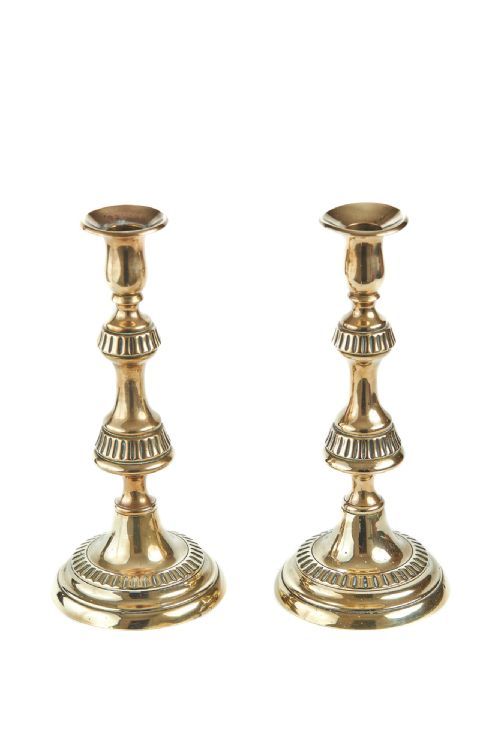
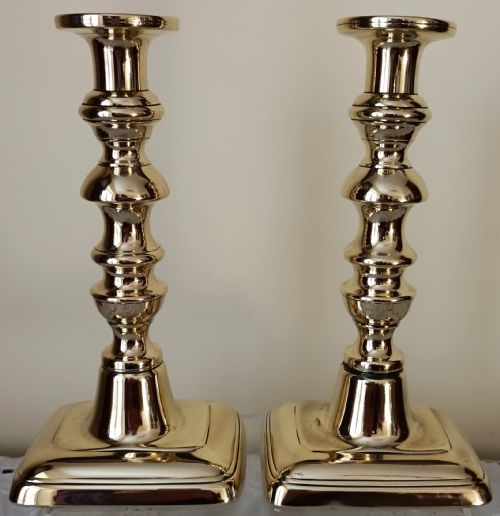
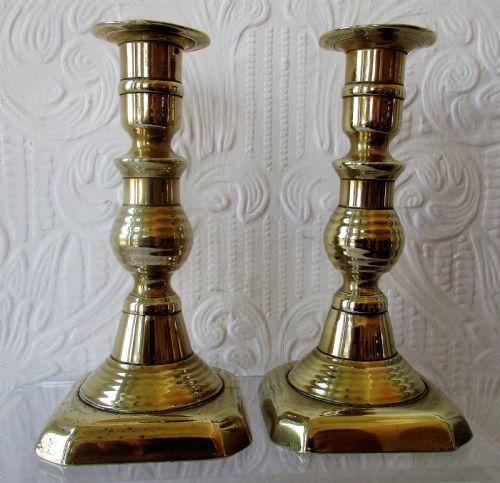
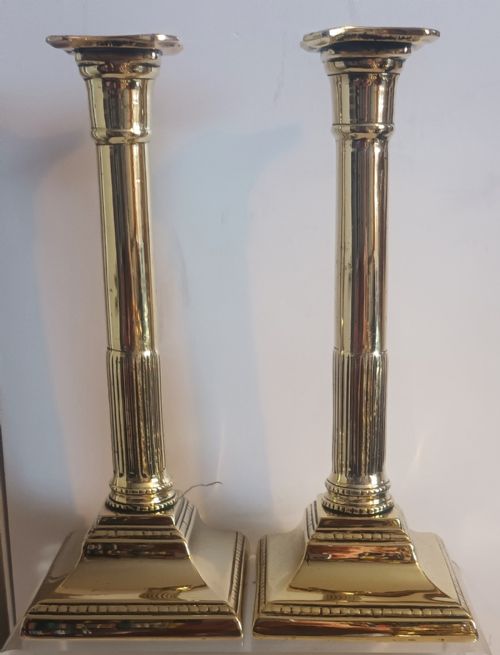
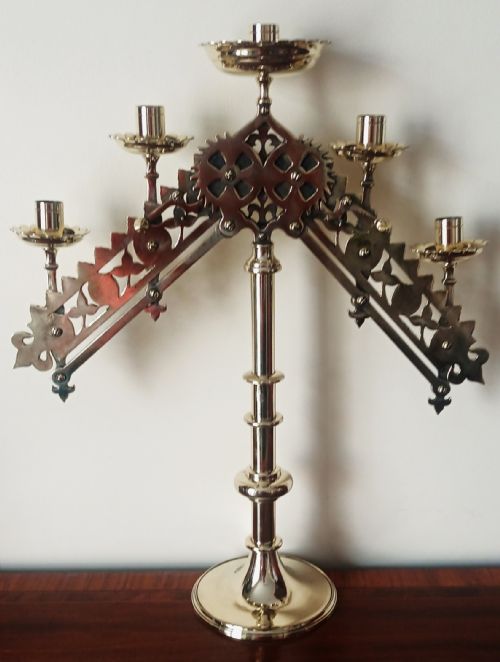
The most common pieces on this page are pairs of Georgian petal base candlesticks and Victorian brass chambersticks. Alongside standard candlesticks, the selection includes candelabras, wall sconces, and occasional combinations of brass with oak or glass. These items served a purely practical purpose before the arrival of gas and electric lighting, illuminating parlours and bedchambers.
Materials and Construction
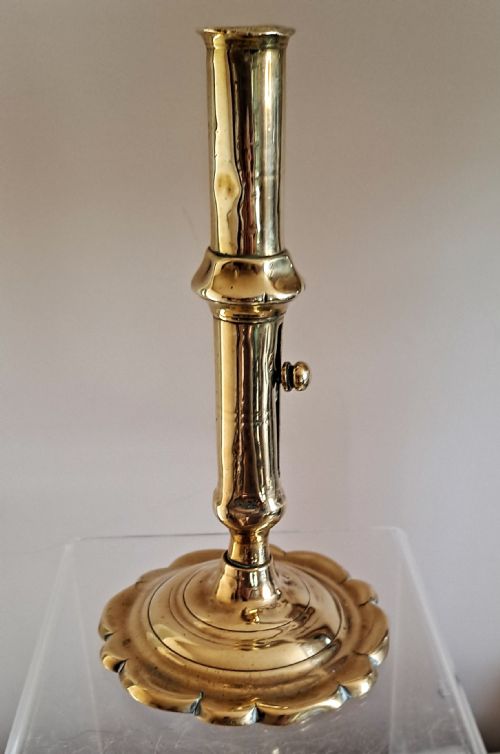
Metalworking techniques evolved noticeably across the periods represented, moving from early seamed construction to later cast production. Mid-eighteenth century items often utilise seamed brass tubes joined to cast bases, sometimes incorporating clever internal ejector mechanisms to push out the remnants of wax. Later nineteenth century pieces rely heavily on heavy casting and applied ornamentation.
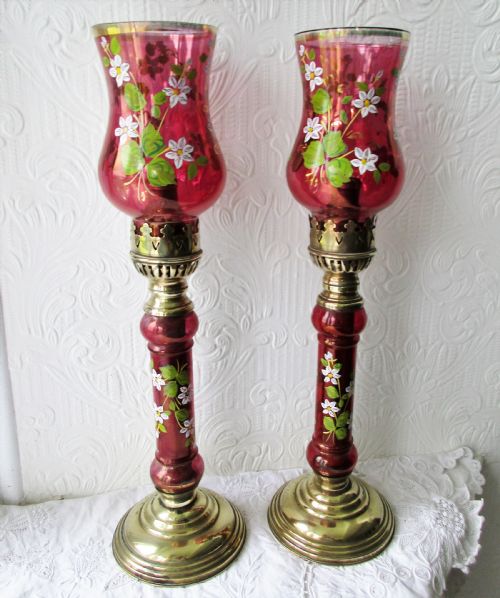
While brass dominates the evidence, makers frequently combined it with other materials such as copper, bronze, cranberry glass, and seasoned woods like oak and mahogany. Silver plate and paktong also appear among the metal variations, adding distinct silvery tones to the warmer yellow alloy.
One curious design in the records goes by the cheerful moniker of King of Diamond, adding a playful touch to functional nineteenth-century lighting.
Assessing Quality and Design
Quality in these domestic objects rests primarily on the crispness of casting and the integrity of the proportions. Superior examples retain sharp detail in petal bases and moulded stems without the softening that comes from over-zealous cleaning over generations.
Mechanical complexity also divides the standard production from the exceptional. Telescopic stems, articulated arms, and functioning ejector mechanisms require precise engineering that elevates an ordinary lighting device into a notable piece of metalwork.
J.T. & Co·J. Miller·Benhan and Froud
The English Brass Candle Holders Glossary
- Ejector
- A mechanical device fitted inside the stem that pushes out the remaining wax stub when a lever is pressed. This clever addition makes cleaning the socket much simpler.
- Chamberstick
- A low candle holder featuring a flat pan base and a loop handle for carrying around a house at night. They often include a small conical snuffer resting in the tray.
- Paktong
- An ancient copper-nickel-zinc alloy originating from China, highly prized in eighteenth-century Britain for its bright silver-like appearance and ability to take fine casting detail.
- Girandole
- An ornamental bracket or mirror fitted with candle branches that reflects light back into the room. These decorative pieces hang on walls to amplify the glow of flames.
- Petal base
- A moulded foot shaped like overlapping flower petals, commonly seen on Georgian candlesticks. This design provides both a stable weighted base and pleasing visual rhythm.
English Brass Candle Holders: Frequently Asked Questions
What is an ejector candlestick?
An ejector candlestick contains a hidden internal rod and a small side thumb-piece designed to push out spent wax. This practical eighteenth-century invention prevented the need to dig out candle remnants with a knife.
They are particularly sought after by collectors for their clever engineering and the interactive nature of the mechanism. Finding one in good working order is a distinct bonus.
Are these old candle holders safe to use?
These items remain entirely functional for holding dinner tapers or pillar candles today, provided they sit on a stable, level surface. The heavy metal bases offer secure support for standard wax candles.
Care should be taken to choose tapers that fit snugly in the socket to prevent any wobble. Placing a small drip catcher inside the pan can also protect the antique metal from accumulating hot wax.
How should I clean antique brass?
Gentle dusting with a soft cloth is usually sufficient to maintain the surface without disturbing the historic patination. Harsh commercial metal polishes should be avoided because they strip away the dark oxidation that accumulates over centuries.
If cleaning is necessary, warm soapy water and a very soft brush will remove surface grime safely. Thorough drying prevents water spots from forming on the polished brass.