

English Blue Transferware
English blue transferware brings robust earthenware and pearlware printed with cobalt pigment into domestic settings across dining and service forms.
English Blue Transferware
English blue transferware comprises tablewares, serving pieces, and decorative vessels produced largely across the eighteenth and nineteenth centuries. These items combine utilitarian function with printed pictorial scenes ranging from pastoral landscapes to topographical views.
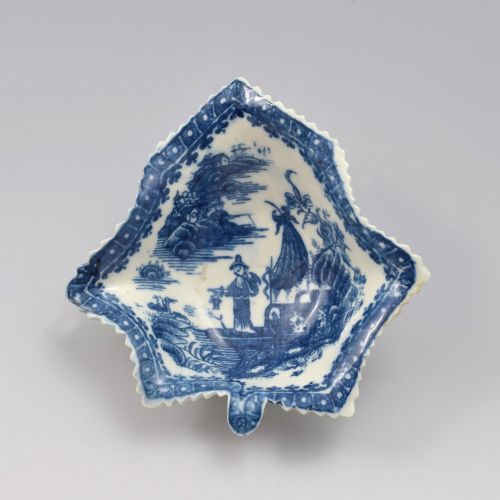
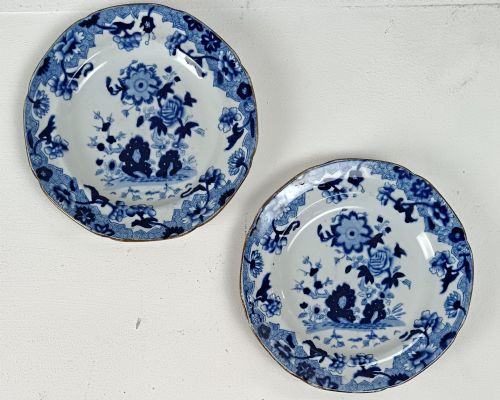
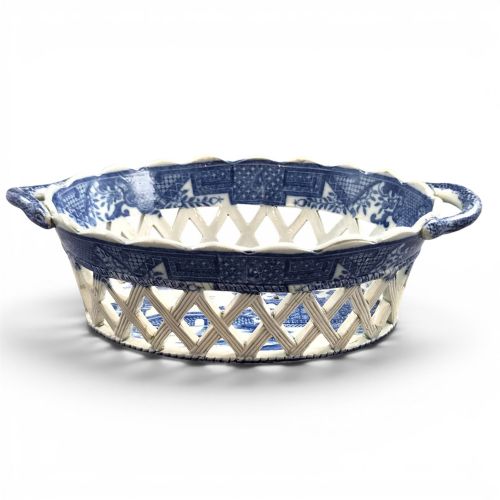
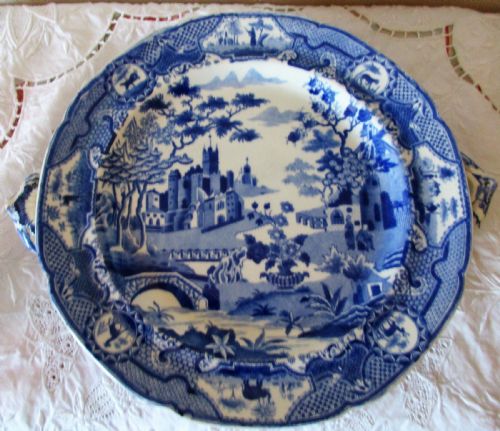
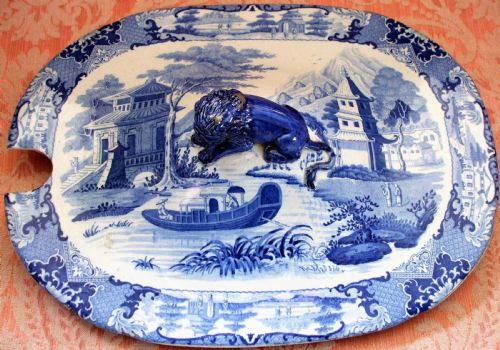
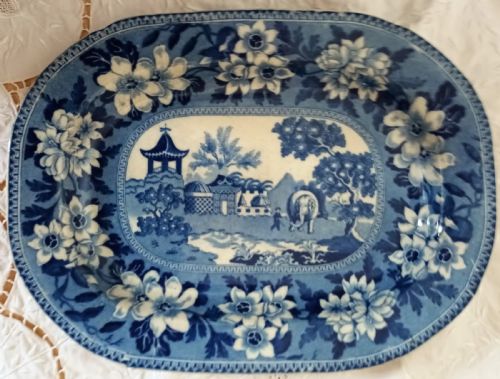
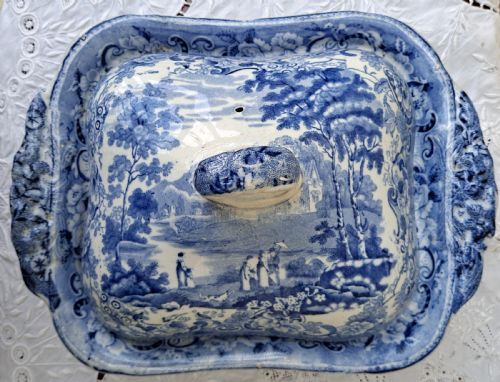
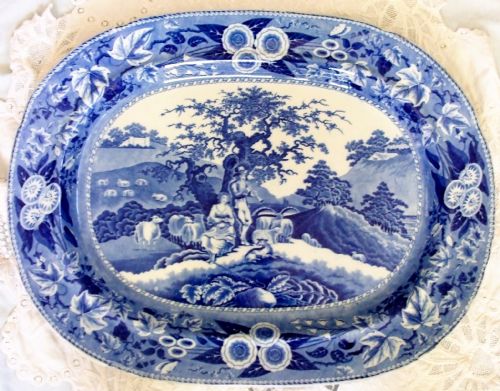
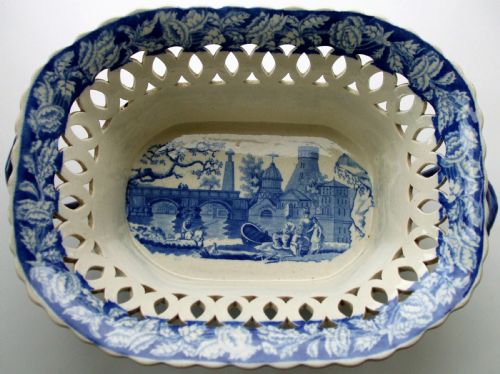
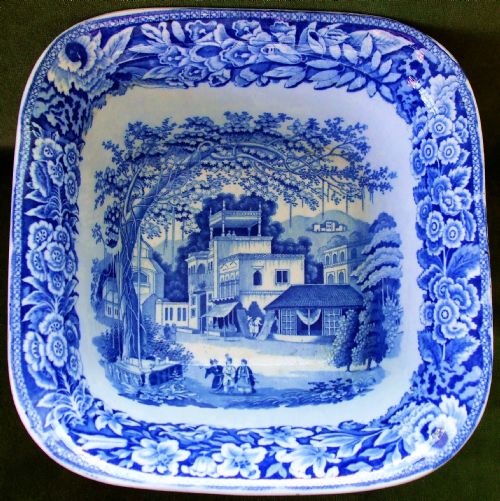
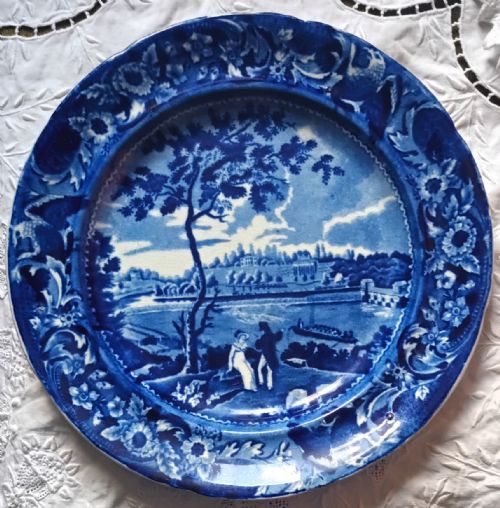
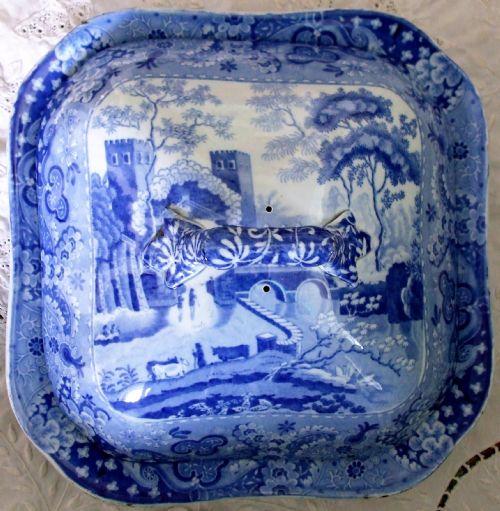
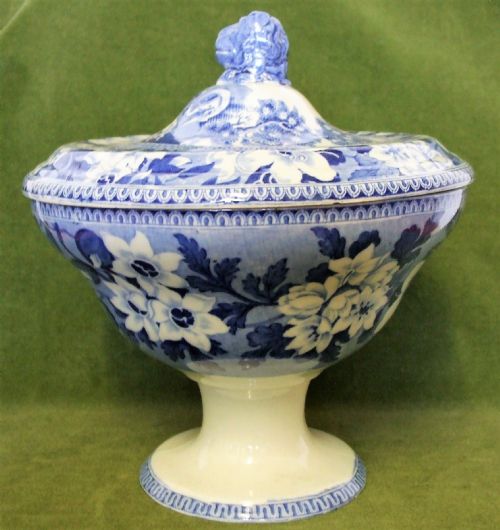
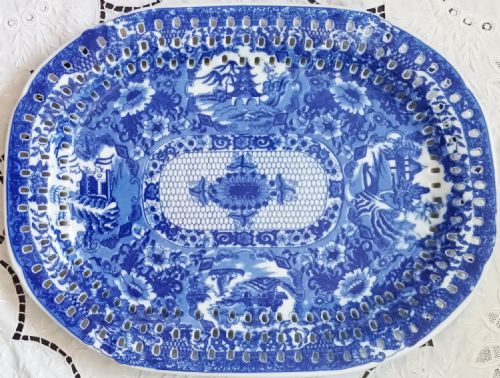
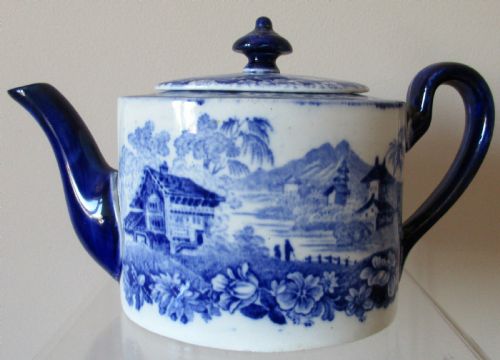
The objects appearing most frequently on this page include plates, platters, vegetable tureens, and chestnut baskets originating from Georgian and Victorian periods. Buyers encounter both utilitarian dinner services and specialised serving vessels bearing distinct transfer-printed patterns.
Forms span from simple tea plates and dessert dishes to substantial footbath jugs and lidded tureens. Each piece demonstrates the application of copper-plate printing methods to ceramic bodies across different English manufactories.
Production Methods and Materials
Potters formed these items using earthenware, pearlware, ironstone, and porcelain bodies, which provided stable foundations for subsequent decoration. The ceramic bodies received shaping via moulds or throwing before undergoing initial firing.
Makers applied cobalt pigment to engraved copper plates, transferring the ink onto tissue paper before pressing the design onto the biscuit ceramic. This printed surface then received a transparent lead glaze to protect the cobalt decoration during the final kiln firing.
Historic footbath jugs show that domestic washrooms once demanded the same pictorial transfer scenery as the dining room table.
Evaluating Quality and Execution
Quality separates through the clarity and registration of the printed cobalt transfer, where crisp lines distinguish superior examples from blurred or smudged impressions. The depth of the cobalt pigment and the evenness of the glaze application also determine the visual strength of the piece.
The sophistication of the ceramic body itself, from standard earthenware to refined ironstone or pearlware, dictates the durability and fineness of the finished vessel. Furthermore, complex reticulated mouldings on chestnut baskets or pierced serving dishes indicate higher manufacturing ambition.
Spode·Robert Hamilton·John Rogers & Son·James Wallace & Co·J & R Clews·J & R Riley·Stubbs·Mintons·John and Richard Riley·John Ridgway·Mason·Adams
The English Blue Transferware Glossary
- Transferware
- Pottery decorated by transferring a printed design from an engraved copper plate onto the ceramic surface via tissue paper. This technique allowed intricate pictorial scenes to be replicated consistently across large production runs.
- Pearlware
- A refined earthenware developed by Josiah Wedgwood featuring a bluish-white lead glaze that pooled subtly in recesses. It served as a primary body for early blue and white printed tableware.
- Ironstone
- A heavy, durable type of feldspathic stoneware patented to withstand rigorous daily use while accepting transfer printing. It provided a robust alternative to softer earthenwares.
- Cobalt Pigment
- The deep blue metallic oxide used beneath the glaze to colour transferware patterns. It withstood high kiln temperatures without burning away or altering its distinct hue.
- Reticulated
- Describes ceramics featuring pierced, openwork lattice designs formed into baskets, plates, or serving dishes. This decorative cutting required skilled handwork prior to glazing and firing.
English Blue Transferware: Frequently Asked Questions
How do I date English blue transferware?
Dating relies on identifying the ceramic body, such as pearlware versus ironstone, alongside stylistic markers within the printed border and central scene. Maker marks stamped or printed underneath also help narrow the period of manufacture.
Changes in glaze composition and manufacturing techniques across the Georgian and Victorian eras provide further chronological boundaries for unbranded pieces.
How were tureens and platters used?
Large platters and lidded vegetable tureens served communal dining tables for presenting meats, fish, and cooked vegetables during formal meals. Ladles accompanied tureens for dispensing sauces and gravies.
Specialist items like chestnut baskets held fruit or dry goods, while drainers rested inside platters to keep meats elevated from accumulated juices.
Can I use these antique items daily?
While durable, these historic earthenwares and pearlwares benefit from careful hand washing rather than automated dishwashing to protect the lead glaze and ceramic body. Modern food safety considerations also suggest cautious use for acidic or greasy foods.
Displaying and occasional gentle service preserves the structural integrity of pieces that have survived for two centuries.
What is the difference between earthenware and ironstone?
Earthenware provides a porous, lighter ceramic body that characterises earlier pearlware and standard tablewares. It requires careful handling due to its softer composition.
Ironstone offers a much denser, heavier, and vitrified body developed to resist chipping and heavy wear during the nineteenth century.