





Enamelled Wine Glasses
Enamelled wine glasses bring together lead glass, clear glass, and white enamel decoration from the Georgian era to the Art Deco period.
Enamelled Wine Glasses
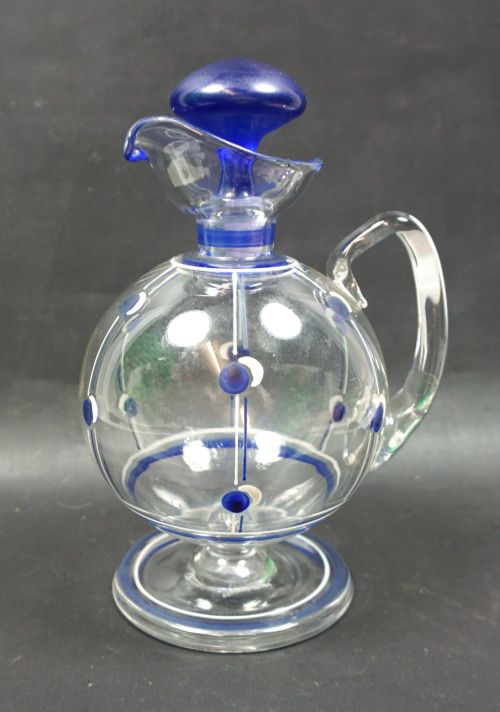
When searching for enamelled wine glasses, collectors encounter pieces ranging from eighteenth-century Georgian drinking vessels to twentieth-century Art Deco glassware. The selection includes wine jugs, hock glasses, roemers, and goblets originating from England, Germany, Bohemia, and Austria.
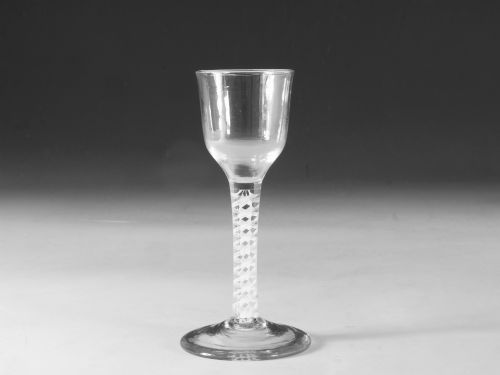
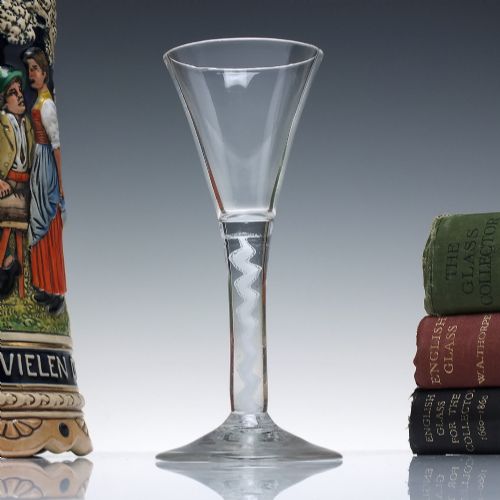
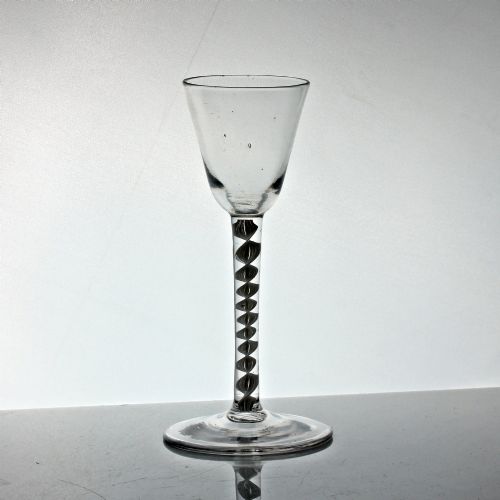
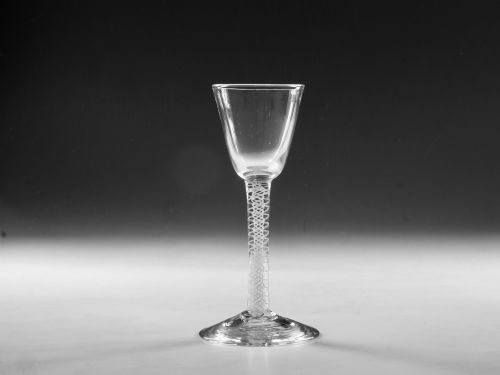
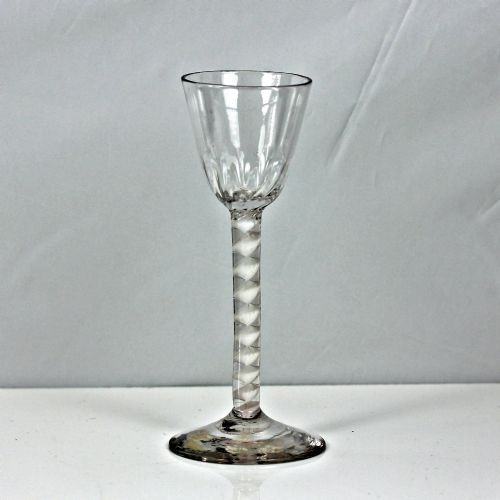
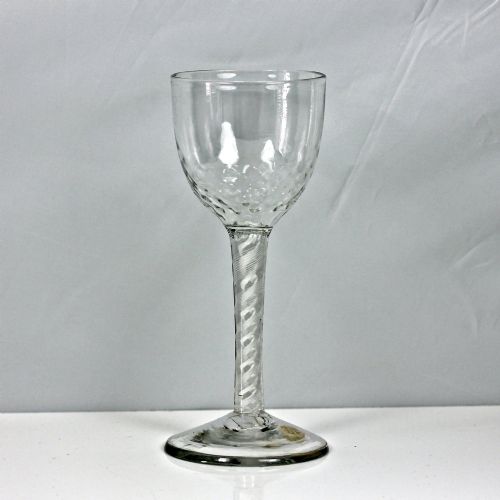
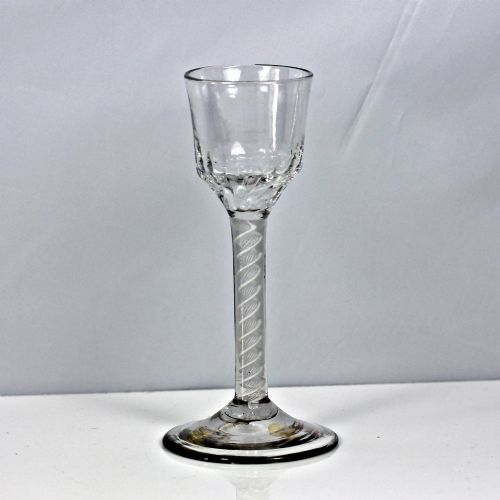
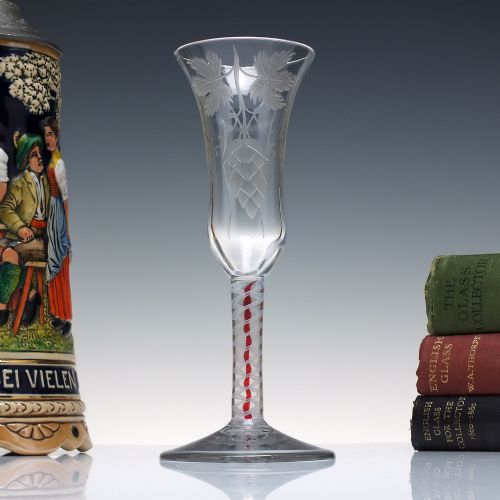
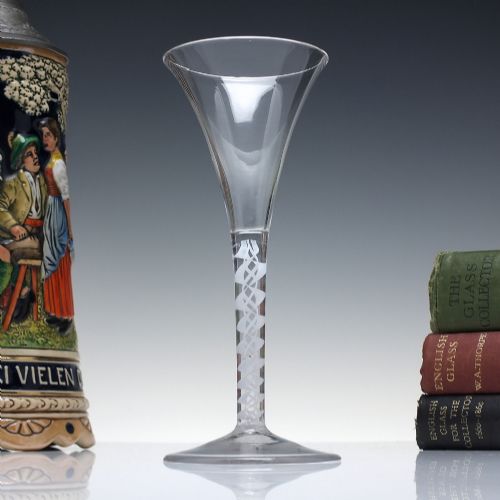
The most common examples on this page are eighteenth-century Georgian wine glasses featuring opaque twist stems alongside later nineteenth-century Victorian and continental European enamelled glassware. Forms vary from simple funnel and ogee bowls to elaborate armorial goblets and hock glasses.
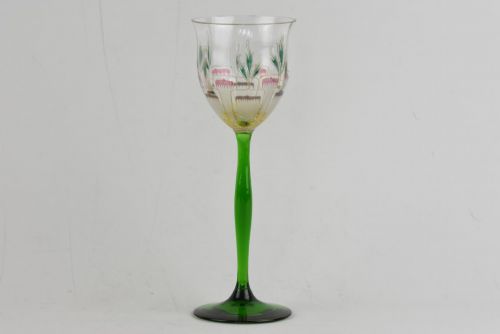
Originating across different periods including the Victorian era, 1900, 1910, and 1930, these drinking glasses and decanters showcase diverse regional styles such as Jugendstil, German Historicism, and Venetian Revival.
Materials and Techniques
Makers utilised lead glass, lead crystal, and blown glass as the fundamental base materials for forming bowls, stems, and decanters. Artisans shaped clear glass and coloured glass, including green and cranberry tones, into various drinking vessels.
Decoration was applied using white enamel, polychrome enamel, and gold leaf. Skilled hands painted floral, heraldic, and figurative motifs directly onto the glass surface, often complementing blown forms with moulded or twisted stem structures.
Enamelled Wine Glasses Retail Price Guide 2026
Typical asking prices for enamelled wine glasses among the pieces listed under this phrase on Sellingantiques today, from the lower quarter to the upper quarter. They describe what is for sale here now, not the wider market.
The inventory includes wine glasses, decanters, hock glasses, and roemers created in Bohemia, Germany, Austria, and England.
Judging Quality
Quality rests upon the precision of the glassblowing and the execution of the enamel work. Fine examples demonstrate crisp moulding in bowls and stems, coupled with neatly detailed and securely fired enamel decoration.
The distinction between standard production and superior pieces lies in the refinement of the glass metal itself and the artistic complexity of the painted motifs, whether handling heraldic armorials or delicate floral sprays.
Theresienthal·Lobmeyer·Frits Hechert·Archibald Knox for Liberty
The Enamelled Wine Glasses Glossary
- Enamel
- An opaque or translucent glassy substance fused to the surface of glass through firing for decorative effect. This technique adds colour and raised patterns to drinking vessels.
- Opaque twist
- A type of glass stem enclosing white or coloured enamelled glass threads twisted into spiral patterns. It is characteristic of eighteenth-century English drinking glasses.
- Hock glass
- A tall-stemmed wine glass traditionally used for white wine, often featuring an elaborately enamelled bowl. These glasses appear frequently in late nineteenth and early twentieth-century continental production.
- Ogee bowl
- A bell-shaped drinking vessel contouring inwards at the rim and outwards towards the base. This profile is commonly seen on Georgian wine glasses.
Enamelled Wine Glasses: Frequently Asked Questions
How do I identify a Georgian opaque twist wine glass?
Georgian opaque twist glasses feature distinctive white or coloured glass threads enclosed within the stem, paired with traditional bowl shapes like the ogee or funnel.
These pieces typically date from the mid to late eighteenth century and possess clear lead glass bodies without modern machine marks.
What are German Historicism roemers used for?
German Historicism roemers were historically utilised for drinking white wine during formal dinners and festive gatherings in the late nineteenth and early twentieth centuries.
Their generous green glass bowls and stable ribbed bases made them well-suited for social toast-drinking and communal feasting.
How can I tell eighteenth-century glass from later reproductions?
Eighteenth-century drinking glasses exhibit characteristic pontil marks on the underside of the base where they were snapped off the blowing iron. The glass metal itself often displays small bubbles and slight irregularities inherent to period hand-blown manufacturing methods.
Examining the weight, stem construction, and wear patterns helps verify the true age of the piece.