




Enamelled Silver Trinket Pot
An enamelled silver trinket pot brings bright colour and neat craftsmanship to a dressing table.
Enamelled Silver Trinket Pot
An enamelled silver trinket pot is a small container designed for dressing tables and vanity sets, combining precious metal with vibrant vitreous colour. These pieces serve to hold pins, rouge, pills or small jewellery while offering a decorative accent to a room.
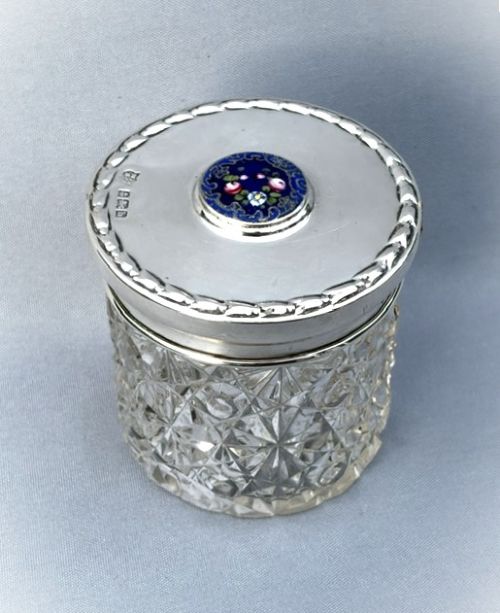
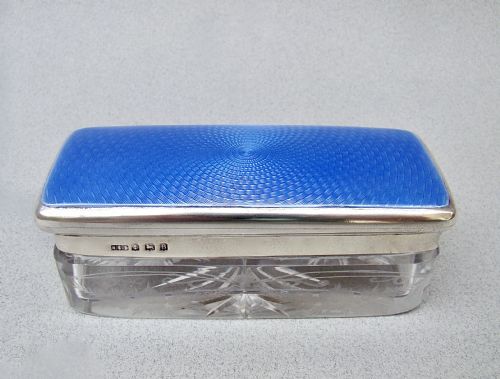
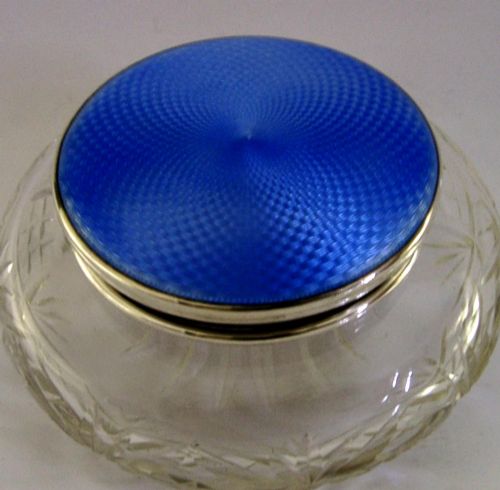
The pieces on this page span the Edwardian era through to the mid-century modern period, taking forms such as vanity jars, lidded bowls, and dressing table accessories. Buyers encounter compact boxes alongside larger cut glass and cranberry glass jars fitted with matching silver and enamel lids.
Origins stretch across the early twentieth century, capturing distinct stylistic shifts from the ornate Edwardian period into the geometric lines of Art Deco. Each example preserves a snapshot of functional dressing table luxury from a bygone decade.
How they were made
Maker's workshops combined sterling silver mounts and fitted collars with glass vessels, including cut glass, etched glass, and coloured cranberry glass bodies. The heavy glass bases provide stability and catch the light beneath the decorative metalwork.
Lids incorporate enamel work, frequently utilising guilloche techniques where engine-turned patterns beneath translucent enamel create shimmering geometric textures. Silversmiths shaped the metal mounts to secure these delicate glass and enamel components tightly together.
Enamelled Silver Trinket Pot Retail Price Guide 2026
Typical asking prices for enamelled silver trinket pot among the pieces listed under this phrase on Sellingantiques today, from the lower quarter to the upper quarter. They describe what is for sale here now, not the wider market.
Some tiny lidded pots served specifically to hold rouge or small pills inside a lady's evening handbag.
What varies in quality
Quality rests in the precision of the guilloche engine-turning and the clarity of the translucent enamel surface, where smoother application and richer colour depth elevate a piece. The weight and gauge of the sterling silver mount also define the substance of the container.
The integration between the glass body and the silver collar reveals the maker's skill, alongside the sharpness of any cut glass or etched detailing on the vessel itself.
Henry Clifford Davis
The Enamelled Silver Trinket Pot Glossary
- Guilloche Enamel
- A decorative technique where metal is engraved with an intricate engine-turned pattern before a translucent enamel layer is applied over the top. This allows the underlying geometric design to show through with a lustrous sheen.
- Sterling Silver
- A standard alloy of silver consisting of ninety-two point five percent silver by mass and seven point five percent other metals, usually copper. It provides the durable framework for these lidded pots and jars.
- Cranberry Glass
- A type of red or pink glass created by adding gold chloride to the molten glass batch. It forms the vibrant coloured body of certain dressing table jars.
- Dressing Table Jar
- A container originally kept on a vanity or dressing chest for cosmetics, pins, or small personal items. These pieces typically feature a removable lid in silver and enamel.
- Edwardian
- The period of British history covering the reign of King Edward VII, noted for refined domestic accessories and lighter stylistic forms than the preceding Victorian era.
Enamelled Silver Trinket Pot: Frequently Asked Questions
How are these pots cleaned?
Silver components require careful polishing with a soft cloth, taking care to avoid abrasive contact with the delicate enamel surfaces.
Glass bases can be washed gently in warm soapy water and dried thoroughly before the silver lid is replaced.
What were vanity jars used for?
These jars held cosmetics, hairpins, rouge, and small trinkets on dressing tables during the early twentieth century.
They kept daily dressing accessories neatly contained while adding a decorative flash of colour to the room.
How do I identify Art Deco pieces?
Art Deco pieces display geometric patterns, stark symmetry, and precise guilloche engraving on the enamel lids.
The style emerged strongly in the nineteen-twenties and nineteen-thirties, moving away from earlier floral motifs.
Are the glass bodies always clear?
While many feature clear cut glass or etched glass, some examples utilise coloured glass bodies such as cranberry glass.
The choice of glass contrasts with the solid sterling silver rim and the bright enamel top.