


Edwardian Silver Lid Jar
An edwardian silver lid jar combines practical dressing table utility with the crisp detail characteristic of early twentieth-century metalwork.
Edwardian Silver Lid Jar
When you search for an edwardian silver lid jar, you encounter a variety of receptacles designed for powders, scents, trinkets, and preserves. The common element is a formed metal lid capping a glass or crystal body, frequently associated with dressing tables and dining rooms.
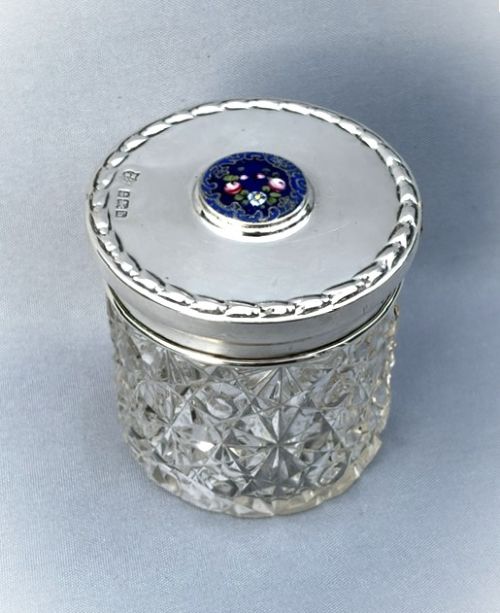
The version you are most likely to meet on this page is a dressing table jar or trinket box featuring cut glass or crystal beneath a sterling silver top. These pieces date predominantly from the Edwardian era, though related items extend from the late Victorian period into the 1920s.
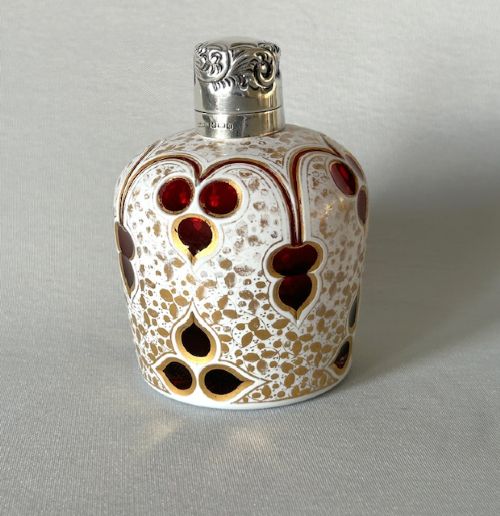
Beyond standard dressing table accessories, the selection encompasses biscuit barrels, scent bottles, and preserve jars. The overarching category balances utilitarian function with decorative glasswork and hallmarked metal mounts.
How they were made
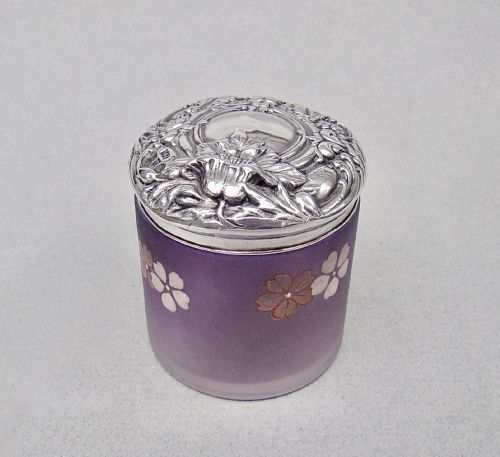
Makers combined blown or cut glass bodies with stamped, spun, or cast sterling silver and silver-plated lids. Glass vessels utilised heavy-cut crystal, cranberry glass, satin glass, or frosted finishes, sometimes enhanced with enamel or tortoiseshell inserts.
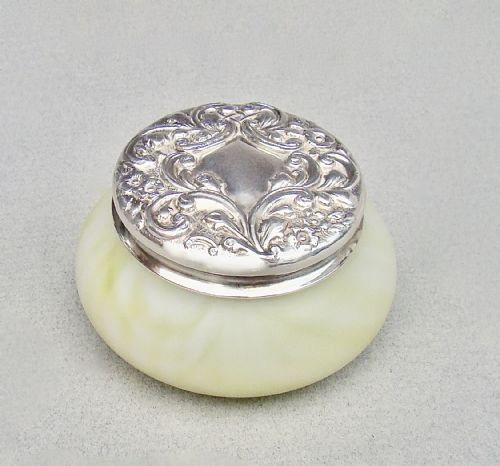
Metal lids were shaped using presses or raised by hand, then decorated with repoussé floral motifs, engine turning, or smooth polished surfaces. Assay office hallmarks stamped into the silver provide precise documentation of the year and city of manufacture, such as Birmingham or Chester.
Several jars arrived with lockable mechanisms designed to protect gentleman's cologne from inquisitive valets.
What varies in quality
Quality rests on the weight and depth of the glass cutting alongside the gauge of the silver used for the lid. Thicker crystal bodies and heavier silver mounts indicate superior craftsmanship and better survival rates through use.
The refinement of decorative elements such as hand-painted enamel, inlaid tortoiseshell, and crisp repoussé detailing separates standard production items from finer workshop pieces.
A. Bromet & Co·Thomas Bradbury·Hasset & Harper·Omar Ramsden·Asprey
The Edwardian Silver Lid Jar Glossary
- Hallmark
- Official marks stamped into silver items indicating the metal standard, assay office, and year of manufacture. These symbols allow collectors to trace the exact origin of a silver lid.
- Repoussé
- A metalworking technique where the artisan hammers the silver from the reverse side to form raised decorative patterns on the front. This method creates tactile floral and scroll designs.
- Cranberry glass
- A rich red glass coloured with gold chloride during production, popular in Edwardian tableware and dressing table containers. It provides a striking contrast against bright sterling silver mounts.
- Tortoiseshell
- The mottled brown material derived from the shell of certain turtle species, utilised as an inset panel on silver lids during the early twentieth century. It adds depth and natural pattern to vanity jars.
- Satin glass
- Glass treated with an acid dip to produce a velvety, matte finish rather than a bright shine. This technique softens the appearance of jars and scent bottles.
Edwardian Silver Lid Jar: Frequently Asked Questions
What were edwardian silver lid jars used for?
These jars served primarily on dressing tables to hold cosmetics, pins, trinkets, or salts. Dining variations also functioned as preserve pots, mustard containers, and biscuit barrels.
The lidded design kept contents clean and concealed from view, blending practicality with the formal presentation expected in Edwardian homes.
How do I date an edwardian silver lid jar?
Dating relies heavily on the assay hallmarks stamped directly onto the silver mount or lid. These small marks indicate the specific city office and a date letter corresponding to the year of manufacture.
Stylistic cues such as Art Nouveau curves or Edwardian floral repoussé help narrow down the period when hallmarks are rubbed or absent.
Are the glass bodies always cut crystal?
While heavy cut crystal is common, the category includes smooth glass, cranberry glass, satin glass, and frosted finishes. Some examples pair the glass with coloured enamel or tortoiseshell panels.
Each material combination alters the visual weight and light reflection of the piece on display.
How should I clean the silver and glass?
Silver components require gentle polishing with a non-abrasive cloth to preserve hallmarks and delicate repoussé details. Care must be taken to avoid getting polish onto adjacent glass, enamel, or tortoiseshell.
Glass bodies can be washed in warm soapy water, provided the metal mounts are kept dry to prevent damage to internal adhesives or linings.