





Enamelled Jewellery Box
An enamelled jewellery box keeps small treasures safe behind a hardened glass surface fused directly to metal or porcelain.
Enamelled Jewellery Box
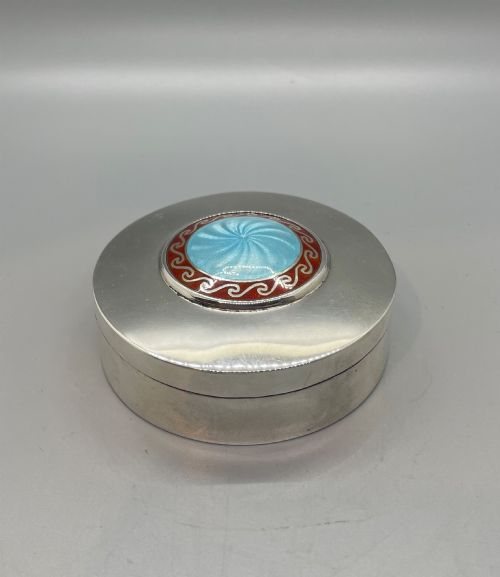
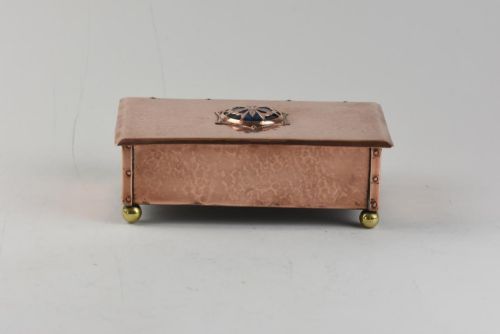
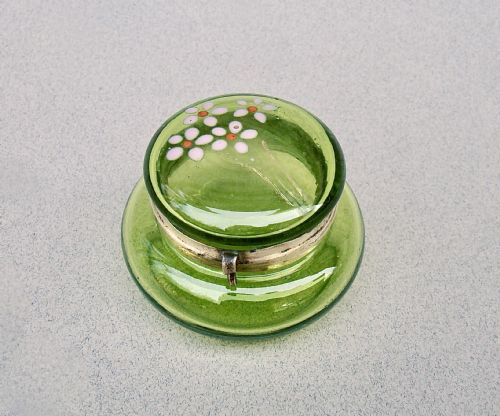
An enamelled jewellery box is a small lidded receptacle designed to hold rings, pins, and small trinkets on a dressing table or desk. These boxes range from delicate glass caskets to sturdy metal caskets decorated with vitreous enamel work. The selection commonly includes pieces spanning the Victorian and Edwardian eras alongside later twentieth-century designs.
Makers often shaped these items as round or rectangular trinket boxes, larger table cabinets, and hinged caskets lined with silk or velvet. Buyers encounter various forms created across Britain, France, Austria, and Japan, reflecting the changing tastes of nineteenth and twentieth-century households.
How they were made
Craftsmen built these containers using a foundation of sterling silver, brass, copper, bronze, or gold, often mounting porcelain plaques or glass panels within the metal framework. Workers applied powdered glass to the metal surface and fired the piece in a kiln to fuse the vitreous enamel into a permanent, glossy coating.
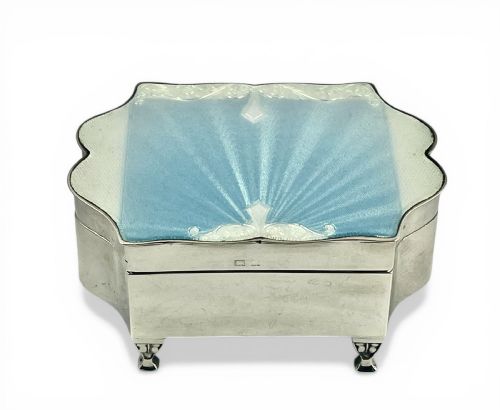
Decorative techniques varied widely according to the period and workshop style. Artisans employed guilloche engraving beneath translucent enamel, cloisonne wire partitions to contain different coloured pastes, champleve troughs carved into the metal base, and hand-painted miniature scenes under clear glazes.
What varies in quality
The quality of an enamelled jewellery box rests on the precision of the metalwork and the clarity of the fired glass surface. Finer examples display even enamel thickness without bubbling or cracking, alongside crisp casting and tight hinge alignment that allows the lid to close flush.
Hand-painted details and complex decorative methods such as guilloche patterning elevate the character of a piece. Substantial metal gauges and intact original linings demonstrate superior construction compared to lighter, mass-produced alternatives.
Liberty and Co·S Theeman·Taye Kenning and Spencer Ltd
The Enamelled Jewellery Box Glossary
- Guilloche
- A decorative mechanical engraving technique that etches precise geometric patterns into metal. Artisans cover this pattern with translucent enamel so the underlying design shows through with depth.
- Cloisonne
- A method where thin metal wires are soldered onto a metal base to create raised compartments. These small cells are filled with coloured enamel paste before the piece undergoes firing.
- Champleve
- A technique where troughs or channels are carved directly into the surface of a thick metal plate. Enamel powder fills these recessed areas prior to heating and polishing.
- Viteous enamel
- A material made by fusing powdered glass to a substrate by firing, usually between seven hundred and nine hundred degrees Celsius. This process produces a smooth, durable, and chemically resistant coating.
- Vinaigrette
- A small ornamental box featuring an internal pierced grille. The container originally held a sponge soaked in aromatic vinegar.
Enamelled Jewellery Box: Frequently Asked Questions
How do I clean an enamelled jewellery box?
Wipe the exterior gently with a soft, dry or slightly damp cloth to remove dust and fingerprints.
Avoid soaking the box in water or using harsh chemical polishes, as moisture can damage internal linings and aggressive abrasives may scratch the glass enamel.
Were these boxes used only for jewellery?
While many were made specifically to hold rings and brooches, others served as general trinket containers or desk accessories.
Some specialised examples held stamps, calling cards, or aromatic vinegars rather than personal ornaments.
How can I tell an Edwardian box from a Victorian one?
Victorian pieces often favour heavier cast metalwork, rich cobalt or ruby glass, and ornate floral or revivalist motifs.
Edwardian and later Arts and Crafts examples frequently display lighter silver mounts, guilloche enamel in pastel shades, or clean geometric lines.
Is damaged enamel possible to repair?
Restoring chipped or cracked vitreous enamel requires specialist firing techniques that match the original glass composition and colour.
Most collectors prefer pieces with intact enamel surfaces, even if they show minor surface wear consistent with age.